



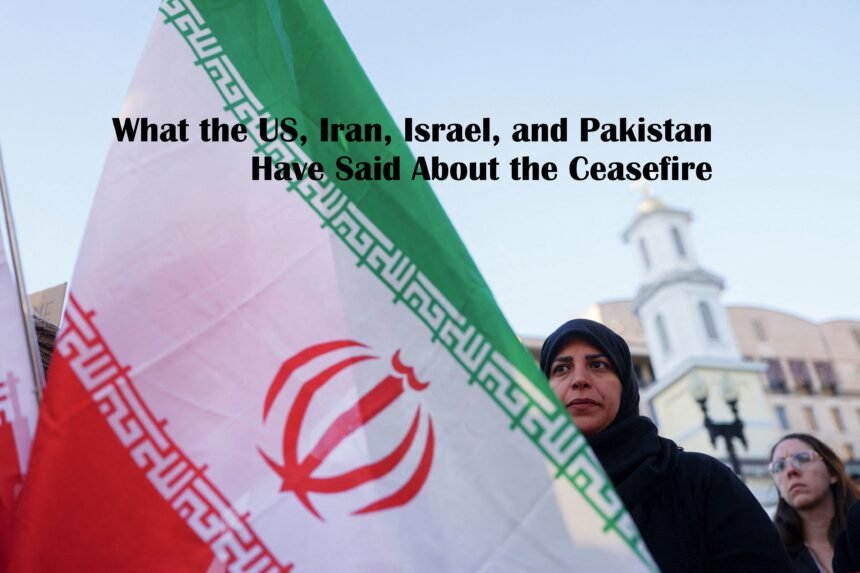
Leaders of the United States, Iran, and Israel have all voiced their positions following the announcement of a temporary ceasefire that could slow down the intensifying conflict in the Middle East. The agreement followed intense diplomatic efforts that involved Pakistan as a key mediator. The ceasefire is intended to last for two weeks, and it marks a notable step away from open hostilities that have recently escalated.
Pakistan’s prime minister first revealed that the United States and Iran had agreed to halt fighting everywhere, including Lebanon. However, Israel later clarified that its military operations in Lebanon do not fall under the ceasefire’s reach, saying those campaigns will continue.
United States: Supportive But Cautious
Officials in the United States welcomed the ceasefire framework as a step toward reducing violence and opening diplomatic channels. U.S. President Donald Trump described Iran’s 10‑point plan as a “workable basis” for ongoing negotiations, even though some of its elements differ from earlier American proposals.
The U.S. government also conditioned its support on Iran allowing secure and open transit through a strategic waterway known as the Strait of Hormuz. This requirement highlights the importance of the route for global trade and energy supplies, and it was set as part of the short‑term deal.
Some U.S. lawmakers reacted to the announcement with cautious optimism. Many praised the pause in hostilities as a chance to seek peace, although others warned that such a temporary arrangement does not address deeper issues that fuel the conflict.
Iran: Mixed Messages and Conditions
Iran responded to the ceasefire announcement with a mix of reaffirmation and caution. Tehran’s foreign ministry indicated that defensive operations would be suspended if attacks against Iran stopped and assured that safe maritime passage would be coordinated.
Still, Iranian officials have maintained that any stop to fighting should not just be a temporary truce. They stress the need for a lasting peace and end to war rather than a brief pause, and some Iranian statements have rejected external deadlines or pressure tied to reopening the Strait of Hormuz.
Tehran’s response also included a proposal of its own, with demands that cover issues like sanctions, regional hostilities, and compensation for war‑related losses. These longer‑term concerns underline that Iran’s acceptance of a ceasefire hinges on more than just halting the immediate conflict.
Israel: Ceasefire Acceptance With Limits
Israel agreed to participate in the temporary truce between itself, the United States, and Iran. However, the government was quick to point out that the ceasefire does not apply to its ongoing military actions in Lebanon. Israeli leaders made clear that campaigns against certain armed groups would continue despite the broader agreement to suspend fighting.
This Israeli position reflects persistent security concerns related to non‑state actors in the region. While the broader ceasefire reduces direct attacks between nation‑state forces, Israel’s focus remains on addressing militant threats at its borders, complicating the full implementation of peace conditions.
Pakistan: Mediation and Diplomatic Push
Pakistan played a central role in brokering the ceasefire agreement, drawing up a framework that was shared with both Washington and Tehran. The Pakistani prime minister described the arrangement as effective immediately upon announcement, and he also invited representatives from both sides to further talks.
Pakistan’s efforts were part of a broader effort by regional mediators to push for temporary and potentially longer lasting peace. Earlier proposals included suggestions for an even longer ceasefire period that could extend to 45 days, though final consensus was difficult to achieve.
The country’s mediation reflected a diplomatic desire to prevent even larger escalations that might involve civilian infrastructure or disrupt global markets. Analysts noted that a sustained ceasefire would require ongoing negotiation and cooperation from all parties involved.
Regional and Global Reactions
While the ceasefire has been welcomed by many external actors hoping for reduced tensions, reactions from global leaders have varied. Some international voices stressed that the halt in fighting is a positive first step but warned that lingering issues still need to be addressed for lasting peace.
Humanitarian concerns were also raised, with many urging increased assistance for civilians affected by weeks of conflict. The broader diplomatic community has emphasized that a ceasefire is only a pause unless it leads to meaningful negotiations for a permanent settlement.
Remaining Challenges Ahead
The ceasefire agreement is narrow in scope and limited in time. Leaders recognize that this temporary pause does not solve deeper strategic disagreements between the United States, Iran, and Israel. Disputes over nuclear enrichment, missile programs, sanctions, and regional influence remain unresolved.
For Iran, concerns about sovereignty and security persist, and for the United States and Israel, ensuring regional stability and protection of strategic routes remains a priority. Future talks, potentially in Islamabad or other diplomatic centers, are expected to focus on how to turn this short‑term truce into a broader peace agreement.