


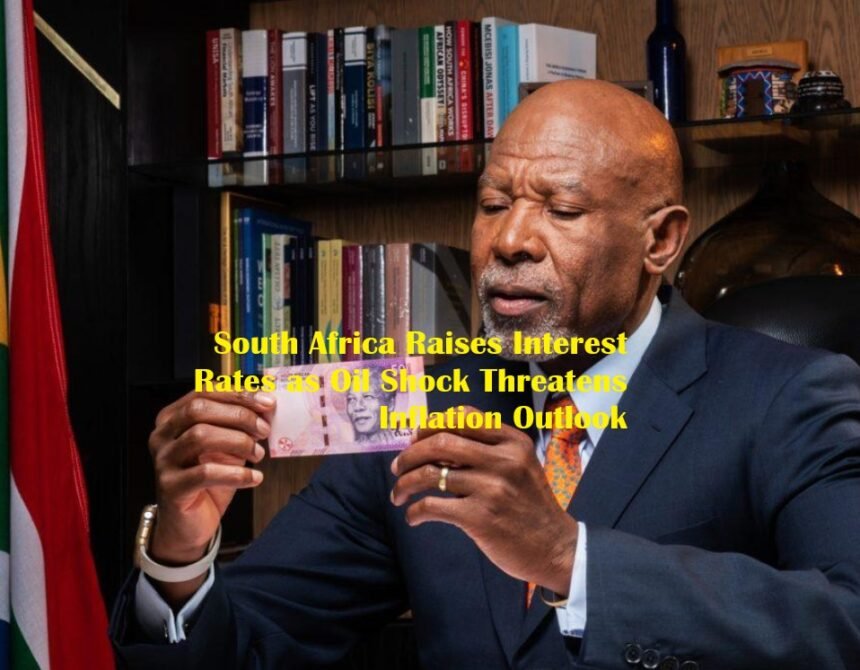
South Africa’s central bank has tightened monetary policy again as a combination of higher energy costs, geopolitical disruptions and persistent inflation risks creates a difficult environment for the country’s economy. The South African Reserve Bank (SARB) increased its benchmark interest rate by 25 basis points to 7.25% on September 23, marking its second rate increase of 2026.
The decision comes as the prolonged conflict in the Middle East continues to disrupt energy supplies and push fuel costs higher. Rather than focusing only on the latest rate decision, the move highlights a broader challenge facing policymakers, how to prevent a temporary energy shock from becoming a longer-lasting inflation problem while economic growth remains weak.
Energy Prices Become a Major Inflation Threat
Fuel prices have emerged as one of the biggest concerns for South African policymakers. The escalation of conflict affecting the Middle East has disrupted global energy markets, while limited oil flows through the Strait of Hormuz have added pressure to international crude prices. The SARB said the combination of geopolitical conflicts was creating a significant global supply shock.
In addition to the Middle East conflict, the ongoing Russia-Ukraine war continues to affect refinery capacity and food exports, increasing pressure on global supply chains. For South Africa, the impact is particularly important because higher fuel prices can spread into transportation, logistics and other operating costs.
Those increases can eventually influence the prices paid by households and businesses across the economy. The central bank has therefore raised its near-term inflation forecasts, warning that headline inflation could move above 5% later this year and remain elevated into early 2027.
Inflation Rises Despite Softer-Than-Expected Data
South Africa’s consumer inflation rate increased to 4.4% in August from 4.3% in July. Although the increase was smaller than economists had anticipated, the figure remains above the central bank’s 3% inflation target. The latest data creates a complicated policy picture. Inflation has not accelerated dramatically, but policymakers are increasingly concerned that energy-related costs could keep price pressures elevated for longer. Services inflation is another area of concern.
The SARB said several service categories are recording price increases above its 3% target, raising the possibility that temporary shocks could become embedded in broader inflation expectations. Keeping inflation expectations under control has become increasingly important because persistent expectations of higher prices can influence wage negotiations and business pricing decisions.
Higher Rates Meet a Weak Growth Outlook
The latest rate increase also comes at a time when South Africa’s economic growth remains fragile. The economy contracted by 0.2% in the second quarter of 2026, according to the SARB. The central bank has reduced its full-year growth projection to 1.2%, although it still expects some recovery during the second half of the year.
This creates a difficult balancing act for monetary policymakers. Higher interest rates can help contain inflation and support price stability, but they can also increase borrowing costs for households and companies. The SARB acknowledged that growth risks remain tilted downward. However, policymakers indicated that allowing inflation shocks to become entrenched could create a more persistent economic problem.
Households Could Face Greater Financial Pressure
The increase to a 7.25% policy rate will also affect borrowing conditions across South Africa. Moneyweb reported that the move takes the commercial banks’ prime lending rate to 10.75%. For consumers with variable-rate loans, higher interest rates can increase monthly repayment costs. Businesses may also face more expensive financing when borrowing for investment, expansion or working capital. At the same time, households are already dealing with higher fuel prices.
This combination could place additional pressure on disposable income, particularly if energy costs remain elevated. The challenge is therefore not limited to inflation statistics. Monetary tightening can influence consumer spending, business investment and overall domestic demand.
Food Inflation Provides Some Relief
Not every part of South Africa’s inflation picture is deteriorating. The SARB noted that food inflation is currently at its lowest level since 2010, helped by strong harvests and more stable meat prices following the earlier impact of foot-and-mouth disease. The rand has also remained relatively resilient, helping contain import costs. However, policymakers remain alert to potential agricultural risks. El Niño conditions could eventually create pressure on food production, adding another uncertainty to the inflation outlook.
Rate Policy Could Remain Restrictive
The SARB’s latest projections suggest that the policy rate could remain broadly stable through the remainder of the year before cuts become possible as inflation moves closer to the 3% target. However, the central bank stressed that this is not a fixed commitment and that future decisions will depend on incoming economic data. The bank currently expects inflation to return toward 3% around the end of 2027. That timeline demonstrates why policymakers are concerned about preventing current supply shocks from producing broader and longer-lasting inflation.
For South Africa, the coming months will therefore depend heavily on developments in global energy markets, the trajectory of inflation expectations and the performance of domestic economic activity. The September rate increase underscores the central bank’s effort to contain inflation while navigating an unusually difficult combination of geopolitical uncertainty, higher fuel costs and subdued growth.