



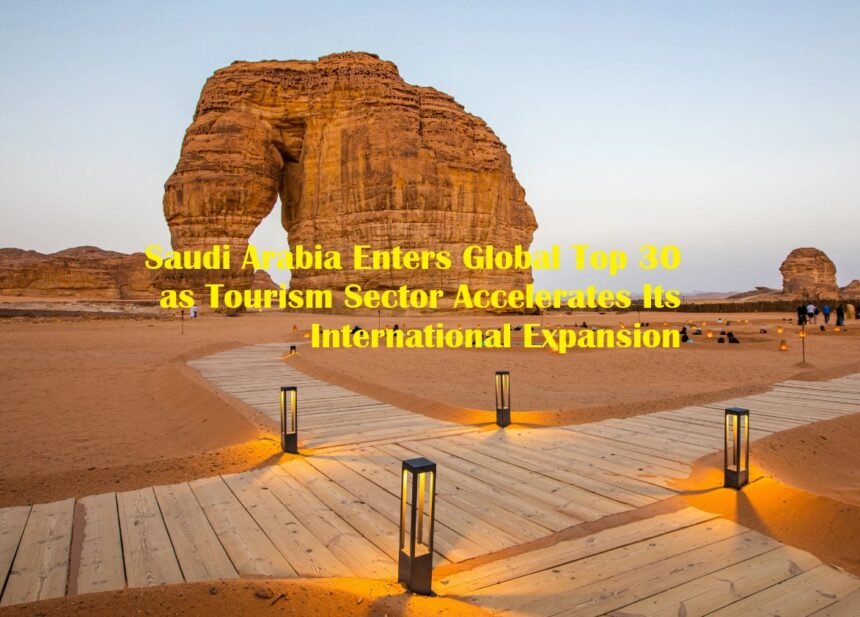
Saudi Arabia has strengthened its position on the global tourism map after climbing to 29th place in the 2026 Travel & Tourism Development Index (TTDI), marking another step forward in the Kingdom’s rapid transformation of its tourism industry. The ranking, published by the World Economic Forum on September 25, places Saudi Arabia among the world’s top 30 tourism destinations and reflects the country’s continued progress in building the infrastructure, services and connectivity needed to support international visitors.
The Kingdom’s latest position also represents a substantial improvement over previous editions of the index. Saudi Arabia has moved up 17 places since 2019 and gained three positions compared with its 2024 ranking, according to information released by Saudi Arabia’s Ministry of Tourism.
A Significant Rise Since 2019
Saudi Arabia’s movement up the TTDI rankings provides an indication of how quickly its tourism sector has developed over the past several years. The WEF index evaluates 110 economies based on the conditions that support travel and tourism development. Its assessment covers areas including infrastructure, air connectivity, tourism services, cultural and natural resources, business conditions, sustainability and demand. Saudi Arabia’s 29th-place position comes as tourism development improves across much of the global industry.
The 2026 index found that 101 of the 110 economies assessed, equivalent to 92%, improved their TTDI scores between 2024 and 2026. This broader improvement means Saudi Arabia’s advancement is taking place within an increasingly competitive international tourism market. The Kingdom’s progress is particularly notable because its tourism industry has expanded rapidly while the government has continued to invest in destinations, transportation networks and visitor infrastructure.
Tourism Becomes a Major Development Focus
Saudi Arabia has been placing tourism at the center of its economic diversification strategy as it seeks to reduce its dependence on oil revenues. The expansion of tourism is closely connected with Vision 2030, the Kingdom’s long-term economic transformation program. Under the strategy, Saudi Arabia has sought to develop new destinations, attract international visitors and create additional opportunities across hospitality, entertainment, transportation and related industries.
The country has also promoted major tourism developments designed to increase its international appeal. These projects are intended to expand the range of experiences available to visitors while supporting the creation of new tourism infrastructure. The latest TTDI ranking provides an external measurement of the progress being made in these areas.
Rather than relying solely on individual tourism attractions, the index assesses the broader environment required for the sector to operate and grow. This includes the ability to connect destinations with travelers, provide visitor services and create conditions that allow tourism businesses to develop.
Middle East Tourism Gains Momentum
Saudi Arabia’s rise also reflects wider improvements across the Middle East and North Africa region. According to the WEF, the MENA region recorded one of the strongest improvements in average TTDI scores between 2024 and 2026, with the regional score increasing by 2.5%. The strongest gains included cultural resources, tourist services and infrastructure, and tourism demand sustainability. The development of Saudi Arabia’s tourism sector therefore forms part of a broader regional transformation.
Middle Eastern destinations have increasingly invested in airports, hotels, cultural attractions and entertainment facilities as governments seek to attract international travelers and diversify their economies. Saudi Arabia’s expanding tourism infrastructure could also strengthen its position as a destination for both leisure and business travel.
Infrastructure Remains Critical to Future Growth
Although Saudi Arabia’s improved ranking represents progress, the global tourism index also highlights the importance of maintaining investment as visitor numbers increase. The WEF reported that international tourism reached a record 1.5 billion arrivals in 2025. At the same time, the organization identified affordability, investment gaps, workforce shortages and sustainability as important challenges facing the global industry. For Saudi Arabia, continued expansion will therefore require more than simply attracting tourists.
The Kingdom will need to ensure that airports, transportation systems, accommodation, attractions and visitor services can handle rising demand while maintaining service standards. Workforce development will also become increasingly important as the hospitality and tourism industries expand. Hotels, restaurants, transportation providers and entertainment businesses require skilled workers capable of serving a growing international customer base.
Global Competition Is Becoming More Intense
Saudi Arabia’s 29th-place ranking puts it closer to a group of established tourism markets, but the global rankings demonstrate how competitive the sector remains. Japan leads the 2026 TTDI rankings, followed by the United States, Spain, Australia, France, Germany, the United Kingdom, China, Switzerland and Italy. Advanced economies continue to dominate the highest positions because of their established infrastructure, connectivity and tourism ecosystems. At the same time, emerging tourism economies are making faster progress.
The WEF found that the 10 largest emerging tourism economies have improved their TTDI scores more than twice as quickly as the top 20 economies since 2019. These markets benefit from combinations of natural attractions, cultural resources and competitive pricing, while continuing to close infrastructure and services gaps. Saudi Arabia’s latest ranking places the Kingdom within this broader global shift toward emerging tourism markets.
The Next Challenge Is Sustainable Expansion
Moving into the global top 30 is one milestone, but maintaining tourism growth will depend on how effectively Saudi Arabia manages the next stage of development. The WEF has warned that tourism growth does not automatically translate into broader economic and social benefits. Rising visitor numbers can place additional pressure on infrastructure, communities and natural resources if destinations expand without adequate planning. Saudi Arabia will therefore face the challenge of balancing rapid tourism development with long-term sustainability.
The country’s rise to 29th in the 2026 TTDI demonstrates the scale of its progress since 2019. With continued investment in connectivity, tourism services, infrastructure and visitor experiences, the Kingdom is positioning tourism as an increasingly important component of its broader economic transformation. Its next phase will be defined not only by how many visitors it attracts, but also by how effectively it converts tourism growth into a durable and diversified economic sector.