



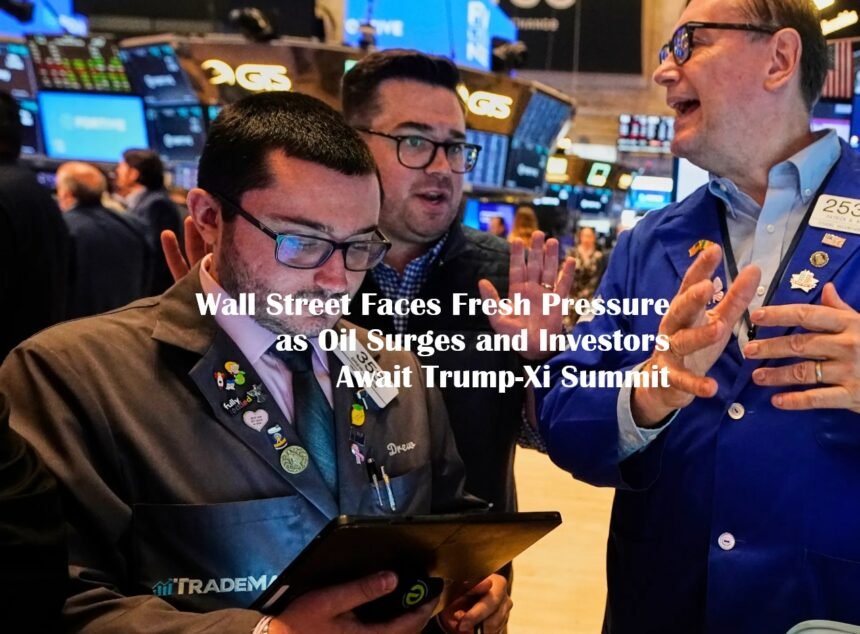
U.S. stock markets entered a more cautious phase on September 24 as rising energy prices and higher Treasury yields created new challenges for investors. The renewed uncertainty surrounding the Middle East conflict came at the same time as financial markets turned their attention toward a major meeting between U.S. President Donald Trump and Chinese President Xi Jinping.
The combination of geopolitical risks, inflation concerns and uncertainty surrounding U.S.-China relations pushed stock futures lower before the opening bell. Dow Jones futures declined 0.33%, S&P 500 futures slipped 0.57%, while Nasdaq 100 futures dropped 1.01%. Rather than focusing solely on corporate earnings, investors are now weighing how developments outside the stock market could influence inflation, interest rates and business costs in the coming months.
Higher Oil Prices Revive Inflation Concerns
Energy markets have once again become a major influence on Wall Street sentiment. Brent crude moved above $100 a barrel after U.S. and Iranian leaders exchanged sharp remarks during the United Nations General Assembly. Higher oil prices can create problems for financial markets because they can increase transportation, manufacturing and consumer costs. If elevated energy prices persist, investors may become more concerned that inflation will remain above the level policymakers want.
The possibility of restrictions on U.S. diesel exports added another layer of uncertainty to the energy market. For investors, the situation creates questions about whether fuel costs could remain elevated and put additional pressure on companies that rely heavily on transportation and energy consumption.
Treasury Yields Add Another Challenge
Oil was not the only source of pressure. U.S. Treasury yields also moved higher, with the 30-year Treasury yield reaching its highest level since 2004. Rising bond yields can influence equity valuations because higher borrowing costs may affect consumers, companies and investors. They can also make fixed-income assets more attractive relative to riskier investments such as stocks. The latest market moves therefore reflect more than immediate geopolitical concerns.
Investors are also reassessing the possibility that interest rates could remain elevated for longer than previously expected. Market expectations for another Federal Reserve rate increase changed sharply. The probability of at least a 25-basis-point increase at the Fed’s next meeting rose to 71%, compared with about 50% one day earlier, according to the CME Group’s FedWatch Tool.
Technology Shares Lose Some Momentum
Technology stocks, which had helped drive the Nasdaq to record levels earlier in the week, also came under pressure. Meta shares declined around 2% in premarket trading, while Nvidia lost about 1%. Marvell and Intel each dropped roughly 3%. The declines show how quickly investor sentiment toward high-growth technology companies can change when interest-rate expectations move higher. Technology companies can be particularly sensitive to changes in borrowing costs and valuation assumptions.
When Treasury yields rise, investors may reassess the premium placed on companies whose expected growth is concentrated further in the future. That dynamic has become increasingly important as artificial intelligence stocks have attracted substantial investor attention throughout 2026.
Airlines and Cruise Companies Feel Energy Pressure
Companies that are directly exposed to fuel costs also faced selling pressure. JetBlue and United Airlines fell more than 1% in premarket trading, while Norwegian Cruise Line and Royal Caribbean also declined. Higher oil prices can increase operating expenses for airlines and cruise operators because fuel represents an important component of their costs.
The market reaction illustrates how geopolitical developments can spread across different parts of the economy. A conflict thousands of miles away can influence transportation companies, consumer prices and ultimately monetary-policy expectations through changes in energy markets.
Trump-Xi Meeting Becomes the Next Market Focus
Against this backdrop, investors are closely watching the planned meeting between Trump and Xi. The summit is expected to cover several sensitive subjects, including artificial intelligence regulation, the Middle East conflict and Taiwan. The discussions could also influence expectations surrounding the economic relationship between the world’s two largest economies.
U.S. Treasury Secretary Scott Bessent said the two countries had agreed to extend their trade truce until January 10. That development could provide some stability for companies exposed to U.S.-China commerce, although investors remain focused on whether the leaders can make further progress.
The meeting also comes as businesses continue to monitor the potential consequences of trade restrictions and technology regulations. Executives from major companies including General Motors, Meta, Apple, Amazon and Tesla are expected to meet with the two leaders, adding a corporate dimension to the summit.
Federal Reserve Expectations Remain Critical
The direction of monetary policy could ultimately prove just as important to markets as geopolitical developments. Recent economic data has suggested that business activity remains relatively strong, while higher energy prices could add fresh inflationary pressure. Federal Reserve officials have therefore continued to leave open the possibility of additional rate increases.
New York Fed President John Williams said it was reasonable to consider another rate increase this year. Meanwhile, investors were preparing for weekly U.S. jobless-claims data and additional comments from Federal Reserve policymakers. These developments leave markets balancing two competing forces: economic resilience on one side and renewed inflation risks on the other.
Investors Face Multiple Sources of Uncertainty
Wall Street’s September 24 decline highlights how several separate issues can interact within financial markets. Higher oil prices raise inflation concerns, rising Treasury yields increase financial pressure, and uncertainty surrounding the Middle East adds another geopolitical risk. At the same time, the Trump-Xi summit could influence expectations for global trade, technology policy and international relations. For investors, the immediate focus is therefore broader than the daily movement of the major stock indexes.
Oil prices, Federal Reserve policy and developments between Washington and Beijing could all shape market sentiment in the weeks ahead. The combination of these factors means Wall Street is entering a period where economic data and corporate results will compete for attention with geopolitical developments. How those forces develop could determine whether recent market optimism surrounding technology and artificial intelligence can withstand renewed pressure from inflation and higher interest rates.