



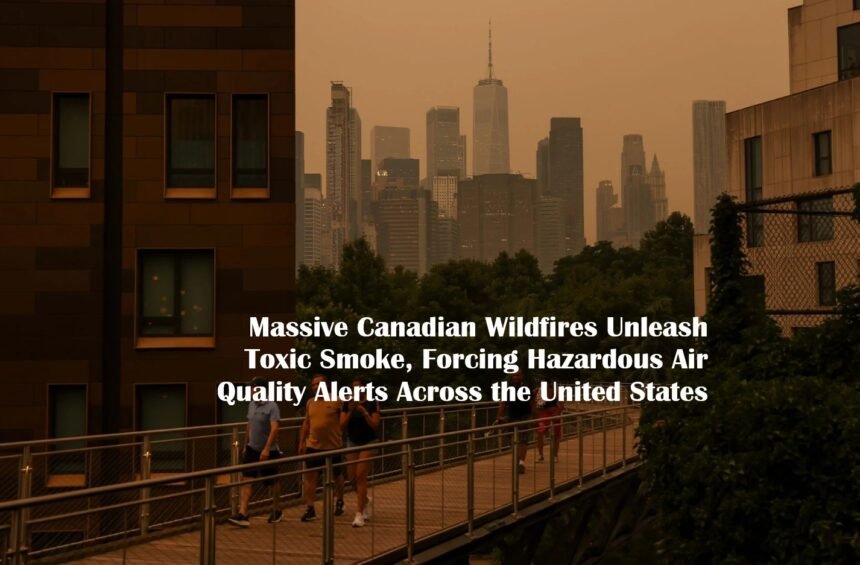
An environmental emergency is currently unfolding across North America. Intense wildfire activity in Canada has surged dramatically, with over eight hundred active blazes raging simultaneously across the country. High winds are actively carrying massive, dense plumes of toxic smoke southward. This rapid atmospheric transport has triggered widespread air quality health advisories across multiple states in the Midwestern and Northeastern United States.
The sudden environmental crisis is exposing millions of people to dangerous levels of fine particulate pollution. Meteorologists and health officials are tracking the immense smoke plumes as they drift over major urban centers. Cities such as Minneapolis, Detroit, and New York are currently experiencing highly degraded atmospheric conditions.
Authorities are officially declaring the air quality in several northern regions as “hazardous,” which represents the most severe category on safety indexes. Public safety officials are urging vulnerable populations and the general public to take immediate protective measures. The sheer scale of the fires highlights the growing severity of North American wildfire seasons.
Tracking the Uncontrolled Blazes and Atmospheric Transport Mechanisms
The Canadian Interagency Forest Fire Centre currently reports approximately 857 active wildfires burning within the country’s borders. According to official tracking systems, firefighters are struggling to contain the vast majority of these blazes. Specifically, over seven hundred fires remain classified as completely “out of control” due to dry, hot weather. The most intense fire activity is concentrated in the western regions of Ontario and portions of Manitoba.
These locations sit directly upwind of major American population centers, creating a direct pipeline for heavy smoke. Persistent northwesterly winds are acting as a giant atmospheric conveyor belt, pushing the particulate matter southeastward. This wind pattern is driving the thickest smoke plumes directly over the Great Lakes and into the Northeast.
Satellite imagery shows an expansive gray shroud covering thousands of square miles of airspace. The smoke sits at various levels of the atmosphere, with ground-level concentrations reaching dangerous densities in several states. Meteorologists expect this specific wind pattern to persist through the upcoming weekend, which will prolong the current environmental crisis.
The Hazardous Impact of Particle Pollution on Major American Cities
As the smoke descends to ground level, cities in the United States are recording unprecedented pollution spikes. In Michigan, the Air Quality Index peaked at a staggering level of nearly eight hundred in certain areas. This value sits more than double the threshold for “hazardous” conditions, which officially begins at three hundred.
Minneapolis and Duluth also recorded index values that pose immediate health threats to all residents, not just sensitive groups. These cities briefly ranked among the most polluted major urban areas on the planet. Further east, New York State has issued comprehensive Air Quality Health Advisories for all its regions.
The air quality index across western and central New York surged past 150, creating a visible orange and yellow haze. Citizens in Boston and Vermont reported smelling strong wood smoke as the sky turned an unnatural brownish color. Even local sports organizers are monitoring the situation with concern.
The ongoing smoke drift could potentially impact highly anticipated outdoor events in New Jersey. The tiny particles in the smoke, known as PM2.5, are small enough to enter the human bloodstream, making this a severe respiratory threat.
Public Health Warnings and Immediate Safety Recommendations
Medical experts are warning that the combination of wildfire smoke and summer heat creates a dual health hazard. The fine particulate matter present in the air can irritate the lungs, trigger asthma attacks, and worsen cardiovascular conditions. Healthy individuals are also experiencing symptoms such as coughing, throat irritation, and shortness of breath.
Consequently, health departments are advising everyone in the affected zones to limit strenuous outdoor activity. People with pre-existing heart or lung diseases should remain indoors with windows tightly closed. Using high-efficiency particulate air filters and running air conditioners on recirculate mode can help clean indoor air.
If people must go outside, officials recommend using high-quality respirator masks to filter out the dangerous fine ash. Schools and community centers throughout the Northeast are canceling outdoor sports practices and moving activities inside. Emergency rooms are also preparing for an influx of patients suffering from acute respiratory distress.
The Long-Term Outlook for the Wildfire Season
While Canadian fire crews are receiving help from international jurisdictions, the sheer number of blazes is stretching resources thin. The Canadian government has raised its national preparedness level to four, its second-highest designation. This level indicates that wildland fire activity is highly significant and requires a massive mobilization of firefighters. Weather forecasters are predicting some scattered thunderstorms across Ontario over the next few days.
However, experts fear the localized rainfall will not be sufficient to extinguish the deep-seated forest blazes. The current crisis highlights a worrying trend of longer, hotter, and drier summer seasons across North America. Prolonged drought conditions in the Canadian forests have created a massive amount of dry fuel that ignites easily.
Climate scientists warn that these extreme fire events will likely occur more frequently in the coming years. Until a major, sustained rain system moves across Canada, the eastern United States will remain vulnerable to shifting winds. Residents must prepare to adapt to a summer where clean, breathable air can disappear in a matter of hours.