



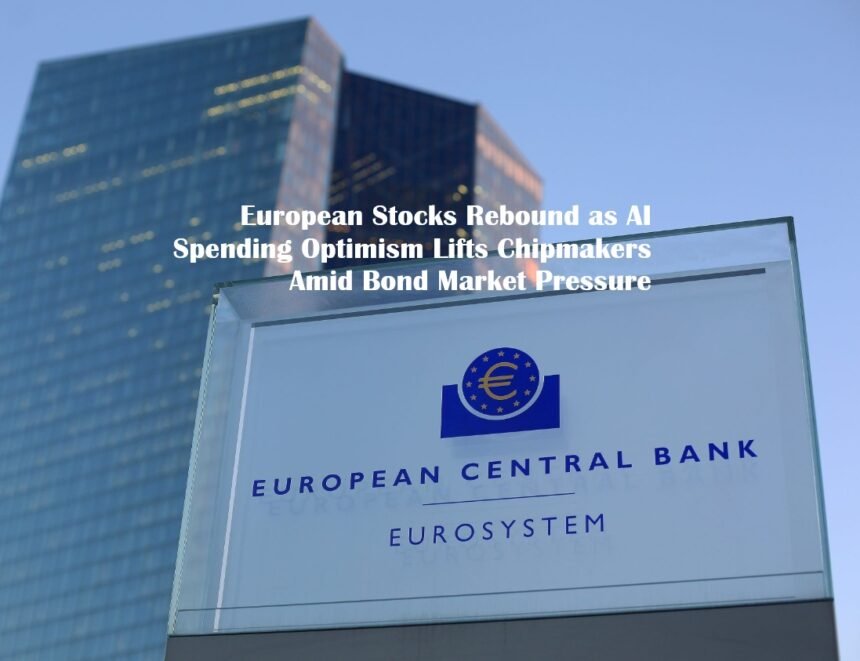
European shares moved higher on Tuesday, September 29, 2026, as renewed optimism surrounding artificial intelligence infrastructure spending provided support to technology stocks. Semiconductor companies led the advance after reports about AI developer Anthropic’s anticipated investment requirements encouraged investors to reconsider the growth potential of Europe’s chipmaking industry. The recovery, however, unfolded against a difficult financial backdrop.
Rising government bond yields, elevated energy prices and persistent geopolitical uncertainty continued to weigh on market sentiment, limiting the broader advance across regional equity markets. According to market data reported by several leading media outlets, the STOXX 600 index, which covers all of Europe, rose 0.5%. Germany’s DAX index rose 0.4%, while France’s CAC 40 and the U.K.’s FTSE 100 each rose 0.2%.
AI Infrastructure Demand Revives European Semiconductor Shares
Technology companies became the main drivers of Tuesday’s market gains after reports indicated that Anthropic’s IPO prospectus highlighted substantial spending requirements for cloud computing, processing capacity and supporting infrastructure. The development attracted attention because expanding artificial intelligence capabilities requires significant investment in advanced chips, computing equipment and data center infrastructure.
European semiconductor suppliers could benefit from this spending cycle as technology companies continue expanding their computing capacity. Several semiconductor-related stocks recorded notable advances across European trading floors. In Paris, shares of STMicroelectronics climbed 6.5%, while Soitec gained 5.9%. Milan-listed companies also participated in the rally, with one semiconductor stock rising 6.3%. Germany’s technology sector experienced similar momentum. Infineon Technologies increased 3.1%, while Aixtron advanced 4% and Suss MicroTec surged 4.6%.
Dutch semiconductor equipment manufacturers also recorded gains. ASML rose 3.2%, ASM International added 3.8%, and BE Semiconductor Industries increased 3%. The rally extended beyond the largest chipmakers. Austrian semiconductor company AT&S gained 4.8%, while Belgian technology group Melexis advanced 3.9%. These movements demonstrated how expectations surrounding AI infrastructure expenditure continued to influence European technology valuations, even as investors remained cautious about broader economic conditions.
Government Bond Yields Complicate the Equity Recovery
Despite Tuesday’s advance, European equities faced substantial pressure throughout September as borrowing costs climbed across major economies. The STOXX 600 remained on course for its first monthly decline in six months, having fallen almost 2% during September. Government bond yields reached levels not seen since the 2008 global financial crisis, creating a challenging environment for companies whose valuations depend heavily on future earnings growth. Higher sovereign yields influence equity markets through several channels.
They increase the returns available from government debt, potentially making stocks less attractive to investors seeking comparatively predictable income. Rising yields also increase the discount rates used to calculate the present value of future corporate earnings. Consequently, investors may assign lower valuations to companies whose expected profits are concentrated further into the future. Businesses that rely on external financing can face additional pressure as borrowing becomes more expensive.
The European Central Bank’s latest interest rate increase, alongside continued hawkish comments from policymakers, added to concerns about restrictive monetary conditions. Warnings from artificial intelligence industry leaders about a potential slowdown in technological development also contributed to September’s market volatility. Javier de Berenguer, a fund selector at MAPFRE Asset Management, highlighted the growing importance of companies demonstrating tangible returns from AI investments rather than relying solely on optimistic growth expectations.
Middle East Tensions Keep Energy Markets Uncertain
Geopolitical developments continued to influence European market sentiment, particularly through their potential impact on energy prices. Earlier hopes for a diplomatic breakthrough in the Middle East faded during September, leaving investors concerned about prolonged regional instability. Tensions between US President Donald Trump and Iranian leadership over the Strait of Hormuz added uncertainty to the outlook for energy transportation and regional security.
The absence of meaningful diplomatic progress has maintained pressure on energy markets, complicating the outlook for European businesses and consumers. Higher crude prices can increase transportation, manufacturing and operating expenses, while elevated energy bills can reduce household purchasing power.
For companies already dealing with higher financing costs, persistent energy inflation could further complicate earnings forecasts. De Berenguer also identified geopolitical uncertainty as a factor restricting equity market performance and suggested that greater exposure to longer-term debt could be worth considering in the prevailing environment.
Economic Indicators and ECB Comments in Focus
Investors were preparing to assess eurozone consumer confidence figures scheduled for release later on Tuesday. The data could provide additional insight into household sentiment as consumers contend with rising energy expenses and elevated borrowing costs. Market participants were also watching for comments from European Central Bank President Christine Lagarde.
Her remarks could offer clues about the central bank’s assessment of inflation risks and whether persistent energy market volatility might require restrictive monetary policy to remain in place for longer during the final quarter of 2026. Individual corporate developments also influenced trading. Shares of two French companies declined after the government proposed substantially higher taxes on motorway concessions and major airports. Swiss chocolate producer Barry Callebaut fell 7% after reducing its full-year organic sales growth forecast.
European Markets Face Conflicting Signals
Tuesday’s gains highlighted the contrasting forces shaping European equities in late September 2026. Optimism about AI infrastructure demand supported semiconductor manufacturers, while higher bond yields, energy costs and geopolitical uncertainty continued to challenge the wider market. Investors will therefore be monitoring corporate earnings expectations, consumer confidence and central bank communications to assess whether the technology-led recovery can extend beyond a single trading session.
The STOXX 600’s monthly performance and developments in borrowing costs will remain important indicators of how European equities respond to these competing economic pressures.