



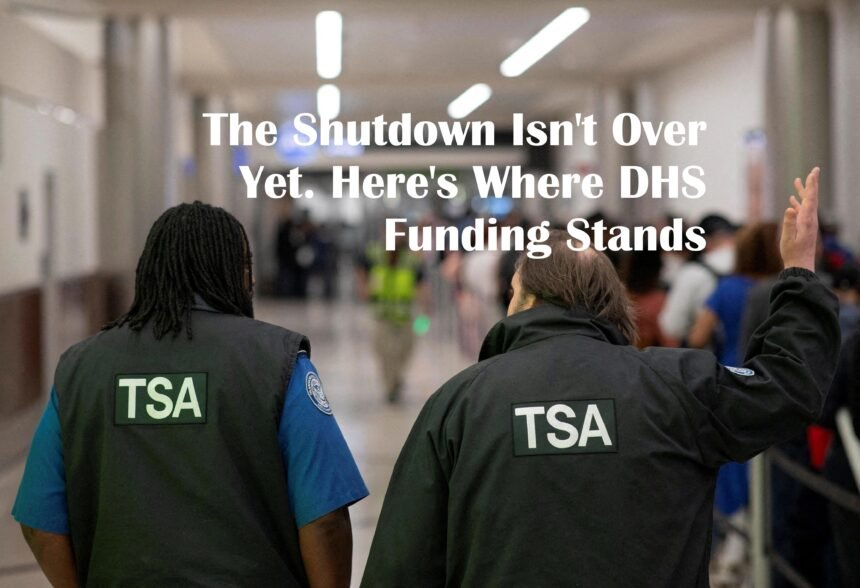
The funding crisis surrounding the U.S. Department of Homeland Security (DHS) remains unresolved. Although progress has been made in Congress, the shutdown is not fully over. Lawmakers continue to debate key issues, especially immigration enforcement, which has kept parts of DHS in limbo. This article explains the current situation, the political conflict, and what comes next.
Background of the DHS Shutdown
The DHS shutdown began on February 14, 2026. It followed a breakdown in negotiations over federal funding. The dispute mainly involved disagreements on immigration enforcement policies. Congress failed to pass a long-term funding bill before the deadline.
As a result, DHS entered a partial shutdown while most other government agencies stayed open. The conflict intensified after controversial incidents involving federal agents. These events led some lawmakers to demand stricter oversight and reforms.
Why the Shutdown Continues
The shutdown has not fully ended because lawmakers disagree on immigration policy. Democrats have pushed for reforms in agencies like Immigration and Customs Enforcement (ICE). Republicans have insisted on full funding without major policy changes.
Several proposals have been rejected by both sides. Attempts to pass temporary funding measures have also failed multiple times. This political standoff has delayed a comprehensive solution. As a result, only partial progress has been achieved.
What Funding Has Been Approved
Recently, the Senate passed a bill to fund most DHS operations. This measure aims to restore funding for critical services such as:
- Transportation Security Administration (TSA)
- Federal Emergency Management Agency (FEMA)
- U.S. Coast Guard
These agencies have faced major disruptions during the shutdown. Many employees have worked without pay, while staffing shortages have worsened. The new bill focuses on stabilizing essential operations. However, it excludes funding for certain immigration enforcement programs.
What Still Remains Unfunded
Despite progress, key parts of DHS remain unfunded. Immigration-related agencies are at the center of the dispute. These include:
- Immigration and Customs Enforcement (ICE)
- Customs and Border Protection (CBP)
Lawmakers have not agreed on how these agencies should operate or be funded. Democrats have demanded accountability measures. Republicans have opposed limiting enforcement powers. Because of this disagreement, funding for these agencies has been left out of recent legislation.
Impact on Workers and Services
The shutdown has had serious consequences. Thousands of DHS employees have been affected. Many workers have continued their duties without pay. This situation has created financial stress and reduced morale. Some employees have left their jobs due to the uncertainty.
Airport operations have been especially impacted. Long security lines and delays have become common. In some cases, travelers have faced wait times of several hours. These disruptions have increased pressure on lawmakers to reach a deal.
Temporary Measures and Emergency Actions
To reduce the impact, temporary steps have been introduced. For example, emergency actions have been considered to ensure that TSA workers receive pay. These measures aim to keep essential services running.
However, they do not solve the underlying political conflict. Short-term solutions cannot replace a full funding agreement. The longer the dispute continues, the greater the risk of further disruptions.
The Role of the House of Representatives
Although the Senate has passed a funding bill, the process is not complete. The House of Representatives must still approve the legislation. The outcome remains uncertain. Some House leaders have expressed concerns about excluding immigration funding. This disagreement could delay final approval. Without House approval, the bill cannot become law. This step is critical for ending the shutdown.
Political Tensions Behind the Crisis
The DHS funding crisis reflects deeper political divisions. Immigration policy has become one of the most contentious issues in U.S. politics. Both parties have strong positions. Democrats emphasize oversight and accountability. Republicans focus on enforcement and border security. These opposing views have made compromise difficult. Each side has accused the other of prolonging the shutdown. As a result, negotiations have stalled repeatedly.
What Happens Next
The future of DHS funding depends on continued negotiations. Lawmakers must decide whether to:
- Pass a full funding bill that includes immigration enforcement
- Approve separate funding measures for different DHS components
Some proposals suggest splitting the funding into smaller parts. This approach could help bypass disagreements. However, it may also create new challenges. Until an agreement is reached, uncertainty will continue.