



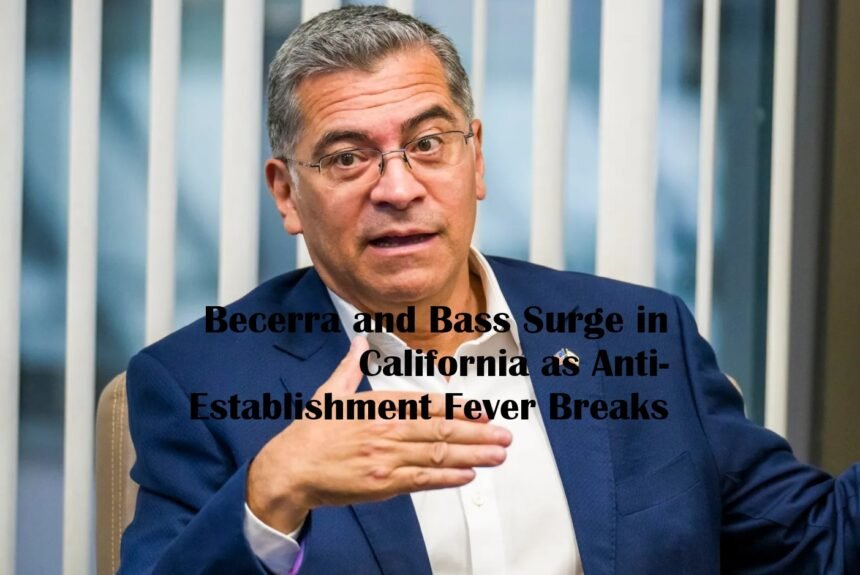
California politics shows a clear shift in tone. Established Democratic figures gain fresh momentum across the state. Voters now show less interest in anti-establishment messaging. They focus more on stability and governance. Recent political trends highlight this change.
Voters respond to experience and institutional knowledge. They also seek leaders who can manage complex state issues. Housing, public safety, and healthcare remain top concerns. This environment creates space for familiar names. Two figures stand out in this movement.
Xavier Becerra and Karen Bass both see rising political support. Their influence grows in different but connected ways. The broader mood has cooled toward outsider-driven campaigns. Many voters now question rapid political disruption. They prefer measured leadership with proven records.
Becerra Gains Ground Through Institutional Experience
Xavier Becerra strengthens his position in California politics. His long public service career shapes voter perception. He previously served as California Attorney General. He also led federal health policy during a national crisis. His background gives him strong recognition. Many voters associate him with legal and policy stability. That connection becomes more valuable in uncertain times.
Support for Becerra grows in policy-focused circles. These voters prioritize governance over political messaging. They look for leaders who understand regulatory systems. Becerra benefits from this shift. His reputation reflects consistency and legal expertise. His policy approach appeals to moderate Democratic voters.
Campaign discussions increasingly highlight experience. Supporters point to his record on healthcare access and legal enforcement. They view him as a steady hand in complex debates. Opponents struggle to frame him as disconnected from current concerns. His long tenure in public office reduces that argument. His visibility in major policy battles reinforces his credibility.
Bass Expands Her Influence in Los Angeles
Karen Bass also sees increased political strength. Her leadership as Los Angeles mayor places her at the center of major urban issues. She focuses on housing shortages, homelessness, and public safety. Her governance style emphasizes coordination and planning. Many voters respond to that approach. They want clear strategies for visible city problems.
Bass builds support through steady communication. She addresses local challenges with direct messaging. Her team highlights progress on housing initiatives and community programs. Her role in a major global city increases her profile. Los Angeles remains a key political and economic hub.
Leadership in the city often influences statewide sentiment. Bass also benefits from reduced enthusiasm for outsider rhetoric. Voters now prefer leaders with administrative experience. Her background in Congress and city leadership supports that preference.
Her approval grows among voters who want practical solutions. She avoids extreme messaging and focuses on implementation. That approach strengthens her appeal among moderate groups.
Decline of Anti-Establishment Momentum
Anti-establishment energy weakens across California. Voters show less interest in political disruption. They now question whether outsider approaches deliver results. Earlier political cycles rewarded outsider candidates. That trend appears less powerful today. Many voters feel frustrated with unresolved structural issues. They now turn toward experienced leadership.
This shift changes campaign strategies. Candidates emphasize record and competence. They reduce reliance on anti-establishment messaging. Political discussions focus more on outcomes. Voters ask about housing progress and public safety results. They also demand clearer economic plans.
Established figures gain an advantage in this environment. They already hold records voters can evaluate. That transparency helps build trust. Anti-establishment candidates still exist. However, their message faces stronger scrutiny. Voters compare promises with past performance more closely.
Voter Concerns Drive the Turn
Several concerns drive this political change. Housing costs remain a major issue in California. Many residents struggle with affordability pressures. Public safety also shapes voter behavior. Communities demand clearer strategies on crime prevention. They want visible improvements in local conditions.
Healthcare access remains another concern. Voters look for stable systems and reliable coverage. They avoid uncertainty in critical services. Economic stability influences decisions as well. Inflation and job security shape voter expectations.
Many prefer leaders with experience in managing large systems. These concerns reduce appetite for political experimentation. Voters now prefer incremental progress. They want measurable improvements over rapid change. Becerra and Bass align with these expectations.
Both leaders emphasize structured governance. Both avoid extreme political positioning. Their communication style also reflects this shift. They focus on policy details and implementation steps. They avoid abstract political rhetoric.
Media and Political Interpretation
Political analysts describe this shift as a normalization phase. Voters return to familiar leadership patterns. They reassess earlier enthusiasm for outsider movements. This interpretation highlights fatigue with constant disruption. Many voters now prioritize stability. They want predictable governance outcomes. Established leaders benefit from this sentiment.
Their long records provide clear evaluation points. Their past decisions shape current trust levels. Becerra and Bass represent this category of leadership. Their experience becomes a key political asset. Their recognition also reduces uncertainty among voters. Campaign environments adjust to this reality. Messaging now centers on results. Candidates highlight measurable achievements.
Impact on Future Elections
The current trend may influence upcoming elections. Candidates with strong institutional backgrounds gain an advantage. They can rely on experience-based messaging. Anti-establishment candidates must adjust strategies. They need stronger policy depth and clearer execution plans.
Simple disruption messages carry less weight. California remains a diverse political environment. Different regions still show different priorities. However, the overall trend leans toward stability. Becerra and Bass benefit from this environment. Their visibility increases across voter groups. Their policy positions align with current concerns.
Future campaigns will likely reflect this balance. Experience and performance will dominate political debate. Messaging will focus less on ideological disruption.