



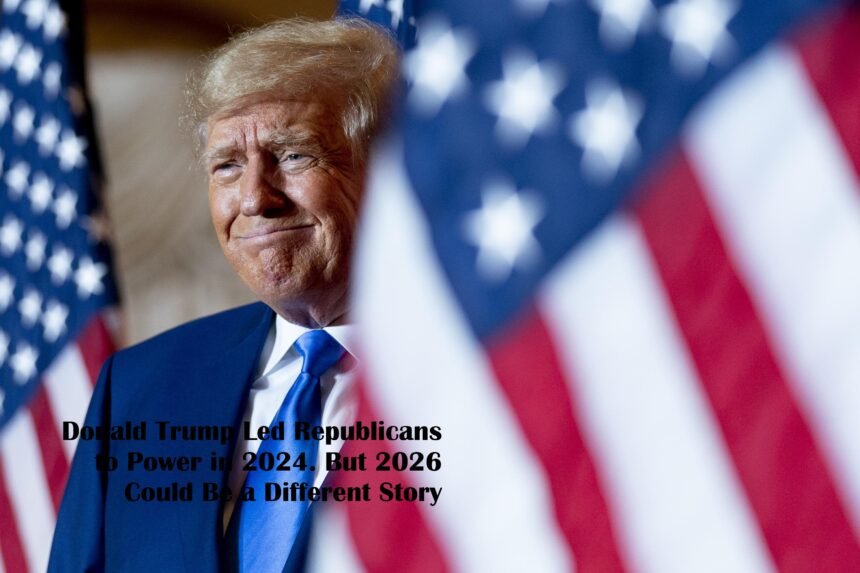
In the 2024 U.S. elections, Donald Trump and the Republican Party achieved victories that reshaped the national political landscape. The Republican Party gained control of the presidency and boosted its influence across Congress. This success was driven by a political strategy that resonated with many voters in that election cycle.
Yet as the United States approaches the 2026 midterm elections, the Republican Party faces an evolving set of challenges. The political dynamics that helped Republicans in 2024 may not repeat themselves in 2026. What once seemed secure is now tested by shifting voter priorities and emerging political trends.
2024: A Year of Republican Breakthroughs
In 2024, Donald Trump regained the presidency. He also helped many Republican candidates win competitive races. Voter concern about economic conditions, immigration issues, and rising crime rates was a central theme in that campaign. Trump’s message on these topics drew support from large numbers of voters nationwide.
The Republicans capitalized on that energy to expand their power in Washington, D.C., securing not only the executive branch but also strengthening their majority in Congress. The Republican strategy in 2024 emphasized a blend of populist messaging and targeted outreach to key swing voters.
The campaign framed national concerns in terms that appealed to voters who felt left behind by rapid social and economic changes. By focusing on what were described as everyday issues, Trump successfully aligned his message with the anxieties of a broad electorate.
Many Republican candidates rode this wave of support, connecting local issues with a national narrative centered on security, economic stability, and immigration reform.
However, the political environment that helped deliver Republican victories is now shifting. What seemed like a winning formula is being tested under new conditions. The direction of that change will have major implications for the 2026 midterms.
Challenges Facing Republicans in 2026
Although Republicans enjoyed significant success in 2024, the picture entering 2026 is more uncertain. Public opinion on key issues has shifted. Polling data from late 2025 suggests that approval ratings for Republican leadership, especially regarding the economy and immigration, have declined since the election.
Voters who once supported the Republican agenda now express growing dissatisfaction with how those issues have been handled. Economic concerns remain prominent in public discourse. Inflation, housing costs, and health care expenses are among the problems voters continue to cite as central to their daily lives.
These issues are particularly acute for undecided and moderate voters who helped drive Republican victories in 2024. As these swing voters reassess their priorities, Republican leaders are being forced to adjust their messaging. The GOP’s ability to respond effectively will be critical to its success in the 2026 elections.
Another challenge for Republicans is internal division. Conflicts within the party over policy direction, messaging, and leadership strategy have become more visible. Some Republican lawmakers have disagreed publicly on major legislative priorities and campaign strategies, exposing rifts that could weaken party cohesion heading into the elections.
Dissent between different ideological factions has drawn media attention and raised questions about the party’s ability to present a unified front to voters.
Shifts in Voter Sentiment and Turnout
Shifts in voter sentiment underscore the uncertainty of the 2026 electoral environment. In several local and state elections held since 2024, Democratic candidates have won races in areas that had previously leaned Republican or were considered competitive. These results suggest that voter enthusiasm for Republican candidates has softened in some regions.
At the same time, Democratic campaigns are increasingly focused on issues related to economic stability and social equity, attempting to appeal to voters who may be dissatisfied with the current national direction. The trend in public opinion appears to be reflected in polling data.
Approval ratings related to the economy, immigration, and crime, a trio of issues that helped propel Republicans in 2024, have shown downward movement. These shifts indicate that voters may not be as receptive to the same messaging in 2026 as they were two years earlier.
This evolving sentiment could influence turnout, particularly among independent voters and younger voters who have shifted political preferences in recent elections. Voter turnout in midterm elections historically differs from turnout in presidential election years.
Midterm electorates tend to be smaller and older, with different priorities than the general electorate in presidential contests. Republicans have in the past relied on strong turnout from their base in midterm elections, but if enthusiasm wanes among key demographic groups in 2026, the party could lose seats in both the House and Senate.
Democrats are actively mobilizing voters in battleground regions, seeking to exploit discontent with current leadership to flip competitive seats.
Policy Battles and Political Strategy
Policy debates are expected to play a central role in the upcoming elections. Republicans have championed legislative actions focused on border security, economic deregulation, and federal spending reforms. These measures have energized core Republican voters but have also drawn criticism from moderates and independent voters who feel that their concerns are not fully addressed.
In response, Republican strategists are debating whether to double down on their message or broaden their platform to appeal to a wider electorate. Meanwhile, Democratic candidates are framing their campaigns around issues like affordable health care, infrastructure investment, and social safety nets.
These topics resonate with voters experiencing economic pressure or instability, especially in urban and suburban areas where Republican gains were narrow in recent cycles. The outcome of these competing messages will hinge on public perception of which party offers practical solutions to pressing problems.
Republican leaders have also had to contend with how to balance Trump’s influence within the party. While Trump remains a dominant figure with a strong base, some party leaders are grappling with how to position his legacy in the broader context of 2026 goals. The challenge lies in maintaining the base’s enthusiasm while not alienating voters who have grown wary of polarizing rhetoric.
Looking Ahead to 2026
With the midterm elections approaching, the Republican Party’s path to retaining power appears more complex than in 2024. The conditions that favored Republicans in the presidential cycle are not guaranteed to prevail in a midterm environment.
Tighter margins in key congressional districts, shifts in public opinion, and internal party disagreements present obstacles to sustained dominance. Democratic gains in local and statewide elections since 2024 highlight that the political terrain is dynamic and unpredictable. Both parties are preparing intensive campaigns to mobilize their supporters and sway undecided voters.
The ability of Republican leaders to recalibrate their message in response to voter concerns over affordability and economic opportunity may be crucial to avoiding setbacks. In summary, while Republicans rode a wave of voter dissatisfaction to power in 2024, the landscape for 2026 is markedly different.
Challenges in public perception, party unity, and policy resonance could shape a midterm election that defies past expectations. The decisions made by Republican strategists and how voters respond to them will ultimately determine whether the GOP can hold onto the influence it gained just two years earlier.