


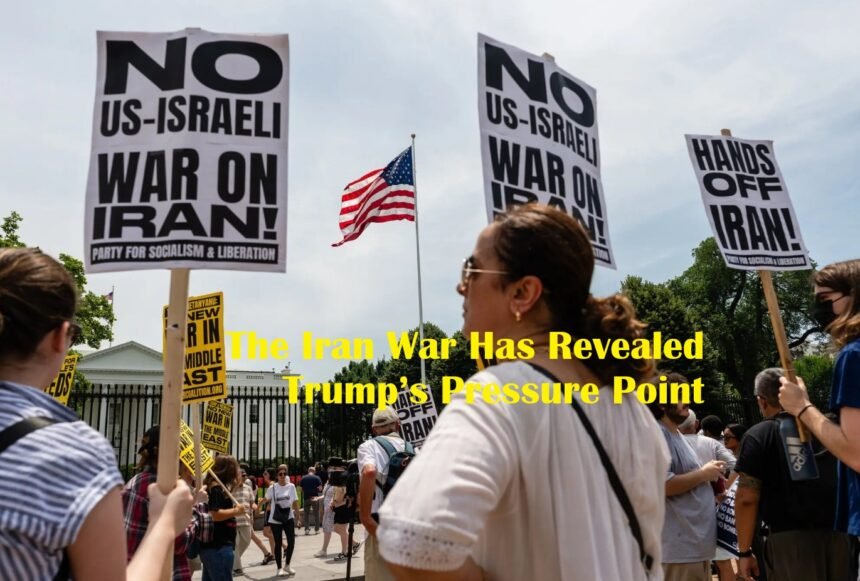
The conflict between the United States and Iran in 2026 has reshaped geopolitical dynamics in the Middle East. It has also exposed a critical vulnerability in President Donald Trump’s leadership style. While military power has dominated headlines, the real battleground has shifted toward economics. The war has shown that financial stability, not military outcomes, represents Trump’s most sensitive pressure point.
A War That Quickly Became Economic
The war began with joint U.S. and Israeli strikes on Iran in late February 2026. The objective was clear: weaken Iran’s military capabilities and force concessions on its nuclear ambitions. Early operations caused significant damage to Iranian infrastructure and defense systems.
However, Iran responded with a different strategy. Instead of relying solely on military retaliation, it targeted global energy flows. The Strait of Hormuz, a critical artery for oil shipments, became the focal point of this approach. Disruptions in this narrow waterway affected a significant portion of the global energy supply.
Oil prices surged as shipments slowed. Inflation pressures increased worldwide. The economic consequences spread far beyond the battlefield. This shift transformed the conflict into a global financial issue rather than a purely military confrontation.
The Strait of Hormuz as a Strategic Weapon
Iran’s ability to disrupt the Strait of Hormuz proved decisive. Approximately one-fifth of the world’s oil passes through this route. Even temporary closures caused immediate market reactions. Shipping companies hesitated to enter the region. Insurance costs rose sharply. Energy markets became volatile.
The United States and its allies faced growing pressure to stabilize the situation. A temporary reopening of the strait during a ceasefire brought relief. Yet uncertainty remained high. Iran warned that it could close the route again if tensions escalated. This threat gave Tehran leverage despite its military losses.
Economic Fallout Hits Washington
The economic consequences quickly reached the United States. Rising oil prices pushed up gasoline costs. Inflation concerns intensified. Financial markets showed signs of stress. These developments created political risks for Trump. His administration has often emphasized economic performance as a key measure of success.
Strong markets and low inflation have been central to his messaging. The war disrupted that narrative. Analysts noted that Iran managed to impose economic costs that U.S. officials had underestimated. This shift increased pressure on the White House to adjust its strategy.
Markets and Political Sensitivity
Financial markets played a crucial role in shaping the administration’s response. Stocks, bonds, and energy prices became indicators of political stability. When volatility increased, pressure mounted on policymakers. Research has suggested that Trump closely monitors market performance.
Sharp declines in equities or rising bond yields can influence policy decisions. This sensitivity reflects the importance of economic indicators to his leadership approach. The war highlighted this dynamic. As inflation rose and markets reacted, calls for de-escalation grew louder. The administration began to shift its tone from confrontation to negotiation.
Shift Toward Diplomacy
Diplomatic efforts gained momentum as economic pressures intensified. Trump signaled optimism about a potential deal with Iran. Negotiations were scheduled, and a ceasefire created space for talks. The change in strategy reflected practical concerns. Continued conflict risked further economic damage.
Higher energy prices could weaken domestic support. Global recession fears added urgency to the situation. Iran understood this leverage. By maintaining pressure on energy markets, it strengthened its negotiating position. The balance of power shifted from military strength to economic resilience.
Global Repercussions
The war’s impact extended beyond the United States and Iran. Allies in Europe and Asia faced higher energy costs. Supply chains experienced disruptions. Economic uncertainty spread across regions. Some countries struggled more than others. Energy-importing nations felt the immediate effects of price spikes.
Industrial sectors faced rising costs. Consumers encountered higher prices for goods and services. The situation also strained alliances. Partners questioned the predictability of U.S. policy. The conflict introduced new risks into global markets. These developments complicated diplomatic relationships and long-term cooperation.
Domestic Pressure Builds
At home, the economic fallout created challenges for the administration. Rising fuel prices affected households. Businesses faced increased operating costs. Farmers dealt with shortages and higher input prices. Public opinion began to shift. Economic concerns often outweigh foreign policy issues for voters.
As costs rose, criticism of the war intensified. Political opponents highlighted the financial burden of the conflict. The administration responded by emphasizing progress in negotiations. Officials sought to reassure markets and the public. Yet uncertainty persisted, keeping pressure on policymakers.
Iran’s Strategic Calculation
Iran’s approach demonstrated a clear understanding of its opponent. While it faced military disadvantages, it exploited economic vulnerabilities. Control over energy routes became a powerful tool. This strategy allowed Iran to remain resilient. Despite damage to its infrastructure, it retained influence over global markets.
The ability to disrupt oil flows provided leverage that offset battlefield losses. The war showed that modern conflicts extend beyond military engagements. Economic instruments can shape outcomes in ways that traditional law cannot.
Lessons for Future Conflicts
The Iran war offers important lessons for global politics. Economic interdependence has changed the nature of warfare. Countries can exert influence through markets as well as military القوة. For the United States, the conflict highlights the need to consider economic resilience in strategic planning.
Military strength alone cannot guarantee success. Financial stability and energy security play critical roles. For Trump, the lesson is more personal. The war has revealed that economic performance remains his most sensitive vulnerability. Market reactions and inflation trends can influence policy decisions more than battlefield developments.