



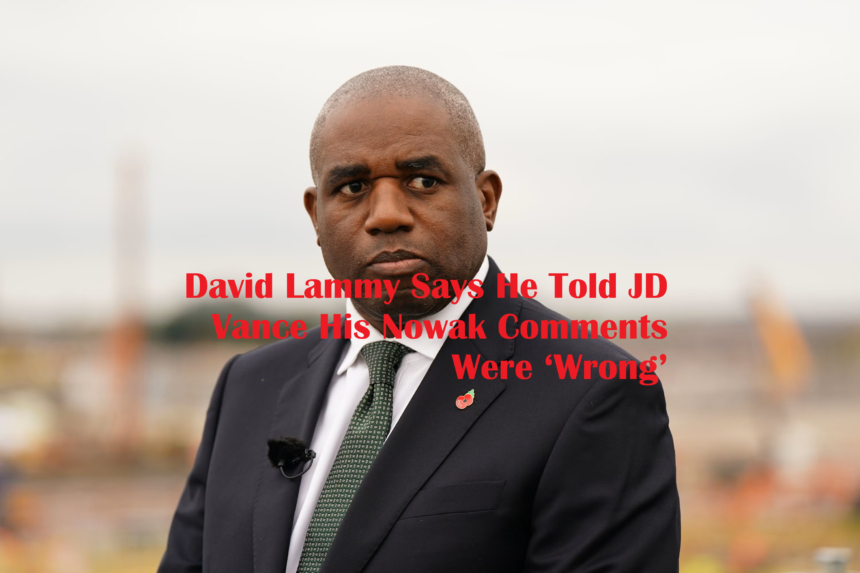
A political disagreement between the United Kingdom and the United States has drawn international attention after Deputy Prime Minister David Lammy revealed that he personally told U.S. Vice President JD Vance that his comments about the murder of Henry Nowak were “wrong.”
The dispute centers on Vance’s claim that mass migration contributed to the tragic death of the British teenager. Lammy strongly rejected that argument and said he raised his concerns directly during a phone conversation with the vice president.
The exchange highlights growing tensions over immigration, public safety, and political rhetoric. It also reflects the broader debate surrounding the circumstances of Nowak’s death and the public reaction that followed.
The Background of the Case
Henry Nowak, an 18-year-old British student, died after a fatal stabbing incident that shocked communities across the United Kingdom. The case attracted national attention because of the events surrounding the attack and the police response.
Authorities later convicted Vickrum Digwa of the murder. British officials emphasized that the case involved a British citizen and did not stem from immigration-related issues. Investigations into the handling of the incident and the actions of law enforcement remain ongoing.
The tragedy sparked widespread public discussion. Many citizens expressed concern about policing practices, public safety, and the criminal justice system. Political figures from several countries also weighed in on the case, turning it into an international topic of debate.
JD Vance’s Comments Trigger Controversy
The controversy intensified when JD Vance connected the murder to what he described as Europe’s failure to control migration. In public remarks, Vance argued that European leaders had allowed policies that contributed to social instability.
He suggested that mass migration played a role in the circumstances that led to Nowak’s death. His comments quickly generated strong reactions from politicians, commentators, and members of the public. Critics argued that the vice president presented an inaccurate picture of the case.
They pointed out that the convicted killer was a British citizen and that authorities had found no link between the murder and immigration. Supporters of Vance defended his broader concerns about migration policies and public security. The disagreement soon became a diplomatic issue as British leaders responded publicly to the remarks.
Lammy Responds Directly
David Lammy chose to address the issue personally. According to his account, he spoke with Vance during a direct phone call and challenged the vice president’s interpretation of the case. Lammy said he told Vance that the murder had “nothing to do with mass migration.” He argued that the facts did not support the connection that Vance had made.
Lammy also stressed that Britain’s legal and democratic institutions were actively addressing the issues raised by the case. During interviews, Lammy described the conversation as robust but respectful. He explained that he and Vance maintain a working relationship despite their political differences.
According to Lammy, the discussion allowed both sides to exchange views while remaining professional. The deputy prime minister emphasized that disagreement between allies does not prevent constructive dialogue. He noted that strong partnerships often involve honest conversations when leaders see issues differently.
A Call for Unity
Lammy also highlighted the wishes of the Nowak family. He said he reminded Vance that family members had asked people not to use the tragedy to promote division or hatred. According to Lammy, public figures should respect those wishes and avoid turning the case into a political weapon.
He argued that inflammatory rhetoric could deepen tensions during an already emotional period. The family has repeatedly encouraged calm and constructive discussion.
Their statements have focused on seeking justice and improving public safety rather than fueling political conflict. Lammy said he raised these concerns directly with the vice president because he believed responsible leadership requires careful language during sensitive situations.
Broader Debate Over Immigration
The disagreement reflects a larger political debate that extends beyond a single criminal case. Immigration remains one of the most controversial issues in both Europe and North America. Political leaders often disagree about the relationship between migration, public safety, and social cohesion.
Supporters of stricter immigration policies argue that governments must strengthen border controls and address public concerns. Others believe politicians sometimes oversimplify complex social problems by linking them to migration. The Nowak case became part of that broader discussion because of the strong emotions surrounding the tragedy.
As a result, statements from senior political figures attracted significant attention both inside and outside the United Kingdom. Lammy’s response signals that the British government wants public debate to remain grounded in verified facts rather than assumptions or political narratives.
The UK Government’s Position
British officials have consistently rejected claims that immigration played a role in the murder. Lammy stated that the convicted killer was British and that the facts of the case do not support the conclusions presented by Vance.
Prime Minister Keir Starmer’s government has also pushed back against suggestions that outside political figures should influence the national conversation surrounding the incident. Government leaders have instead focused on ongoing investigations into police conduct and broader questions about public trust in law enforcement.
They argue that these issues deserve careful examination without introducing unrelated political arguments. Officials believe that independent reviews and legal processes should determine accountability rather than social media debates or political campaigns.
UK-US Relations Remain Strong
Despite the disagreement, neither side has suggested that the dispute will damage the broader relationship between the United Kingdom and the United States. Lammy described the conversation as respectful and indicated that he and Vance remain able to work together on important issues.
Their exchange demonstrates how allies can disagree openly while maintaining diplomatic ties. Political observers note that differences between allied governments are common.
Leaders often challenge one another’s views while continuing to cooperate on economic, security, and foreign policy matters. In this case, the disagreement centered on the interpretation of a specific event rather than a major strategic issue. As a result, analysts expect both governments to move forward while continuing discussions on shared priorities.