



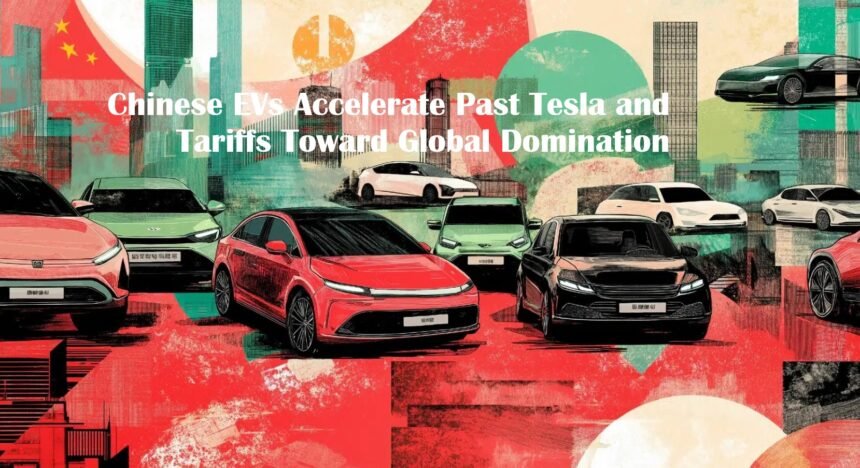
Chinese electric vehicle (EV) makers have surged ahead of long-time industry leader Tesla, overcoming steep tariffs and global trade barriers as they expand worldwide.
The rapid growth of Chinese automakers, particularly BYD, highlights a dramatic shift in the global automotive landscape. This shift is reshaping international competition, consumer preferences, and trade policies across key markets in Europe, North America, and beyond.
The Rise of Chinese EV Makers
In 2025, Chinese EV manufacturers achieved an unprecedented global breakthrough. Led by BYD, China’s most prominent electric vehicle maker, exports and sales outside China grew at exceptional rates. BYD alone delivered over 1 million vehicles beyond China, more than double the previous year’s total.
This performance occurred despite tariffs and restrictive trade policies in the United States, the European Union, and Mexico. These barriers were intended to protect local manufacturers and slow the influx of Chinese imports, yet they have not halted the momentum of Chinese EVs.
Export Expansion Despite Trade Barriers
Chinese EVs faced steep trade hurdles in major markets. In Europe, tariffs were applied to vehicles imported from China, raising the cost of Chinese models in key EU markets. The U.S. maintained high duties and various restrictions on software and components tied to Chinese vehicles.
Mexico also increased tariffs to 50% on vehicles from countries lacking free-trade agreements, including China. However, Chinese automakers responded with strategic expansion.
BYD and others have increased localized operations in foreign markets and cultivated partnerships to circumvent some of these restrictions. In Canada, for example, tariffs were reduced dramatically to 6.1% under a new trade agreement, making Chinese EV imports more competitive.
These adjustments reflect broader industry responses to global trade realities. Chinese companies are exploring production in overseas factories, employing local workforces, and adjusting their product strategies to appeal to diverse consumer bases.
Consumer Demand and Competitive Pricing
Consumer demand has been a powerful driver of Chinese EV success. In Europe, Chinese brands like BYD have captured significant market attention with a wide range of models. Many of these vehicles offer high-tech features, competitive pricing, and attractive financing options.
For example, vehicles like the BYD Sealion 7 compete directly with European luxury brands, providing comparable features at lower prices. These offerings have broadened Chinese appeal beyond budget-conscious buyers to include more affluent customers who might otherwise choose German or other Western brands.
In Mexico, affordable models such as the BYD Dolphin Mini have attracted a range of buyers, including ride-share drivers looking for cost-efficient solutions. Such models leverage strong battery efficiency and feature sets that meet diverse driving needs at lower ownership costs.
Strategic Market Positioning
Chinese EV makers have actively tailored their strategies for foreign markets. Localization has become a key priority. Employing local sales staff, adjusting marketing approaches, and understanding regional preferences have helped brands like BYD appeal to consumers across different cultural and economic environments.
These strategies reflect a broader push to establish a global brand identity rather than being seen solely as low-cost alternatives. Chinese EV makers are investing in infrastructure like dealer networks and service centers, which are critical for long-term brand trust. Such investments have supported rapid dealer expansion across Europe and other regions.
Production and Capacity Advantage
China’s EV production capacity has emerged as another competitive edge. The country leads global EV production by a wide margin, with factories capable of manufacturing tens of millions of vehicles annually. This scale allows Chinese EV makers to leverage economies of scale, reduce per-unit costs, and invest heavily in innovation.
In comparison, Western manufacturers often operate with smaller volumes and higher production costs. Chinese firms’ integration across battery manufacturing, supply chains, and vehicle assembly has strengthened their cost positions and competitiveness.
Tesla’s Shifting Position
Tesla, once dominant in the global EV sector, has experienced slowing sales in some regions. While Tesla continues to be a major brand, several factors have constrained its growth. In Europe and other markets, Chinese competitors have closed gaps with well-priced alternatives that resonate with local buyers.
Additionally, Tesla has faced challenges related to shifting consumer preferences, slower adoption in certain segments, and ongoing debates around its product roadmap and pricing strategies. This has opened opportunities for agile competitors from China to claim market share.
Looking Ahead: Global Reign or Continued Competition?
The rapid global expansion of Chinese EVs does not guarantee uninterrupted dominance. Tariff policies and geopolitical tensions remain fluid. While Canada’s reduction of tariffs has opened a new market opportunity for Chinese imports, other regions continue to debate protectionist measures and strategies to support domestic EV makers.
Yet, the trajectory of Chinese EV makers suggests they are poised to remain influential players in the global auto market for years to come. Their aggressive international expansion, cost advantages, and growing brand recognition paint a picture of sustained competition with legacy Western manufacturers.
Chinese companies are also placing emphasis on innovation in battery technology, autonomous systems, and vehicle design. Continued R&D investment and global partnerships could shape the next generation of EV offerings and further enhance their appeal to consumers worldwide.
Conclusion
Chinese electric vehicle makers have achieved a remarkable ascent in the global market, surpassing long-established rivals like Tesla and navigating through tariffs and trade barriers to claim broader international success.
Through consumer-focused pricing, local market adaptation, vast production capacity, and strategic expansion, companies such as BYD are redefining what competitive leadership looks like in the evolving EV landscape. As global demand for sustainable transportation grows, Chinese EVs are well positioned to continue shaping the future of mobility across regions and markets.