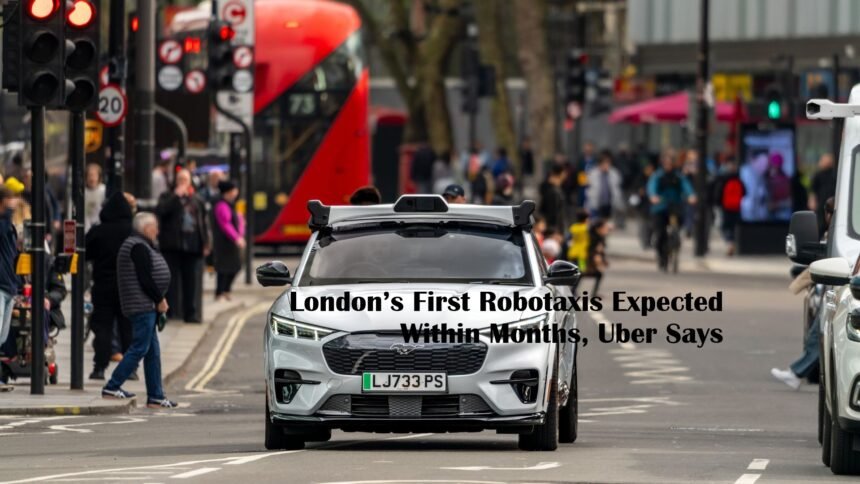
London could soon join the growing list of global cities embracing autonomous transportation. According to Uber, the British capital may see its first robotaxis operating within months, marking a significant milestone for the future of urban mobility.
The announcement comes as governments, technology companies, and transportation providers continue investing heavily in self-driving vehicle technology. Supporters believe autonomous vehicles can improve safety, reduce congestion, and expand transportation access.
Critics, however, continue raising questions about regulation, reliability, and public acceptance. If the plans move forward as expected, London could become one of Europe’s leading testing grounds for commercial robotaxi services.
Uber Sees Major Opportunity in London
Uber believes London offers a strong environment for autonomous vehicle deployment. The city has one of the world’s largest ride-hailing markets and a population that frequently relies on public and private transportation. Company executives have stated that recent changes in government policy create an opportunity to accelerate autonomous vehicle adoption.
The United Kingdom has taken steps to support innovation while developing regulatory frameworks that address safety concerns. Uber expects robotaxi services to begin operating in limited areas before expanding to broader sections of the city.
The company plans to work closely with technology partners and government agencies throughout the rollout process. Executives view London as a critical market because it influences transportation trends across Europe. Success in the city could encourage similar deployments in other major urban centers.
The UK Government Supports Autonomous Technology
The British government has shown increasing interest in autonomous transportation. Officials believe self-driving technology can strengthen economic growth, attract investment, and position the country as a global leader in innovation. Lawmakers have worked to establish rules that allow companies to test and eventually operate autonomous vehicles on public roads.
These regulations aim to balance innovation with public safety. Government leaders argue that autonomous transportation could create thousands of jobs across technology, engineering, manufacturing, and support industries.
They also expect investment in the sector to generate long-term economic benefits. Support from policymakers has played a key role in encouraging companies such as Uber and autonomous vehicle developers to consider large-scale operations in the United Kingdom.
What Are Robotaxis?
Robotaxis are self-driving vehicles that transport passengers without requiring a human driver behind the wheel. Advanced software, cameras, radar systems, and sensors guide these vehicles through traffic and help them respond to changing road conditions. Passengers typically book robotaxis through a mobile application, similar to traditional ride-hailing services.
The vehicle then arrives at the pickup location and completes the trip autonomously. Developers have spent years refining the technology. Modern autonomous systems can recognize pedestrians, interpret traffic signals, and navigate complex urban environments.
Companies involved in the industry believe robotaxis can eventually provide transportation at lower costs while improving efficiency and reducing human error. Many technology firms consider autonomous ride-hailing one of the most promising applications of artificial intelligence in transportation.
London Presents Unique Challenges
While London offers significant opportunities, it also presents unique challenges for autonomous vehicles. The city contains some of the busiest and most complicated roads in Europe. Narrow streets, heavy traffic, cyclists, buses, and large numbers of pedestrians create demanding conditions for any transportation system.
Autonomous vehicles must successfully navigate historic neighborhoods, complex intersections, and unpredictable traffic patterns. Developers need extensive testing to ensure vehicles can operate safely in these environments. Weather conditions also create challenges. Rain, fog, and changing visibility can affect sensor performance and require sophisticated software solutions.
Because of these factors, many experts view London as one of the toughest real-world testing environments for autonomous transportation technology. Companies that succeed in London may gain valuable experience that helps them expand into other major cities worldwide.
Global Competition Continues to Grow
London’s planned robotaxi launch reflects a broader global race among technology and transportation companies. Several cities in the United States, China, and the Middle East already host autonomous vehicle pilot programs or commercial services. Companies continue investing billions of dollars to gain an advantage in the rapidly evolving market.
The competition focuses not only on technology but also on public trust. Consumers must feel comfortable using autonomous transportation before the industry can achieve widespread adoption. Uber aims to position itself as a leading platform for robotaxi services.
Rather than developing all technology in-house, the company often collaborates with specialized autonomous-vehicle developers. This strategy allows Uber to leverage existing expertise while expanding its transportation network. Industry analysts expect partnerships to play an increasingly important role as autonomous transportation becomes more common.
Potential Benefits for Passengers
Supporters of robotaxis point to several potential advantages for passengers. Improved safety ranks among the most frequently cited benefits. Human error contributes to many traffic accidents each year. Autonomous systems do not become distracted, fatigued, or impaired. Robotaxis could also increase transportation availability.
Self-driving vehicles can operate for extended periods and serve customers throughout the day and night. Some experts believe autonomous ride-hailing may eventually reduce transportation costs. Lower operating expenses could translate into more affordable trips for consumers.
Accessibility represents another potential benefit. Autonomous transportation could provide additional mobility options for elderly individuals and people with disabilities.
Urban planners also suggest that widespread adoption of autonomous vehicles may contribute to more efficient traffic management and reduced congestion. While these benefits remain largely theoretical in some markets, supporters believe real-world deployments will help demonstrate the technology’s value.
Concerns About Safety and Regulation
Despite growing enthusiasm, concerns remain. Safety continues to dominate public discussions about autonomous vehicles. Even a small number of high-profile incidents can influence public perception and slow adoption. Regulators require extensive testing and detailed safety evaluations before approving commercial operations.
Companies must demonstrate that their systems can handle a wide variety of road situations. Privacy concerns also emerge in discussions about autonomous transportation. Robotaxis rely on large amounts of data to navigate safely and efficiently. Some observers want stronger protections regarding how companies collect and use that information.
Labor groups have also expressed concerns about the long-term impact of automation on professional drivers. These issues remain central to the debate as governments and companies work toward broader deployment.
Public Acceptance Will Be Critical
Technology alone will not determine the success of robotaxis. Public confidence will play an equally important role. Many consumers remain curious about autonomous transportation but have limited firsthand experience with self-driving vehicles. Companies must convince passengers that robotaxis provide safe, reliable, and convenient transportation.
Positive early experiences could encourage wider adoption. Education campaigns, transparent safety reporting, and gradual expansion strategies may help build trust among potential users.
Industry experts note that public acceptance often develops slowly when new transportation technologies emerge. Over time, familiarity tends to increase comfort levels and reduce skepticism. Uber and its partners understand that earning public trust represents one of the most important challenges ahead.
Looking Ahead
The prospect of robotaxis arriving in London within months signals a major step forward for autonomous transportation in Europe. Uber’s plans reflect growing confidence in both the technology and the regulatory environment supporting its development. While challenges remain, momentum continues building across the autonomous vehicle industry.
Companies, governments, and investors all see significant potential in self-driving transportation. The coming months will reveal whether London can successfully launch one of Europe’s most closely watched robotaxi programs.
If the rollout proceeds smoothly, it could accelerate autonomous vehicle adoption across the continent. For now, London stands on the verge of a transportation transformation that may reshape how millions of people travel in the years ahead.