



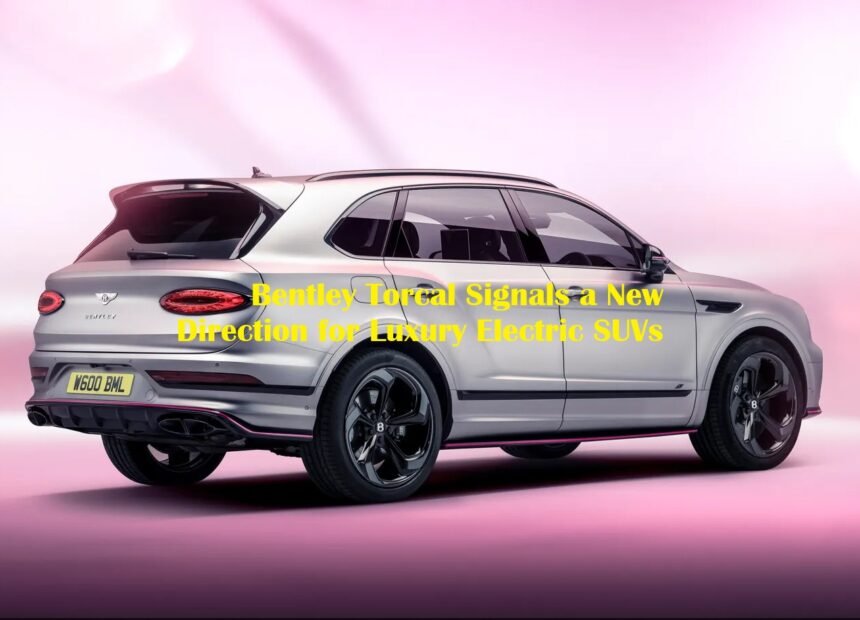
Bentley has entered the electric vehicle market with the Torcal, a new luxury SUV designed to combine zero-emission driving with the traditional styling and character associated with the British marque. Rather than treating electrification as a reason to reinvent its identity, Bentley has taken a more familiar approach by creating an electric model that remains closely connected to its established design language.
Unveiled in London on September 23, 2026, the Torcal represents an important step for Bentley as the company evaluates whether wealthy customers are prepared to embrace a fully electric vehicle without giving up the visual character and emotional appeal of a conventional Bentley. The company has also positioned the SUV at the lower end of its existing price range, potentially allowing it to reach customers beyond its traditional buyer base.
A Luxury EV Designed to Look Like a Bentley
One of the most noticeable aspects of the Torcal is its connection to Bentley’s established styling. While electric vehicles generally provide designers with more freedom because they do not require a traditional engine grille, Bentley has deliberately retained visual elements associated with its combustion-powered cars.
The SUV features diamond-shaped lighting elements and a front treatment that recalls Bentley’s traditional grille. This approach reflects the company’s intention to make the transition to electric power without abandoning recognizable design cues.
Bentley CEO Frank-Steffen Walliser said the company’s objective was to build a Bentley first, rather than create an entirely different vehicle simply because its powertrain is electric. That philosophy separates the Torcal from some recent luxury EV launches that have adopted dramatically different designs.
The strategy also reflects the importance of brand identity in the ultra-luxury automotive market. Buyers paying substantial sums for a vehicle may expect more than technology and zero-emission capability. They can also place value on heritage, craftsmanship and the visual identity associated with the manufacturer.
Creating an Electric Alternative to the Traditional V8 Experience
Moving from a combustion engine to an electric powertrain creates another challenge for luxury manufacturers: how to preserve the emotional experience associated with powerful engines. Bentley has addressed that issue with an artificial sound system designed to recreate some of the sensation of driving a V8-powered vehicle. The soundtrack uses orchestral timpani and additional percussion, with the rhythm becoming faster as the vehicle accelerates.
The solution demonstrates how Bentley is attempting to translate familiar driving characteristics into an electric environment. Instead of simply eliminating traditional engine sensations, the company has created a new interpretation intended to maintain some of the drama associated with its performance vehicles.
Torcal Targets a Broader Luxury Audience
Pricing is another major part of Bentley’s strategy. The Torcal starts at £173,000, placing it toward the lower end of the company’s range. That is significantly below Ferrari’s first electric model, which starts at around €550,000. Bentley describes the Torcal as a more accessible model within its portfolio.
The lower entry point could allow the brand to attract buyers who may not previously have considered purchasing one of its vehicles. The company has already presented the electric SUV to existing and potential customers. According to Bentley, interest has emerged from Europe, the Middle East and U.S. states where electric vehicle adoption is relatively strong.
The customer mix could also be significant. Bentley said roughly half of the interest has come from existing customers, while approximately half has come from people who are new to the brand. This suggests the Torcal is being positioned not only as an alternative vehicle for Bentley owners but also as an opportunity to expand the company’s customer base.
Bentley Takes a Cautious Approach to Electrification
The launch comes after Bentley adjusted its previous electrification ambitions. The company had delayed its first EV until 2026 and abandoned an earlier target of becoming fully electric by 2030, citing customer readiness as one factor behind the change. That decision reflects a wider challenge facing luxury automakers. Electric vehicles have expanded rapidly, but demand has not developed uniformly across markets or customer groups.
Several high-end manufacturers have therefore taken different approaches to electrification. Rolls-Royce is already selling an EV, while Lamborghini has postponed its first electric model until later in the decade. McLaren has also said it currently sees insufficient customer demand for a fully electric vehicle.
A Major Investment in UK Production
Bentley’s electric strategy also involves significant investment at its historic manufacturing site in Crewe, England. The company has committed £350 million to prepare the facility for production of the Torcal. The investment provides an industrial dimension to the EV launch beyond the vehicle itself. It reinforces Bentley’s manufacturing presence in Britain while supporting the company’s ability to produce its first fully electric model domestically.
For Bentley, the Torcal therefore represents more than a new product. It is a test of whether traditional luxury customers will accept electrification when the vehicle continues to emphasize familiar styling, premium positioning and emotional driving characteristics.
The Next Test Is Customer Demand
The Torcal gives Bentley an opportunity to measure how its customer base responds to a fully electric luxury SUV. Its combination of recognizable styling, a lower entry price within the Bentley lineup and a deliberate connection to traditional performance cues reflects a strategy built around gradual transformation rather than a complete break with the past. The company plans to begin a launch campaign in China in 2027, expanding the model’s exposure to another important luxury automotive market.
Ultimately, the success of the Torcal will depend on whether wealthy buyers consider electric power compatible with the experience they expect from Bentley. The model marks the beginning of that test, while its reception across different markets could influence how quickly the British manufacturer expands its electric portfolio in the years ahead.