



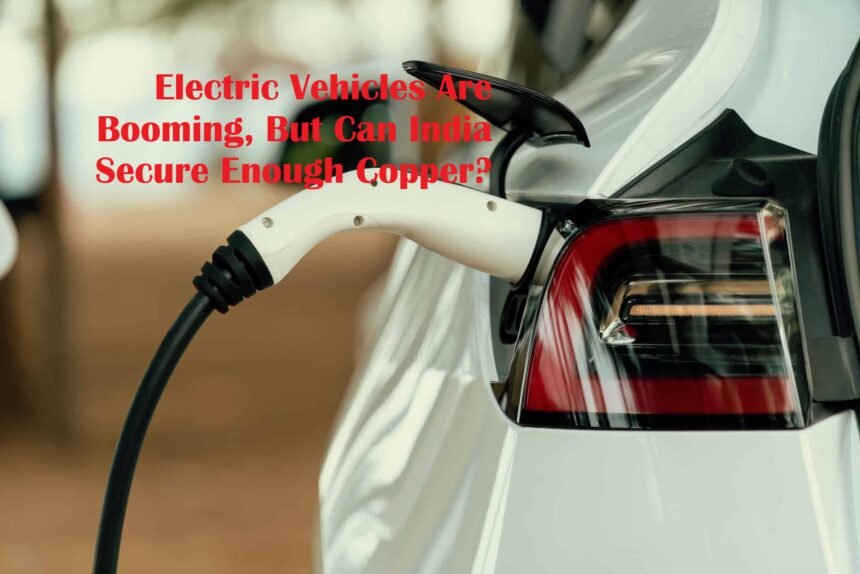
The electric vehicle (EV) revolution is transforming the automotive industry worldwide, and India is no exception. With ambitious targets to electrify its roads and slash carbon emissions, the country has witnessed rapid growth in EV adoption. This surge is driven by supportive policies, technological progress, and heightened environmental awareness among consumers.
However, this transformation comes with a critical challenge, securing enough copper to support the growing EV ecosystem. Copper is essential for electric mobility, powering everything from batteries and motors to charging networks. As India advances in electrification, it must ensure that its copper supply chain is robust and resilient.
Why Copper Matters in the EV Revolution
Copper’s role in electric vehicles cannot be overstated. An EV uses significantly more copper than a conventional internal combustion engine vehicle, with copper required in battery packs, electric motors, wiring harnesses, and charging infrastructure.
Moreover, as EV penetration increases, overall copper demand rises accordingly. With India aiming for nearly 30% EV penetration by 2030, copper has become a strategic resource at the heart of the country’s clean mobility goals.
In addition to vehicles themselves, the charging ecosystem requires vast amounts of copper. EV chargers and associated electrical infrastructure rely on copper’s excellent electrical conductivity. Without an ample supply, the development of a nationwide charging network could slow, jeopardising accessibility and convenience for EV buyers.
The Growth of EVs and Copper Demand in India
The Indian EV market has seen remarkable expansion in recent years. Sales of electric cars, scooters, and buses have surged as both consumers and fleet operators shift towards greener alternatives. Incentives such as tax reductions, subsidies, and preferential policies have encouraged manufacturers to invest in EV production.
As these vehicles flood the roads, they raise copper demand significantly. Industry projections indicate that India’s copper demand could double by 2030.
The auto segment alone is expected to account for about 25% of total copper consumption in a high-growth scenario, up from roughly 10% today. This increase reflects the sheer volume of infrastructure and vehicles that depend on copper to operate efficiently.
Domestic Production Versus Import Dependence
Despite the rising demand, India’s domestic copper production has struggled to keep pace. Current production levels fall well short of consumption, forcing the country to rely heavily on imports to meet its needs. In the year ending March 2025, India imported over one million tonnes of refined copper, highlighting the scale of the supply gap relative to domestic output.
The closure of major domestic smelting facilities in the past has exacerbated this issue. When one of the country’s largest copper processing plants was shut down, it significantly reduced the capacity to produce refined copper locally. As a result, India became increasingly dependent on foreign suppliers.
Several large domestic players hold copper production capabilities, but operational constraints and limited capacity mean that the industry cannot yet satisfy national demand. While production capacity is nominally above one million tonnes, actual output often remains lower due to infrastructure, mining challenges, and processing bottlenecks.
The Strategic Imperative of Securing Copper Supply
As electrification accelerates, India faces a strategic imperative to secure copper sources. This is true not just for vehicles but for the wider energy transition. Renewable energy infrastructure, smart grids, and other clean technologies also depend on copper, making it one of the most critical raw materials in the modern economy.
Industry estimates suggest that by 2030, India may require multiple times its current copper intake to support both clean energy and transportation needs.
This significant demand is being driven by ambitious plans for solar and wind power expansion alongside EV growth. Domestic companies and government initiatives are increasingly focused on expanding mining activities, refining capacity, and recycling.
Efforts to build new smelters and strengthen processing facilities are underway, aiming to reduce reliance on imported metal and enhance self-sufficiency. Yet, these projects take time and require considerable investment before they can fully address the supply-demand imbalance.
Challenges in Scaling Copper Supply
A major hurdle in securing copper supply for India is the long lead time involved in developing mining and processing projects. Exploration, extraction, and refinement all demand extensive planning, regulatory approval, and capital expenditure. These factors contribute to delays that can span years.
Another challenge lies in technological and economic constraints. Mining operations in India often contend with lower ore grades compared to other countries, which can make extraction less commercially viable. This limits the pace at which domestic production can be increased efficiently.
Recycling presents an opportunity to supplement the primary copper supply, but it currently plays a limited role. To truly leverage recycled copper, improvements in collection, processing, and refining infrastructure will be needed across the industry.
Geopolitical and Market Risks
India’s dependence on imported copper exposes the country to geopolitical risks and fluctuations in global commodity markets. Supply disruptions, trade barriers, and price volatility can all have a direct impact on the cost and availability of copper. When global copper prices surge, manufacturing costs for EVs and related infrastructure also rise, potentially slowing industry growth.
To mitigate these risks, India needs to diversify its import sources and build strategic partnerships abroad. Long-term contracts and investment in overseas mining assets could help secure a more stable supply of copper, reducing vulnerability to market shocks.
The Role of Policy and Industry Collaboration
Government policy will play a pivotal role in strengthening India’s copper supply chain. Incentives for mining expansion, favourable tax conditions, and support for processing and recycling facilities can all accelerate progress. Public-private partnerships are also crucial, as they pool resources, expertise, and risk-sharing mechanisms necessary to build robust supply networks.
Policy efforts that encourage domestic refinement and value addition could help India capture more of the copper value chain domestically, reducing reliance on imports. Collaboration between manufacturers, suppliers, and government bodies is essential to align strategic objectives and ensure efficient execution.