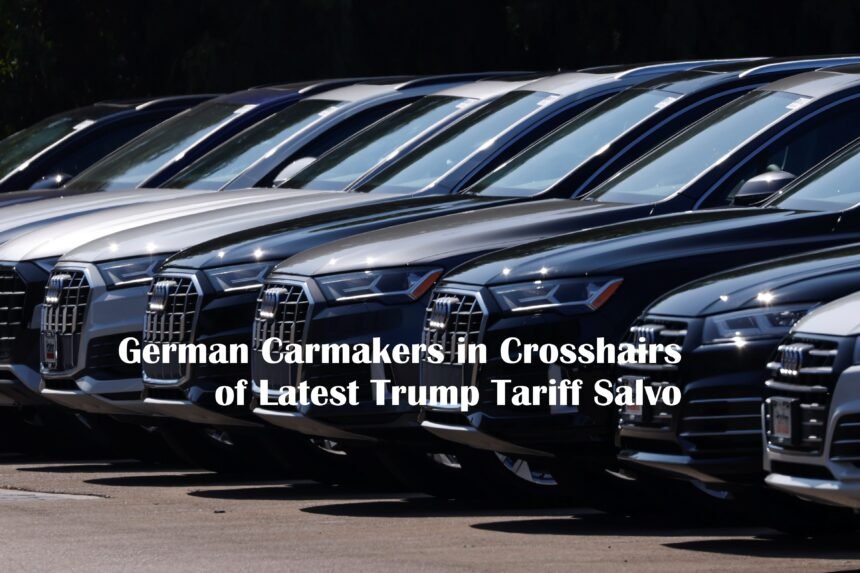
German carmakers face renewed pressure after a fresh tariff move from the United States. The policy shift has shaken markets and raised concerns across Europe. Major automotive firms now confront higher costs and rising uncertainty. The situation reflects deeper tensions in transatlantic trade relations.
Tariff Hike Sparks Immediate Market Reaction
A new tariff increase has targeted European vehicle imports. The rate has risen from 15% to 25%. This decision has triggered sharp reactions in financial markets. Shares of leading German automakers dropped soon after the announcement.
Companies such as BMW, Mercedes-Benz, Volkswagen, and Porsche recorded declines. The broader automotive sector in Europe also weakened. Investors responded quickly to the unexpected escalation. The policy shift has shaken market confidence.
The automotive index across Europe fell as traders reassessed risks. Analysts believe the tariff increase will reduce profit margins. Many firms rely heavily on exports to the United States. This dependence has amplified the impact.
Economic Pressure on Germany’s Key Industry
Germany’s economy depends strongly on its automotive sector. The tariff increase threatens this vital industry. Estimates suggest billions of euros could be lost in operating profit. Some projections indicate a long-term output loss reaching tens of billions. Economic growth in Germany already remains weak.
The added burden could further slow the recovery. Car manufacturers may respond by raising prices. Higher costs could be passed on to consumers. This strategy carries risks in a competitive global market. Demand may weaken if prices climb too high.
The pressure is not evenly distributed. Brands without production facilities in the United States face greater challenges. Export-heavy models will become less competitive. This imbalance could reshape global production strategies.
Political Motives and Trade Disputes
The tariff move has been justified by claims of non-compliance. The United States argues that the European Union failed to honor a prior agreement. European officials strongly dispute this claim. They insist that implementation delays reflect internal processes. Negotiations within the EU require time and consensus. Political considerations may also play a role.
Domestic economic priorities often influence trade decisions. The tariff increase could aim to boost local manufacturing. It may also serve electoral or strategic goals. Tensions between the two sides have increased. European leaders warn against escalation. They prefer dialogue over retaliation. However, patience may wear thin if pressure continues.
Industry Response and Strategic Adjustments
Automakers have begun to adapt to the changing environment. Some companies consider shifting production closer to the U.S. market. This approach could reduce tariff exposure. Others focus on cost efficiency and supply chain adjustments. Investments in local facilities may increase. These changes require time and significant capital.
Industry groups have called for swift negotiations. They emphasize the importance of stable trade relations. A prolonged dispute could harm both sides. The uncertainty complicates long-term planning. Companies must balance risk and opportunity. Strategic decisions now carry higher stakes.
Broader Challenges Facing the Auto Sector
The tariff issue adds to existing difficulties. Demand in key markets like China has slowed. Global economic growth remains uneven. Rising costs further strain profitability. Energy prices and geopolitical tensions also affect the industry. Supply chains remain vulnerable to disruptions. These factors create a complex operating environment.
Electric vehicle transitions require heavy investment. Automakers must fund innovation while managing costs. Tariffs make this balancing act even harder. The combination of pressures creates a challenging outlook. Companies must navigate multiple risks at once.
Potential Consumer Impact
Consumers may feel the effects of the tariff increase. Higher import duties often lead to higher vehicle prices. This outcome could reduce demand in the U.S. market. Luxury and premium brands may face particular challenges. Their vehicles often carry higher price tags.
Additional costs could push them beyond consumer budgets. At the same time, domestic producers might gain an advantage. Local manufacturing becomes more attractive under higher tariffs. This shift could reshape competition in the market.
Prospects for Negotiation and Resolution
Efforts to resolve the dispute are ongoing. European countries are working to finalize trade agreements. They aim to prevent further escalation. Negotiations between EU institutions continue. Lawmakers seek safeguards before approving deals. These discussions may determine the next steps.
Some experts advise caution. Rapid reactions could worsen tensions. A balanced approach may yield better outcomes. The timeline for resolution remains uncertain. Political dynamics on both sides will influence progress. Markets will continue to react to any developments.