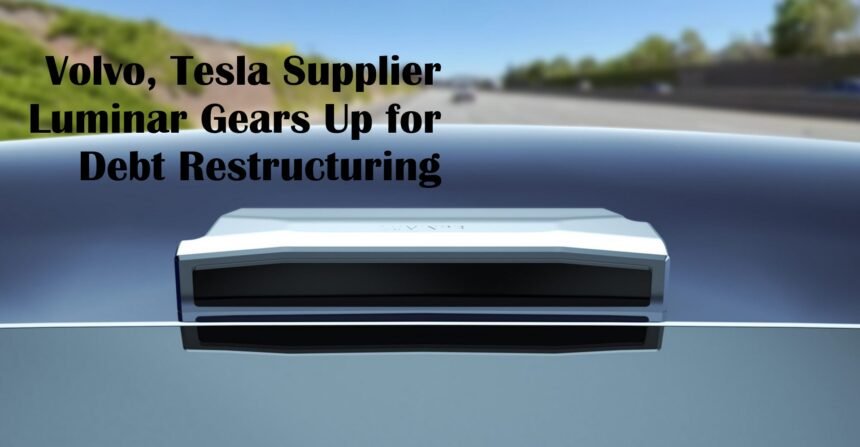
Automotive-sensor supplier Luminar Technologies has recently taken major steps to reshape its finances after missing several interest payments and facing mounting pressure following the loss of a key client. The firm is now preparing for a debt restructuring, a sign that the auto-supplier industry is experiencing severe stress.
An executive known for restructuring distressed companies has been appointed as Chief Restructuring Officer to lead the workout plan. The move came shortly after the company admitted failures to service interest on its first-lien notes due 2028.
What Led to This Situation: Contract Termination and Financial Strain
The trouble for Luminar escalated when Volvo announced it would discontinue its supplier relationship with Luminar. Previously, Luminar had supplied LiDAR sensors for Volvo’s electric vehicles. That contract had been central to Luminar’s business outlook, and its termination came as a major blow.
In response, Luminar filed for damages and suspended further commitments to supply its Iris LiDAR products to Volvo. Meanwhile, other financial woes compounded. The company has reportedly amassed hundreds of millions of dollars in debt, while its cash reserves and revenue remain under pressure.
Third-quarter disclosures in 2025 revealed revenue expectations of US$18–19 million, raising serious doubts about the firm’s ability to continue as a going concern. These factors forced the company to announce a workforce reduction of roughly 25 % and the resignation of its Chief Financial Officer.
Restructuring Strategy: What Luminar Plans to Do
To address its financial distress, Luminar is pursuing a restructuring strategy that involves both reducing debt and cutting costs. As part of this effort, the company repurchased US$50 million worth of its 2026 convertible senior notes, paying about US$30 million in cash and issuing new common stock in exchange.
After this transaction, the remaining outstanding principal of its 2026 convertible notes dropped significantly. Additionally, Luminar has reportedly pivoted its business focus away from being heavily reliant on its automotive customers; the firm is now exploring commercial, defense, and other non-automotive applications for its LiDAR and sensing technologies.
Cost savings have also been sought via workforce reductions and operational streamlining. Non-GAAP operating expenses and stock-based compensation costs were reportedly reduced dramatically year-on-year. Cash management is becoming a priority; additional capital was raised through convertible preferred stock issuance earlier in 2025.
Risks and Uncertainties — What Could Still Go Wrong
Even with debt repurchases and cost cuts, significant risks remain for Luminar. The termination of the Volvo contract reduces demand for the firm’s core sensor products, which threatens revenue stability. The outcome of the legal claim against Volvo is uncertain; there is no guarantee any compensation will be awarded or that litigation will succeed.
Moreover, liquidity remains tight. Recent filings disclosed a substantial cash burn and limited reserves, raising concern about whether the company can sustain operations if additional financing or profitable deals do not materialize. The shift toward non-automotive markets (commercial, defense, etc.) could take time during which financial pressure may continue to build.
Finally, stakeholders’ confidence could be shaken, and past performance expectations (especially related to automotive customers) may no longer be realistic, which complicates any plans for new investment or partnerships.
What This Means for Volvo, Tesla, and the Broader Auto-Tech Industry
For Volvo and Tesla, former or potential clients of Luminar, the unraveling partnership with Luminar signals a broader trend: reliance on specialized LiDAR providers may become riskier amid financial turbulence in the auto-tech supply chain.
Volvo’s decision to drop Luminar may encourage other automakers to reevaluate their supply chains. It may prompt them to diversify suppliers or invest in alternative sensor technologies. For the auto-tech industry at large, Luminar’s woes act as a cautionary tale.
The transition from R&D to large-scale production of autonomous driving hardware remains fraught with business model risks. Companies that cannot secure stable demand or manage debt exposure may face insolvency even if their technology remains cutting-edge.
At the same time, Luminar’s pivot toward commercial and defense markets suggests that adaptation and diversification remain possible, but outcomes will depend heavily on execution, demand shifts, and capital markets.