



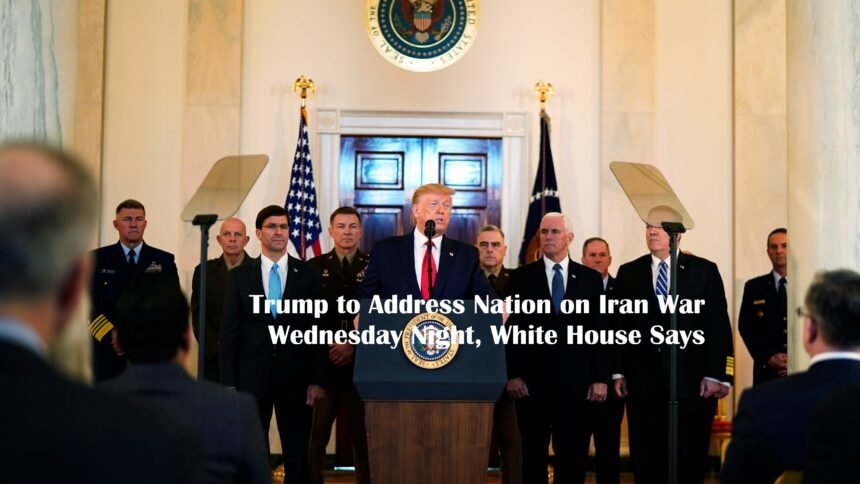
U.S. President Donald Trump is set to deliver a prime-time address to the nation regarding the ongoing war with Iran. The announcement was confirmed by the White House, signaling a critical moment in the conflict and raising expectations of a major policy update. The speech is scheduled for Wednesday at 9 p.m. Eastern Time and is expected to outline the administration’s next steps.
Background of the Iran Conflict
The war between the United States and Iran has intensified since late February, when coordinated military operations began. U.S. and allied forces targeted key Iranian military and strategic facilities. In response, Iran launched retaliatory strikes across the region, including attacks on U.S. bases and allied nations.
The conflict has disrupted global stability. Oil markets have experienced sharp fluctuations, and shipping routes such as the Strait of Hormuz have faced significant risks. These developments have increased economic pressure worldwide and heightened geopolitical tensions.
White House Announcement
The White House confirmed that Trump will address the American public directly to provide, as officials describe it, an “important update” on the war. Press Secretary Karoline Leavitt shared the announcement, emphasizing the significance of the upcoming address.
The timing of the speech suggests that key decisions may soon be revealed. Observers expect Trump to clarify military objectives, future operations, and the broader strategy toward Iran. The administration has provided limited details so far, fueling speculation about possible outcomes.
Signals of a Possible End to the War
Recent statements from Trump indicate that the conflict may be nearing its conclusion. He has suggested that U.S. forces could withdraw within two to three weeks. This timeline has drawn attention from both domestic and international audiences. Trump has also emphasized that the primary objective is to prevent Iran from developing nuclear weapons.
According to his remarks, that goal has largely been achieved. As a result, a prolonged military presence may no longer be necessary. These signals have led to growing speculation that the upcoming address could include an announcement about de-escalation or withdrawal. However, no official confirmation has been provided yet.
Strategic Considerations
The administration’s strategy appears to focus on limiting U.S. involvement while maintaining pressure on Iran. Trump has stated that responsibility for securing key global trade routes should fall on other nations. This includes the Strait of Hormuz, a vital channel for global oil shipments.
This position reflects a broader shift in U.S. foreign policy. The administration has shown reluctance to commit to long-term military engagements. Instead, it prioritizes rapid operations aimed at achieving specific objectives.
At the same time, critics argue that a quick withdrawal could create instability. Regional allies may face increased risks, and unresolved tensions could lead to future conflicts. These concerns are likely to influence reactions to Trump’s speech.
Global and Economic Impact
The war has already affected global markets. Oil prices surged during the early stages of the conflict but have recently shown signs of decline. This shift reflects expectations that the situation may stabilize soon. Energy costs remain a major concern for consumers and governments alike. Rising fuel prices have contributed to inflation and economic uncertainty.
A potential end to the war could ease these pressures and restore market confidence. In addition, international relations have been strained. Some U.S. allies have expressed hesitation about deeper involvement in the conflict. This has created friction within alliances and raised questions about future cooperation.
Domestic Political Implications
Trump’s address also carries significant political implications. The war has become a central issue in U.S. politics, influencing public opinion and shaping policy debates. Supporters argue that the administration has achieved its objectives and demonstrated strong leadership.
They point to the reported weakening of Iran’s military capabilities as a key success. Opponents, however, question the long-term effectiveness of the strategy. They raise concerns about the human and economic costs of the conflict. The upcoming speech may play a crucial role in shaping public perception.
What to Expect from the Address
The nation will be watching closely as Trump delivers his remarks. Several key questions remain unanswered:
- Will the U.S. announce a timeline for withdrawal?
- How will the administration define victory in the conflict?
- What role will diplomacy play moving forward?
The speech may also address broader regional issues. These include security concerns, alliances, and economic recovery. Clear communication will be essential to reassure both domestic and international audiences.