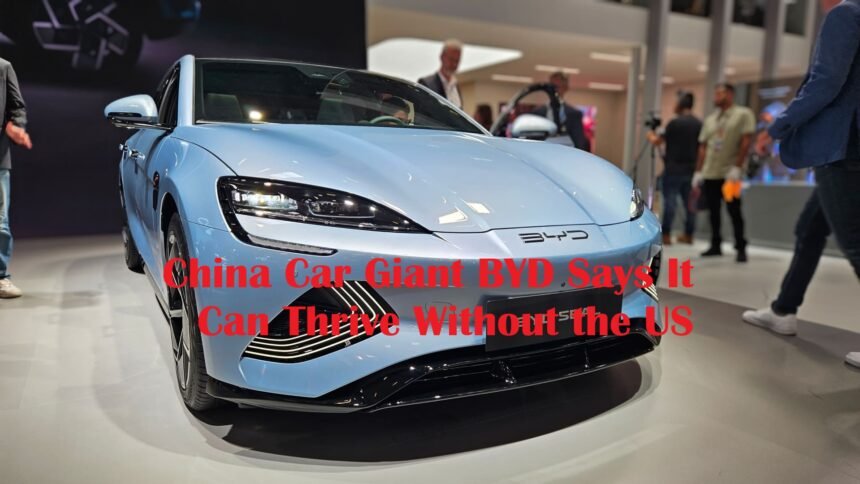
The global electric vehicle market is shifting quickly. Chinese automaker BYD has emerged as a dominant force. Recent statements from company executives highlight a bold position. The firm believes it can succeed without entering the United States market. This stance reflects deeper changes in the global auto industry.
A Confident Statement from BYD
A senior executive from BYD made a clear claim. The company can grow and remain profitable without access to the US market. The statement was delivered during a major auto event in Beijing. Stella Li emphasized current success. She explained that the company already performs strongly worldwide.
Demand continues to rise in multiple regions. In fact, production capacity struggles to keep up. This situation creates an unusual challenge. Many automakers seek more customers. BYD instead needs to increase supply. That difference highlights its strong market position.
Barriers to the US Market
The United States remains difficult for Chinese carmakers. Strict regulations and high tariffs limit entry. Officials in the US have raised concerns about security and subsidies. These concerns affect companies like BYD. Trade restrictions also play a role.
Policies discourage the import of Chinese electric vehicles. As a result, market access remains limited. Rather than waiting for policy changes, BYD has shifted strategy. The company now focuses on regions with fewer barriers. This approach allows faster expansion and fewer complications.
Global Expansion Beyond America
BYD has turned its attention to international markets. Growth in Asia, Europe, and Latin America has accelerated. These regions offer strong demand for electric vehicles. Rising fuel prices influence consumer behavior. Many buyers seek cheaper alternatives to gasoline vehicles. Electric cars provide long-term savings. That trend supports BYD’s expansion.
The company has also increased exports. Sales volumes outside China continue to rise each year. Overseas markets now play a critical role in its strategy. This diversification reduces reliance on any single region. It also protects the company from political risks.
Strong Demand Drives Growth
Demand for BYD vehicles has grown rapidly. In several markets, supply cannot meet orders. This imbalance shows strong consumer interest. Electric vehicles are becoming more attractive globally. Environmental concerns and fuel costs push adoption. Governments also support cleaner transportation.
BYD benefits from these trends. Its vehicles offer competitive pricing and advanced features. Buyers in emerging markets find them especially appealing. The company’s challenge lies in scaling production. Expanding factories and supply chains will be essential. Without this, growth could slow despite strong demand.
Innovation as a Key Advantage
Technology plays a major role in BYD’s strategy. The company invests heavily in battery development. It produces many components in-house. This vertical integration gives it an edge. One major innovation involves fast-charging technology. New systems reduce charging time significantly. This feature addresses a common concern among buyers.
Range anxiety has long limited EV adoption. Faster charging reduces that concern. It makes electric cars more practical for daily use. BYD also develops its own battery systems. These technologies improve efficiency and durability. As a result, the company competes on more than price alone.
Competing Without the US
The US market is large but not essential for BYD. Other regions provide enough growth opportunities. Europe and Asia show strong adoption rates. Latin America also presents emerging demand. By focusing on these areas, BYD avoids regulatory hurdles. It can allocate resources more efficiently.
This strategy supports faster expansion. The company’s leadership sees global demand as sufficient. They believe success does not depend on entering every market. This mindset challenges traditional assumptions in the auto industry.
Changing Global Automotive Power
The rise of BYD reflects a broader shift. Chinese automakers are gaining influence worldwide. They now compete with established Western brands. BYD has already achieved major milestones. It became one of the top electric vehicle sellers globally. Its growth continues to accelerate.
This shift changes the balance of power. Innovation and production are no longer concentrated in one region. Instead, competition has become truly global. Events like the Beijing Auto Show highlight this change. New technologies and models attract international attention. Chinese companies now lead in several areas.
Challenges Still Ahead
Despite strong growth, challenges remain. Competition within China has intensified. Price wars among manufacturers affect profits. Global expansion also brings complexity. Different markets require different strategies. Regulations, infrastructure, and consumer preferences vary widely.
Production capacity remains a key issue. Meeting rising demand will require investment. Supply chains must remain stable and efficient. BYD must also maintain quality and reliability. As it expands, expectations from global customers will increase.
Future Outlook
The future looks promising for BYD. The company continues to invest in innovation and expansion. Its strategy focuses on high-growth regions. Electric vehicles will likely dominate the automotive industry. Demand will increase as technology improves. Governments will continue supporting clean energy solutions.
BYD appears well-positioned to benefit. Its ability to scale production will determine long-term success. The decision to operate without the US market reflects confidence. It shows that global opportunities can outweigh regional limitations.