



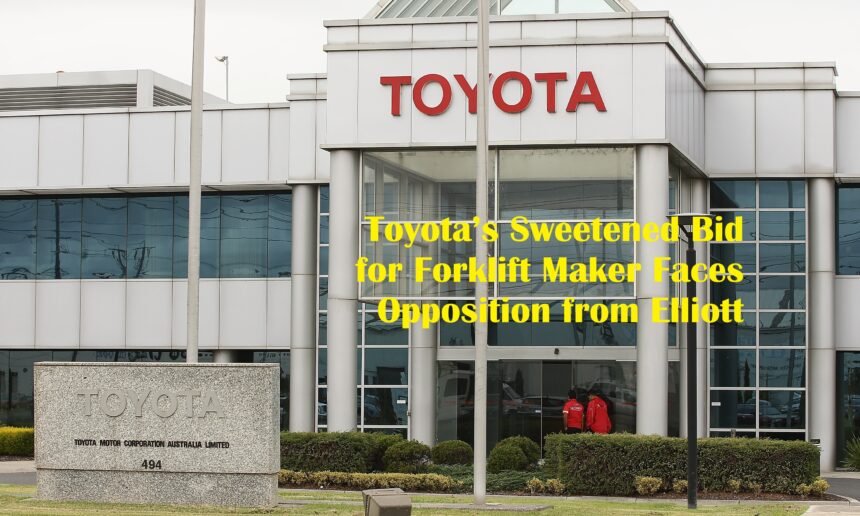
Toyota Motor Corporation’s recent move to sweeten its buyout offer for Toyota Industries Corp has become a major story in Japan’s corporate landscape.
The automotive giant increased its bid to take a key forklift and engine maker private, but this effort ran into strong resistance from activist shareholder Elliott Investment Management. The dispute highlights complex issues around valuation, corporate governance, and shareholder influence in major buyouts.
Background: The Revised Offer
In mid-January, Toyota Motor, together with its real estate arm and Chairman Akio Toyoda, raised its proposed tender offer for Toyota Industries shares by 15%. The new price was set at 18,800 yen per share, valuing the company at around 5.6 trillion yen (roughly $35 billion).
This offer followed an earlier proposal of 16,300 yen per share, which had faced criticism from global investors for being undervalued. The tender period officially opened on January 15 and is scheduled to run until February 12. Toyota executives said the higher offer reflects changes in market conditions and the performance of Toyota Industries’ business since the initial bid was made.
Toyota Industries, a long-established affiliate of the Toyota group, is a major manufacturer of forklifts, engines, and industrial machinery. Its roots go back to the early history of Toyota’s corporate development, and it supplies products not only to the Toyota group but also to other industrial clients.
Activist Opposition: Elliott’s Stance
Despite the higher offer, Elliott Investment Management publicly declared it would not tender its shares under the new terms. Elliott holds a roughly 5% stake in Toyota Industries and believes the revised offer still “very substantially undervalues” the company.
According to Elliott, Toyota Industries’ valuable assets and stakes in other Toyota group companies together imply a fair value well above the current offer price—potentially more than ¥25,000 per share. Elliott also stated its intention to encourage other shareholders not to support the proposal unless the terms improve.
This activism demonstrates the growing influence of investors seeking greater returns in major corporate transactions. In this case, Elliott’s pressure has not only prompted Toyota to improve its offer but also drawn more attention to how the deal is structured and communicated to shareholders.
Market Reaction and Shareholder Sentiment
Toyota Industries’ share price responded strongly to the revised bid. Before Elliott’s opposition was announced, the stock climbed to a record high, trading above the new offer price. This movement reflected investor hopes that Toyota might offer an even higher bid or that other outcomes could materialize in the tender process.
The fact that the share price rose above the tender price suggests that investors may believe the company’s intrinsic value is greater than the current offer price. Some minority shareholders and market analysts have pushed for a premium that more closely reflects recent gains in the company’s business and asset holdings.
This dynamic creates a situation where Toyota must balance its strategic objectives with the expectations of the market and activist investors, who are now more vocal in seeking value maximization.
Strategic Importance of Toyota Industries
Toyota Industries holds a significant position within the broader Toyota group network. It was originally spun off from Toyota Motor and has maintained a distinct listing on the stock exchange. Beyond forklifts, the company produces engines, auto parts, and industrial machinery that tie into Toyota’s broader operations and supply chain.
By taking the company private, Toyota aims to tighten its integration and control over a key supplier. Such consolidation could streamline operations and align strategic goals more closely with the parent company. However, such moves can also stir debate over minority shareholder rights and the valuation methods used in buyouts.
Investors and analysts closely watching the tender process have raised concerns about transparency and whether Toyota has adequately factored in the rising value of assets held by Toyota Industries and its group stakes. These concerns contributed to the initial criticism of the first bid and remain central to the opposition from Elliott and others.
Valuation Debate and Analyst Views
The heart of the conflict revolves around how Toyota Industries is valued. Elliott’s assessment places a much higher intrinsic value on the company’s operations and holdings than the current tender price does. Supporters of a higher valuation point to Toyota Industries’ performance, stakes in other Toyota group companies, and recent share price strength.
Some analysts have questioned whether Toyota’s revised price fully reflects these elements or if a more aggressive premium is needed to secure shareholder approval. Other market observers believe that investor sentiment might remain cautious until the late stages of the tender offer, with the possibility that Toyota might increase its bid again.
For Toyota, negotiating a balance between achieving a successful buyout and maintaining shareholder confidence is a delicate task. Decisions made in this process may set precedents for how other major corporate actions are handled in Japan, particularly when activist investors are involved.
Corporate Governance and Broader Implications
This episode also touches on broader themes in corporate governance in Japan. In recent years, there has been increasing pressure on Japanese companies to improve governance practices, including how cross-shareholdings and internal transactions are handled.
Toyota’s buyout of Toyota Industries is taking place against this backdrop, and investor scrutiny is part of a broader trend toward greater accountability. Activist investors like Elliott have pushed Japanese firms to adopt more transparent and value-focused strategies.
Their involvement in high-profile cases like this one underscores changing expectations from global capital markets regarding disclosures, valuations, and treatment of minority shareholders. Toyota’s ability to navigate these expectations could influence how future corporate actions are structured.
If Toyota increases its offer further or adjusts terms to address investor concerns, this could signal a trend toward more responsive engagement with shareholders. Conversely, if the opposition remains entrenched, the company could face a drawn-out process with broader implications for Japan’s markets.
Looking Ahead
As the tender period continues through early February, market participants will closely monitor share movements and any signals from Toyota or activist investors. The outcome could hinge on whether Toyota makes further concessions, how other shareholders respond to Elliott’s stance, and broader market trends affecting investor sentiment.
Whatever the result, the clash over Toyota’s sweetened bid is emblematic of evolving dynamics in shareholder activism, corporate valuation, and governance in major Japanese firms. Toyota’s strategy and responses could reverberate beyond this single deal, shaping how other large corporations approach similar scenarios in the future.