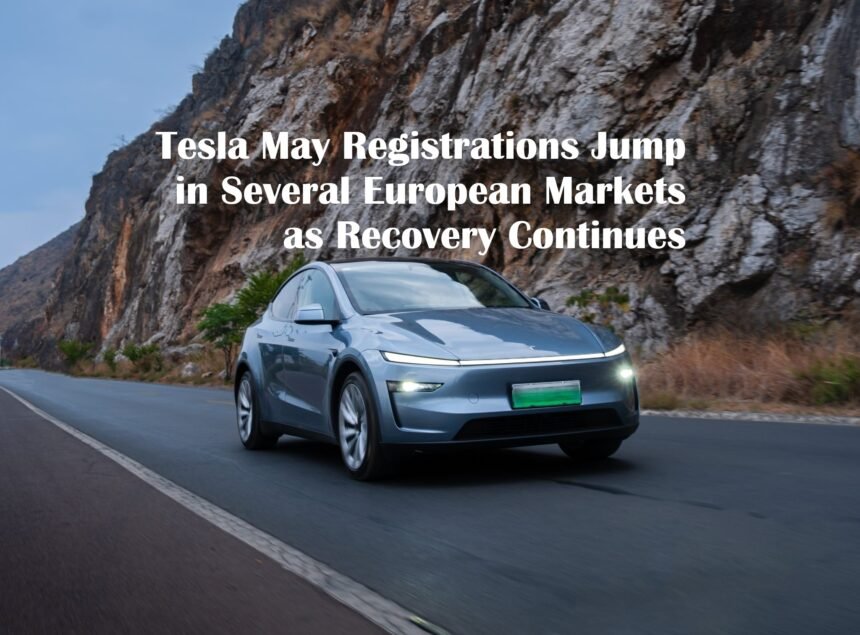
Tesla saw a noticeable rise in new vehicle registrations across several European markets in May. The growth signals a gradual recovery in demand after a period of slower sales earlier in the year. The data points to improving momentum for battery electric vehicles across the region.
According to industry reports cited by Reuters, Tesla recorded higher registrations in key European countries. The increase reflects both stronger consumer demand and improved inventory availability. It also shows shifting sentiment in the electric vehicle market.
Stronger Demand Across European EV Markets
Electric vehicle registrations increased in several European countries during May. Tesla benefited from this trend. Buyers returned to the market after delays caused by high interest rates and economic uncertainty. Germany showed one of the strongest rebounds.
France also recorded improved EV demand. Southern European markets followed a similar pattern. Consumers showed more interest in battery electric vehicles compared to earlier months. Tesla gained traction in these regions. The company improved deliveries after earlier supply adjustments.
It also aligned production more closely with demand in Europe. The broader EV market supported Tesla’s recovery. Total battery electric vehicle sales increased across several European Union countries. This helped lift overall market sentiment.
Model Performance Supports Growth
Tesla’s Model Y and Model 3 remained the primary drivers of registrations in Europe. These two models continued to attract strong interest due to their price positioning and performance. The Model Y performed well in urban and suburban markets. Buyers valued its range and practicality.
The Model 3 maintained steady demand among commuters and fleet operators. Tesla adjusted pricing strategies in several European countries earlier in the year.
These adjustments helped improve competitiveness. Lower prices encouraged more first-time EV buyers to consider Tesla vehicles. Inventory availability also improved in May. This allowed faster deliveries. It reduced waiting times for customers in several regions.
Country-Level Trends Show Uneven Recovery
European EV recovery did not happen evenly. Some countries showed stronger growth than others. Germany led the rebound with strong consumer interest in electric mobility. Government incentives also supported demand. France recorded steady improvement.
The country maintained strong support for EV adoption through regulatory incentives. Buyers responded positively to these policies. In the United Kingdom, registrations also increased. However, growth remained moderate compared to continental Europe. Market conditions and financing costs influenced buyer behavior.
Smaller European markets showed mixed results. Some countries experienced strong percentage growth due to lower baseline volumes. Others remained stable without major changes. Tesla benefited most in countries with established EV infrastructure. Charging availability and policy support played important roles in adoption rates.
Competitive Pressure Remains High
Tesla continues to face strong competition in Europe. European automakers expanded their electric vehicle lineups. Companies such as Volkswagen, BMW, and Renault increased their EV offerings. Chinese manufacturers also expanded their presence in Europe. They introduced lower-cost electric vehicles in several markets. This increased price pressure across the segment.
Despite competition, Tesla maintained a strong brand position. Many buyers still associate Tesla with advanced technology and charging network advantages. However, market share shifts remain visible. Competitors gradually gained ground in entry-level EV segments. Tesla responded with pricing adjustments and production efficiency improvements.
Market Conditions Support Gradual Recovery
Several macroeconomic factors influenced the May recovery. Inflation rates stabilized in many European countries. Consumer confidence improved slightly compared to earlier months. Interest rates remained relatively high.
However, expectations of future cuts supported buyer sentiment. Many consumers delayed purchases earlier in the year. Some of them returned to the market in May. Energy prices also stabilized. This improved the attractiveness of electric vehicles compared to traditional combustion cars.
Lower operating costs remained a key selling point for EVs. Government policies continued to support EV adoption. Many European countries maintained incentives for electric vehicles. Some cities expanded low-emission zones, which encouraged EV ownership.
Tesla Strategy in Europe
Tesla focused on maintaining competitive pricing in Europe during the period. The company adjusted prices in response to local market conditions. It also optimized logistics and delivery timelines. The company strengthened its supply chain flexibility.
This helped reduce delays and improve customer satisfaction. Faster delivery times supported higher registration numbers. Tesla also continued expanding its Supercharger network across Europe. Charging infrastructure remains a key factor in EV adoption.
Improved accessibility supported consumer confidence. Local production from Tesla’s Gigafactory in Berlin also contributed to efficiency. The facility helped reduce delivery times for European customers. It also improved cost structure for regional sales.
Outlook for the Rest of the Year
The European EV market is expected to remain volatile but gradually improving. Analysts expect continued recovery in registrations through the second half of the year. Tesla’s performance will depend on pricing strategy and competition. The company may continue adjusting prices to maintain market share. Product updates could also influence demand patterns.
Government policies will play a major role in shaping EV adoption. Incentives and emissions regulations will continue to influence consumer decisions. Tesla’s long-term position in Europe remains strong, but competition continues to intensify. Market share gains will depend on innovation, pricing, and production efficiency.