



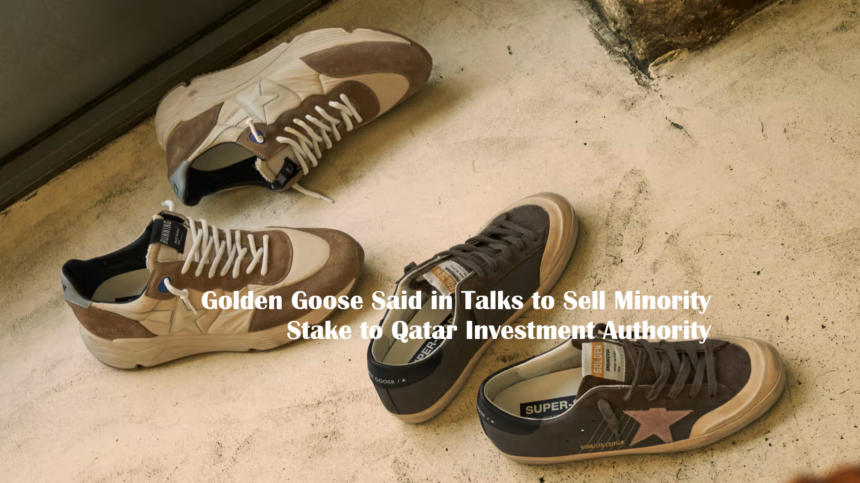
Italian luxury sneaker brand Golden Goose is reportedly in discussions to sell a minority stake to Qatar Investment Authority. The potential deal highlights growing investor interest in premium lifestyle brands. It also signals the company’s continued expansion strategy in global markets.
Strategic Move to Attract Global Capital
Golden Goose has built a strong identity in the luxury footwear segment. Its signature distressed sneakers attract younger consumers and fashion enthusiasts. The company continues to blend craftsmanship with streetwear aesthetics. The talks with the Qatar Investment Authority reflect a strategic effort to secure long-term capital.
Sovereign wealth funds have increased their presence in fashion and lifestyle sectors. These investors seek stable growth and global brand appeal. Golden Goose appears to align well with this investment approach. Its consistent revenue growth and global footprint make it an attractive target. The brand operates hundreds of stores worldwide and continues to expand.
Background of Ownership Changes
The potential deal comes after a series of ownership transitions. In 2025, private equity firm HSG acquired a majority stake in Golden Goose. Other investors, including Temasek, joined as minority stakeholders. Earlier, Permira owned the company after acquiring it in 2020. The firm still retains a minority interest.
Over the years, Golden Goose has passed through several investment phases. Each phase contributed to its rapid scaling and brand development. These ownership changes reflect a broader trend in luxury fashion. Investment firms continue to rotate stakes in high-growth brands. They aim to maximize value through expansion and repositioning.
Why Qatar Investment Authority Is Interested
The Qatar Investment Authority has built a diverse global portfolio. It invests in real estate, technology, sports, and luxury sectors. The fund seeks assets with strong brand equity and long-term growth potential. Golden Goose fits this profile. The brand combines luxury positioning with a casual aesthetic. It appeals to younger demographics while maintaining premium pricing.
Demand for “accessible luxury” continues to rise. Consumers seek products that balance exclusivity with everyday wear. Golden Goose has successfully captured this market segment. The company also benefits from a direct-to-consumer strategy. This approach improves margins and strengthens customer relationships. It allows better control over brand storytelling and retail experience.
Growth Strategy and Global Expansion
Golden Goose continues to expand its international presence. The brand has increased its retail footprint across Europe, Asia, and the United States. It also invests in experiential retail concepts. Stores often include customization services and interactive features.
These elements enhance customer engagement and brand loyalty. The company positions itself as more than a footwear label. It aims to create a lifestyle ecosystem. Digital channels also play a key role. E-commerce growth supports global reach and customer acquisition.
The brand uses social media and influencer partnerships to maintain relevance. The potential investment from Qatar could accelerate these initiatives. Additional capital would support store openings, marketing campaigns, and product innovation.
Market Context and Industry Trends
The luxury fashion industry faces a complex environment. Growth remains strong in some regions, while others show signs of slowdown. Economic uncertainty and shifting consumer behavior influence demand. Despite these challenges, premium sneaker brands continue to perform well.
Casualization trends drive demand for stylish yet comfortable footwear. Golden Goose benefits from this shift. Investors increasingly focus on brands with clear identity and loyal communities. Golden Goose has cultivated a strong following.
Its products often serve as status symbols among younger consumers. The involvement of sovereign wealth funds reflects confidence in the sector. These investors typically adopt long-term perspectives. Their participation can stabilize ownership structures and support sustained growth.
Leadership and Vision
Golden Goose CEO Silvio Campara continues to lead the company. He has played a key role in shaping its modern identity. Under his leadership, the brand has expanded globally and strengthened its positioning. Management focuses on creativity, authenticity, and innovation.
The company emphasizes its Italian heritage while embracing global trends. This balance helps differentiate it from competitors. Leadership also prioritizes sustainability and responsible growth. Consumers increasingly expect transparency and ethical practices.
Golden Goose has taken steps to address these expectations. The potential partnership with Qatar Investment Authority could support these goals. Strategic investors often bring not only capital but also global networks and expertise.
Potential Impact of the Deal
If completed, the minority stake sale would mark another milestone in Golden Goose’s journey. The deal could enhance financial flexibility and support future expansion. It may also strengthen the company’s positioning ahead of potential public market activity. Golden Goose previously considered an initial public offering but delayed those plans due to market conditions.
A strong investor base can improve readiness for future listings. It can also increase valuation and investor confidence. For Qatar Investment Authority, the deal would expand its exposure to luxury fashion. It would add a high-growth brand to its portfolio.