



Red Bull’s 2026 Formula 1 season launch captured global attention not just for the cars but for how technology was showcased. At the event, Apple’s devices stood at the forefront of presentation and broadcast elements. This marked a shift in how hardware is used in motorsport displays and media.
The launch introduced Red Bull Ford Powertrains’ new cars for the upcoming season. The event brought together Oracle Red Bull Racing and Visa Cash App Racing Bulls in a joint reveal. Attendees and online viewers alike saw clear examples of how Apple technology has begun to intersect with Formula 1 team presentations.
Apple Hardware Integrated Into the Launch Broadcast
One of the most talked-about aspects of the launch was the use of the “Shot on iPhone” label within the broadcast itself. This branding was shown during live streaming of the presentation, making it part of the core video content rather than a standalone commercial or inserted advertisement.
The appearance of that label went beyond traditional marketing and placed Apple’s imaging tools in the context of how the launch was presented to a global audience. This presence did more than highlight a product. It suggested that tools normally associated with consumer use are capable of playing a role in professional event coverage.
Fans and commentators on social platforms noticed the integration, noting that segments filmed from the audience or stage level featured the label embedded on screen. These moments pointed to a potential new direction for visual storytelling at high-profile motorsport events, where even live launches may lean on accessible hardware for compelling visuals.
Vision Pro Takes the Stage
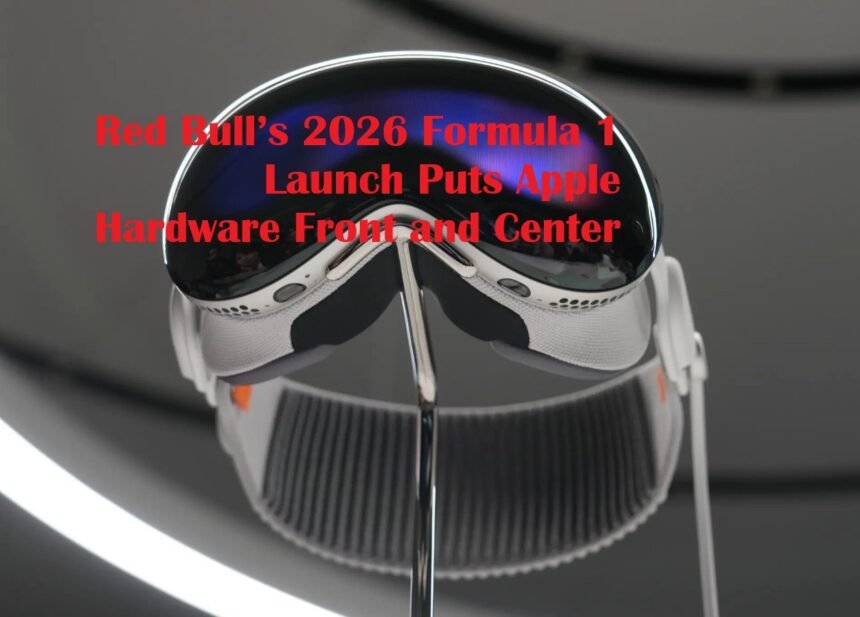
Another striking moment came with Apple Vision Pro. Presenters wore the headset on stage during key parts of the launch. Rather than treating it as a side demonstration, the headset was used in front of the audience as part of the core presentation.
This placement suggested that immersive technology is being positioned as a tool for more serious applications than entertainment alone. Vision Pro’s presence aligned with an effort to present it as something that supports visualization and engineering workflows.
Those at the event saw it used as part of discussions around future technical work, particularly in relation to powertrain development and design. Red Bull’s decisions about what tools to highlight at such moments are usually deliberate, especially with partners and collaborators involved.
By integrating Vision Pro into the formal narrative of the launch, Red Bull provided a hint at how emerging hardware might be used to interpret complex engineering data or to give immersive experiences that deepen engagement with technical concepts.
Broader Context: Apple and Formula 1
This launch event did not happen in isolation. Apple has been expanding its involvement with Formula 1, especially through broadcasting initiatives. Beginning with the 2026 season, Apple holds exclusive rights to stream the sport in the United States under a multi-year agreement. This gives viewers access to all practices, qualifying rounds, and races through Apple’s platforms.
With this broadcasting deal, the integration of hardware like iPhones and Vision Pro appears to be part of a broader strategy. Apple is building an ecosystem where its devices are not just ways to view content but are part of how content is captured, delivered, and experienced.
This approach stands in contrast to traditional broadcast models that focus on paid channels and conventional camera rigs. Placing Apple technology front and center at a major team’s official season launch highlights how the company is beginning to weave its products into more professional contexts.
It also reflects a willingness by the team to experiment with new storytelling methods. Whether this becomes a trend across other teams remains to be seen, but it is notable that a consumer brand’s devices were given such visibility in a Formula 1 launch environment.
Impact on Motorsport Presentation and Coverage
The use of these devices at Red Bull’s launch points points to changing expectations of how events are presented. In the past, technical announcements and season launches focused on cars, design details, and team personnel. Now, the digital tools used to capture and augment these reveals are becoming part of the conversation.
Fans and media commentators have taken note that the iPhone branding and Vision Pro headsets were not incidental props but intentional choices within the launch’s structure. These choices could influence future events, particularly as teams look for ways to better connect with younger, tech-savvy audiences through interactive and immersive content.
Observers have also highlighted that the use of consumer hardware for professional storytelling might reshape how access and coverage evolve in the sport. With devices that are familiar to the public, fans might feel closer to the action, while teams and broadcasters might explore new ways to visualize data or present narratives beyond traditional cameras and graphics.
Looking Ahead
Red Bull’s launch served as a clear signal that technology partnerships today extend beyond financial sponsorships or branding placements. The integration of Apple’s products at the event suggested a shared vision for how technology can enhance the sport’s presentation and engagement.
While it remains to be seen how deeply this integration will extend into race weekends or engineering work, the launch has set a benchmark for how hardware can connect with audiences in new ways. As the 2026 Formula 1 season unfolds, both the team’s performance on track and how technological collaborations shape narrative and broadcast experiences will be closely watched.
Red Bull’s strategic choices at its launch demonstrate an appetite for blending competitive sport with broader technology trends, pointing to a potential evolution in the way motorsport interacts with global audiences.