



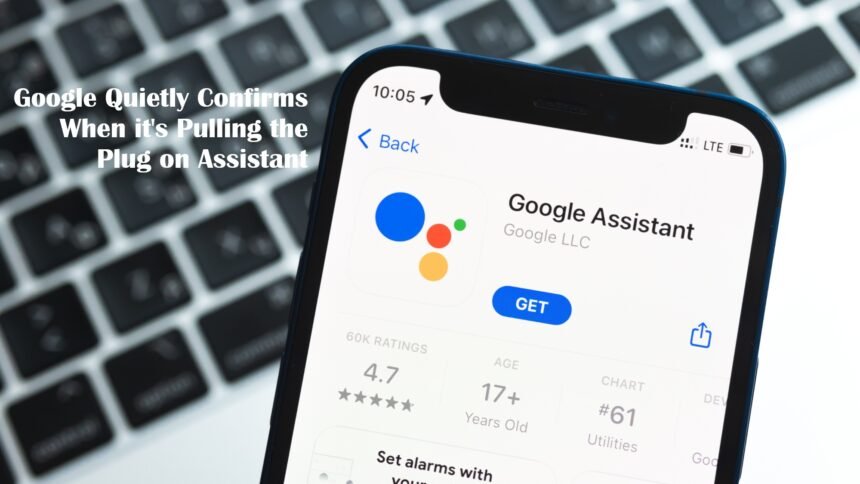
In a move that has largely flown under the radar, Google has confirmed a timeline for terminating its long-running digital assistant, Google Assistant, in favor of its newer AI platform, Gemini. While the company did not make a big splash in its public announcements, internal documentation and subtle notices have revealed a clear end-of-life plan.
The Silent Transition: Why It Matters
Google Assistant has been a cornerstone of Android since its debut in 2016. For nearly a decade, users have relied on it to set reminders, control smart home devices, and launch media hands-free. However, its role is being phased out as Google shifts its focus toward Gemini, a more generative, conversational AI that is being integrated into phones, cars, watches, and other devices.
The quiet nature of this transition is significant. Rather than issuing a grand “farewell Assistant” campaign, Google is letting the shift happen in the background. This subtlety helps minimize backlash or panic, especially among users who depend on the Assistant’s voice features.
Key Dates and the March 2026 Cutoff
One of the most important revelations comes from a banner spotted on an Android Auto support forum, which states that Assistant will remain available until March 2026. This provides the clearest timeline yet for its retirement. Until then, users will continue to have access to Assistant on many devices.
But that window is finite, and Google’s roadmap suggests that Gemini will take over across its ecosystem.
Feature Rollback Before Shutdown
Google isn’t just planning a shutdown; it is actively removing functionality from Assistant even before the full transition. Several underused yet beloved features are being deprecated as part of this winding-down process. Notable removals include:
- Interpreter mode (the live, real-time translation feature) is being dropped, leaving only phrase-by-phrase translation.
- Daily updates, such as weather or news briefings, will no longer be available in the same way, though custom routines are suggested as a workaround.
- Family Bell announcements (scheduled reminders for families) will be discontinued in Assistant.
- Users’ voice commands to manage photos like favoriting or sharing them, or asking metadata questions, are being removed.
- On car accessories connected via Bluetooth or auxiliary cable, voice control via Assistant is being eliminated.
Rather than simply turning off these features at a fixed date, Google is choosing a “soft sunset” approach. According to its support documentation, users will be alerted the next time they try to use a deprecated feature, a notification will explain that the feature is being retired and when it will stop working.
Why Google Is Making This Change
The shift from Assistant to Gemini is not just a rebranding. Gemini represents a dramatic shift in how Google envisions interaction with its AI: more natural language, more context, and more generative responses. Gemini is being built to do more than just follow voice commands; it’s designed to understand, synthesize, and reason.
Many of the older Assistant’s commands were rigid, heavily reliant on predetermined intents. Gemini aims to break that mold. By consolidating its efforts, Google can prioritize innovations in generative AI without maintaining two parallel systems. This helps reduce fragmentation across its device ecosystem, from smartphones to smart displays.
Moreover, by removing lesser-used features from Assistant, Google can reallocate resources toward improving Gemini’s core capabilities.
User Impact and How to Prepare
For users, the transition brings both challenges and opportunities. On the one hand, features they rely on may be removed over time. On the other hand, Gemini offers a more powerful, flexible assistant experience. Here are a few things users should know and steps they can take:
1. Expect feature deprecations
If you regularly use features like Interpreter mode, Family Bell, or voice-based photo controls, you may want to find alternatives now or save backups of routines and settings.
2. Set up Routines
Google suggests building custom Routines within its ecosystem. These can replicate some of the functionality being removed.
3. Familiarize yourself with Gemini
Try out Gemini early if possible. Google is rolling out Gemini to more devices, meaning users will gradually be exposed to the new assistant.
4. Plan for March 2026
That is the practical cutoff point for many users, according to Google’s internal banner. After that, access to Assistant is expected to be severely limited, removed, or replaced altogether.
Risks and Uncertainties
Despite Google’s plan, some risks exist. For instance:
- Gemini is still a growing platform. Some of the Assistant’s features may not yet be perfectly replicated in Gemini.
- Generative AI can hallucinate or deliver inaccurate information, which may affect trust or reliability in certain contexts.
- Legacy devices may have compatibility issues. Not all devices may receive a seamless Gemini upgrade, and older hardware could be left behind.