


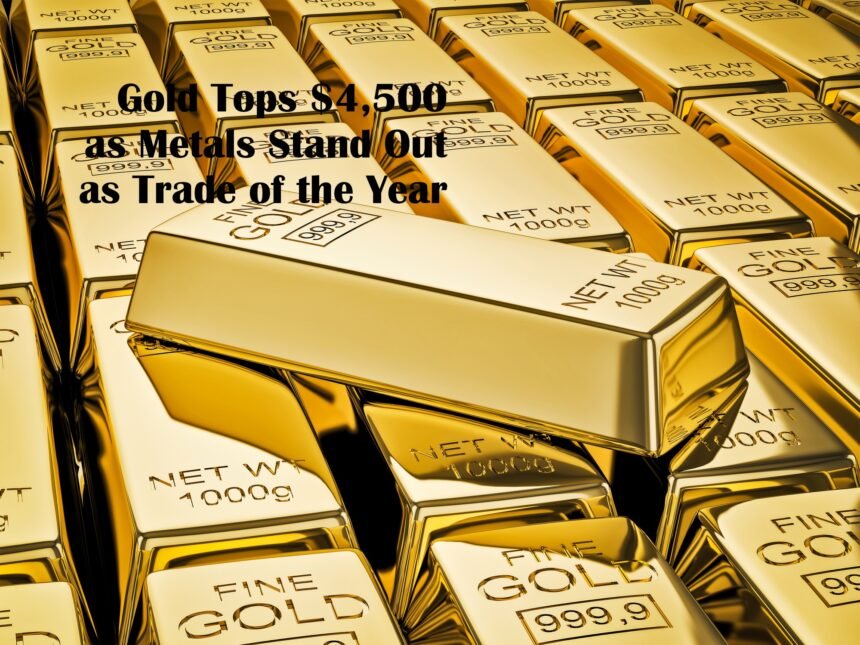
Gold has reached an unprecedented level above $4,500 per ounce in 2025, marking one of the most dramatic rallies in modern markets. This surge has been driven by strong investor demand, macroeconomic shifts, and a growing acceptance of precious metals as core portfolio assets.
Metals such as silver and copper have also soared, setting new records and showing the broad strength of the metals trade this year. This year’s rally has placed gold and other metals at the centre of global investment discussions. With record gains and continuing momentum, many market observers are calling precious metals the standout trades of 2025.
Historic Rally in Precious Metals
Gold’s price has climbed sharply, breaking the $4,500 mark for the first time ever. The rally has been driven by several converging trends, including growing demand for safe-haven assets and expectations of lower interest rates in the coming year. This year’s gains are among the strongest since the late 1970s. Silver has performed even more dramatically.
Its price has increased by more than 150% year-to-date, surpassing the gains seen in gold. Strong industrial demand and limited supply have supported the surge in silver prices. These price moves reflect a broad investor appetite for metals that can act as hedges against inflation and currency risk. Many traders have shifted attention to metals amid uncertainty in other markets.
What Is Driving Metal Prices Higher?
Safe-Haven Demand and Geopolitical Uncertainty
One major force behind the rally is safe-haven buying. Investors typically flock to gold when economic or geopolitical risks rise. In 2025, several global tensions and trade concerns have amplified this demand. This heightened interest has pushed gold to record levels.
Concerns over currency strength also contribute. A weaker U.S. dollar makes dollar-priced metals more attractive to foreign buyers. Many investors believe that holding physical metals offers protection against inflation and currency depreciation.
Expectations of Interest Rate Cuts
Another key driver has been expectations that U.S. interest rates will fall in 2026. Lower interest rates reduce the opportunity cost of holding non-yielding assets, such as gold.
Traders have acted on these expectations, helping to lift prices. Central banks around the world have also been buying gold to diversify reserves. This institutional demand has formed a strong support base for gold prices.
Diversification and Market Strategy
Investors have increasingly viewed metals as strategic portfolio assets, not just commodities. Many are adding gold and silver to portfolios alongside traditional stocks and bonds. This shift reflects a desire to diversify and protect against volatility.
Some strategists say investors have adapted their thinking. They argue that metals now act more like currency alternatives than simple physical commodities. This perception has encouraged broader participation by institutional and retail traders alike.
Broader Trends in the Metals Market
The rally is not limited to gold and silver. Other metals, including copper, have also reached record levels. Supply concerns and strong demand for industrial metals have helped push these prices higher. Copper’s rise shows that strong demand is not restricted to traditional safe-havens.
Industrial growth in various regions has underpinned copper’s value, while constraints on supply have tightened markets. Platinum and other precious metals have also seen significant gains, rising with strong investment flows and speculative interest.
The Year of Metals
Metals have stood out as some of the best-performing asset classes this year. Gold’s advance has exceeded 70% annually, a level not seen since the late 1970s. Silver’s gains surpass that, reinforcing the strength of the metals trade.
This performance contrasts with the more modest growth seen in some stock markets and other risk assets. Metals offered a compelling alternative for investors seeking performance and risk mitigation at the same time.
Market Responses and Investor Behaviour
Institutional and Retail Interest
Institutional activity has increased significantly. Central banks and large investment funds have boosted purchases of physical metals and related exchange-traded products.
This demand has helped sustain price momentum as the year draws to a close. Retail investor interest has also contributed. Individual traders have been attracted to the dramatic price movements in gold and silver, adding another layer of buying pressure.
Speculative and Strategic Positions
Some market players have taken speculative positions in metals, anticipating even higher prices in 2026. The expectation of continued central bank buying and rate cuts has encouraged this speculation. Gold and silver ETFs have seen strong inflows. These funds offer a liquid way to gain exposure to metals, and their popularity has risen with the rally.
Outlook for 2026 and Beyond
Many analysts now believe that metals could continue to perform well in 2026. Some projections suggest that gold could test new psychological levels above $5,000, reflecting sustained demand from diverse investor groups. The outlook depends on several factors:
- Interest rate policies by major central banks.
- Global economic performance, especially in major economies.
- Ongoing geopolitical tensions or shifts in trade policy.
Should interest rates remain lower for longer, metals could remain attractive relative to other assets. Continued central bank buying and diversified demand from institutional investors could support prices into next year.