



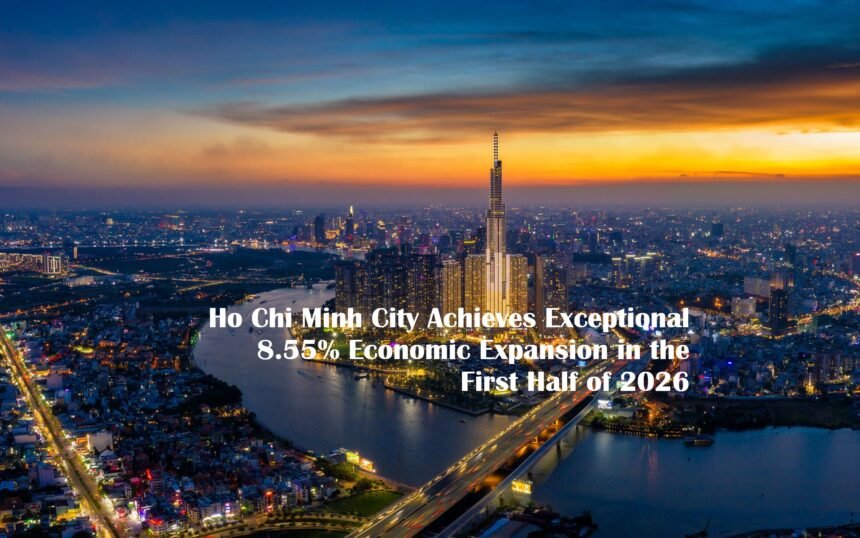
Ho Chi Minh City, Vietnam’s primary commercial powerhouse, has achieved an impressive economic milestone. The southern metropolis recorded a robust year-on-year growth rate in gross regional domestic product (GRDP) of 8.55 percent during the first six months of 2026. This notable performance underscores the city’s critical role as the financial engine of the nation.
It also demonstrates a powerful recovery trajectory amidst ongoing global economic uncertainties. Local businesses and state authorities have expressed strong optimism regarding these initial findings. The latest statistics highlight a balanced expansion across multiple critical sectors.
Strong domestic consumption, a revitalized tourism market, steady industrial production, and a spectacular surge in foreign direct investment (FDI) have collectively fueled this positive economic outcome. Economic analysts note that the city maintained a steady performance throughout both quarters of the first half of the year.
The city’s economy expanded by 8.57 percent in the first quarter of 2026. It then followed up with another solid expansion of 8.53 percent in the second quarter. This consistent output proves that the local economy possesses deep resilience. Local manufacturing enterprises have successfully adapted to changing global demand patterns.
Furthermore, the local population continues to demonstrate strong purchasing confidence. Government policies aimed at boosting internal demand have clearly yielded positive results. The metropolitan area is now on track to achieve its ambitious full-year developmental objectives.
The Service Sector Drives Unprecedented Metropolitan Growth
The service industry remains the primary engine powering Ho Chi Minh City’s economic development. This vital sector alone accounted for 54 percent of the total GRDP during the January-June period. It achieved a remarkable expansion rate of 8.89 percent compared to the previous year.
Furthermore, the service sector contributed approximately 56 percent of the total economic growth seen in the city. Consumers within the city are spending money on a wide variety of services. This high level of domestic consumption has helped insulate the city from weaker export markets abroad. Retailers report steady foot traffic in major shopping centers.
Within the service spectrum, transportation services emerged as the top performer. The transport sub-sector recorded an impressive growth rate of 13.68 percent. This expansion reflects an increase in logistical activities and public mobility across the region. Wholesalers and retail traders also reported vibrant activities.
The trade sub-sector expanded by 8.4 percent during this six-month window. Financial institutions and insurance providers also experienced favorable conditions. The financial services sector grew by 8.21 percent. This steady performance occurred despite tighter credit conditions worldwide. Tourism and travel services also added significant momentum to the overall numbers.
Foreign travelers are returning to the historic city in great numbers. This influx has directly benefited local hospitality networks, restaurants, and entertainment venues.
Industrial Production and Manufacturing Witness Robust Revival
The industrial and construction sectors also delivered an encouraging performance during the first half of 2026. These combined industries grew by 8.5 percent year-on-year. They represented 32.8 percent of the city’s total GRDP. They also contributed 30.6 percent to the overall economic growth.
Factories across the industrial zones have increased their production schedules. The overall Industrial Production Index (IIP) climbed by 11.1 percent during the first six months. This marks a substantial improvement from the 8.6 percent growth rate recorded during the same period in 2025.
The manufacturing sub-sector spearheaded this industrial acceleration. Manufacturing activities increased by 11.5 percent as international buyers renewed their bulk orders. Additionally, the mining and resource extraction sector expanded by 10.8 percent. Certain key industries performed exceptionally well during this period.
The pharmaceuticals and chemicals sector recorded the strongest expansion. It registered a phenomenal growth rate of 20 percent. The mechanical engineering sector followed closely with a 15.8 percent increase. However, not all segments experienced positive gains. The electronics manufacturing sector faced minor challenges.
It declined slightly by 0.6 percent due to shifting global component supply chains. Despite this minor setback, the broader industrial landscape remains highly competitive and productive.
Foreign Direct Investment Skyrockets to New Heights
Ho Chi Minh City continues to attract massive interest from international corporations and venture capitalists. Total registered foreign direct investment (FDI) inflows exceeded 6.8 billion USD during the first half of 2026. This figure represents an astonishing surge of 114.2 percent compared to the same period last year.
International investors view the city as a secure, stable, and highly profitable destination for capital allocation. The local government has streamlined many administrative procedures to facilitate these investments. During these six months, municipal authorities licensed 888 entirely new foreign-invested projects.
These new initiatives carried an aggregate registered capital value of more than 1.1 billion USD. Existing enterprises also chose to deepen their local commitment. Around 99 operating projects decided to expand their operations. These businesses raised their investment capital by more than 3.1 billion USD.
This massive capital injection will likely create thousands of high-skilled jobs for residents. It will also accelerate the transfer of modern technology to domestic companies. The booming corporate sector has also bolstered the city’s financial position. The state budget revenue experienced a significant increase of 31.7 percent year-on-year.
Entrepreneurship and Corporate Expansion Transform the Market
The domestic business environment has shown clear signs of structural improvement. Local entrepreneurs are launching new companies at an accelerating pace. The number of newly established enterprises rose by 15.6 percent year-on-year. Furthermore, the total newly registered capital for these startups increased by 26.5 percent.
This trend indicates that local business owners possess ample confidence in the long-term economic prospects of the city. Existing firms are also expanding their market footprints. This corporate expansion is diversifying the local economic base. New digital startups, creative agencies, and green energy firms are entering the market.
They are challenging older business models and introducing innovative solutions. This dynamic business ecosystem attracts young talent from all over Vietnam. The city is rapidly becoming a leading innovation hub within Southeast Asia. Municipal authorities are supporting this trend by upgrading digital infrastructure and providing business grants.
Navigating Rising Costs and Overcoming Modern Headwinds
Despite these exceptional growth figures, Ho Chi Minh City must still navigate several critical challenges. Global economic volatility and fluctuating energy prices continue to create uncertainty. Rising production costs and elevated logistics expenses are putting pressure on local manufacturers. High shipping costs make it more difficult for exporters to maintain fat profit margins.
Additionally, the local real estate sector continues to face persistent structural headwinds. Property developers are struggling with liquidity issues and regulatory bottlenecks. These economic pressures have had a visible impact on consumer prices.
The average Consumer Price Index (CPI) in the city rose by 4.41 percent during the first half of 2026. Price increases occurred across almost all major consumption categories. Transportation costs led the inflationary trend with an increase of 6.19 percent. Food and catering services also grew more expensive, rising by 5.78 percent.
Meanwhile, housing and construction materials recorded a 5.22 percent price hike. These rising costs are squeezing the disposable incomes of middle-class families.
Strategic Interventions to Secure Future Prosperity
Municipal officials and economic experts recognize that sustaining this growth momentum requires proactive intervention. The city’s Statistics Office has issued several key recommendations for the remaining months of the year. First, authorities must accelerate the disbursement of public investment capital.
Currently, public investment disbursement remains below expectations, especially for mega infrastructure projects. Speeding up these projects will create immediate jobs and improve long-term logistical efficiency. Second, the government must implement targeted measures to boost domestic demand further.
This could include organizing trade fairs, offering tax incentives, and promoting local tourism packages. Third, officials must closely monitor market price movements to curb inflation. Finally, the city needs to provide stronger support to domestic enterprises. Banks should offer easier access to affordable financing. Government agencies must also simplify administrative processes further.
Helping businesses secure input materials and access new consumer markets will ensure long-term stability. The city is targeting an ambitious full-year economic growth rate of at least 10 percent. Achieving this goal will require a growth rate of nearly 12 percent in the second half of 2026. With coordinated efforts, the city is well-positioned to meet this challenge.