



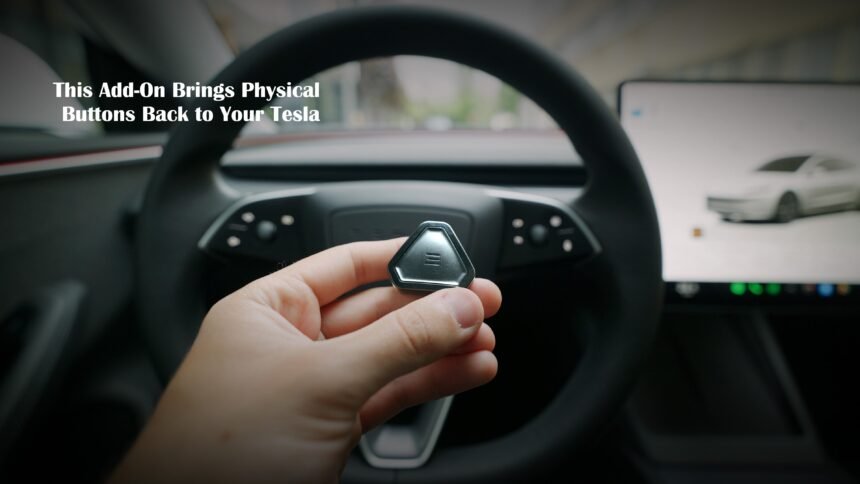
Owners of Tesla vehicles often enjoy sleek interiors, strong performance, and cutting-edge software. Yet many drivers still miss something simple: physical buttons. Modern cabins rely heavily on touchscreens, especially in the Tesla Model 3 and Tesla Model Y. Fans of traditional controls sometimes feel overwhelmed.
A new aftermarket add-on now targets this problem. It introduces tactile switches that blend with the minimalist design while restoring a sense of control that many drivers prefer.
Why Some Drivers Miss Physical Controls
Touchscreens deliver a clean look. They also allow software-based updates that expand features over time. Many drivers appreciate this. But others want direct control of climate, audio, and basic functions without digging through menus. They value the speed and certainty of pressing a real switch.
During driving, every second counts. A tactile button offers instant feedback. Users can adjust settings with minimal distraction. This remains important for both comfort and safety. In cars that rely almost entirely on screens, small tasks take extra effort. This is why enthusiasts keep asking for physical controls, even in vehicles that embrace a futuristic style.
The Add-On: A Practical Solution for a Common Complaint
The new accessory integrates with the lower dashboard area. It attaches to the console without drilling or permanent modification. The product includes switches for temperature, fan speed, defrost, seat heating, volume, and other frequent actions. Each button links to the car’s internal system through a subtle wiring connection.
The unit communicates through CAN signals, so response time stays fast. The buttons trigger the same commands that the touchscreen uses. The driver does not need to change habits. They simply gain a second, more direct way to control the car.
The design team shaped the panel to match the interior. Colors and textures align with the trim used in vehicles like the Model 3 and Model Y. Most owners install the accessory in under fifteen minutes. They can also remove it when needed, which helps for resale or lease returns.
How the Buttons Improve the Driving Experience
Drivers report smoother control in everyday situations. When the air temperature rises, one tap lowers it without opening menus. When music gets loud, a quick adjustment sets the right volume. These small tasks feel natural with physical switches. Navigation remains on the primary screen.
Touch gestures stay available for advanced settings. But for common tasks, the new panel offers a shorter path. This makes a difference on long trips. Touchscreens create a clean look, but physical switches reduce mental load. Eyes remain on the road, and hands adapt faster. Some drivers say the car feels more “human” again.
A Shift in Interior Design Philosophy
Electric vehicles often showcase minimalism. Simplified dashboards reflect a broader trend in tech. Phones, laptops, and tablets also reduce buttons. Car designers followed the same logic. But automotive needs differ from consumer electronics. Drivers travel at high speeds. They handle complex conditions.
Physical buttons help them act without visual confirmation. They reduce error and speed up reaction time. Many premium brands recognized this balance. Even technology-focused cars still use real switches for key actions. The add-on for Tesla models responds to this same principle. It does not fight the design. Instead, it works alongside it.
Safety Benefits: A Small Change With a Big Impact
Research shows that manual controls reduce task duration in vehicles. Tactile surfaces allow drivers to keep their attention on traffic. Screen-based systems require more visual focus. A moment of distraction can matter in busy conditions. The add-on supports this idea. It reduces the steps needed for essential tasks.
Drivers do not search through icons. Their hands learn the layout and respond quickly. While current vehicles from Tesla include advanced safety systems, human attention still matters. Better ergonomics support safer behavior. The accessory aims to enhance this, not replace existing features.
Installation and Compatibility
The product works with several Tesla models. Owners of the Model 3 and Model Y adopt it most often. Installation involves lifting a panel, connecting a harness, and placing the unit in position. No specialized tools are required. Because the system taps into existing command structures, software updates do not block the buttons.
The panel mirrors functions already present in the interface. Drivers can switch between methods without issue. The company behind the product plans versions for other electric vehicles. Demand comes from owners who want more tactile interaction. As more cars adopt screen-first interiors, the market for such accessories continues to grow.
User Response: Strong Interest From Drivers
Many owners welcome the accessory. Forums and social groups show active discussions. Some praise the smooth feel of the switches. Others like the ease of quick adjustments. A common theme appears in owner reviews: reduced frustration. Touch interfaces sometimes lag in cold weather.
They also require accuracy while moving. Buttons solve this with an immediate response. A few users prefer the untouched minimalist cabin. They enjoy the clean aesthetic. They also feel comfortable with screen-based control. The add-on targets drivers who want options, not those who already prefer full digital control.
How This Add-On Reflects a Larger Trend
Car interiors evolve faster than before. Software-driven designs create new possibilities. But these designs also remove familiar elements. Many drivers discover they prefer physical feedback. This new accessory reveals a rising shift. It shows that technology and tradition can work together.
Digital interfaces remain powerful. But tactile controls still offer value that software cannot match. Other aftermarket brands may follow this path. They may design switches, dials, or haptic modules for many electric vehicles. The goal will remain the same: enhance comfort and reduce distraction.
A Future With More Customization
Owners of electric cars enjoy personalization. They modify wheels, add interior trim, and install software-based tools. The return of physical controls fits into this pattern. It allows customization without altering the core car. Future models may even include modular panels.
Automakers could offer optional tactile controls from the factory. This would satisfy both minimalist fans and those who love buttons. The add-on available today gives a preview of that future. It answers a clear need. It also encourages more creative ideas for interior technology.