



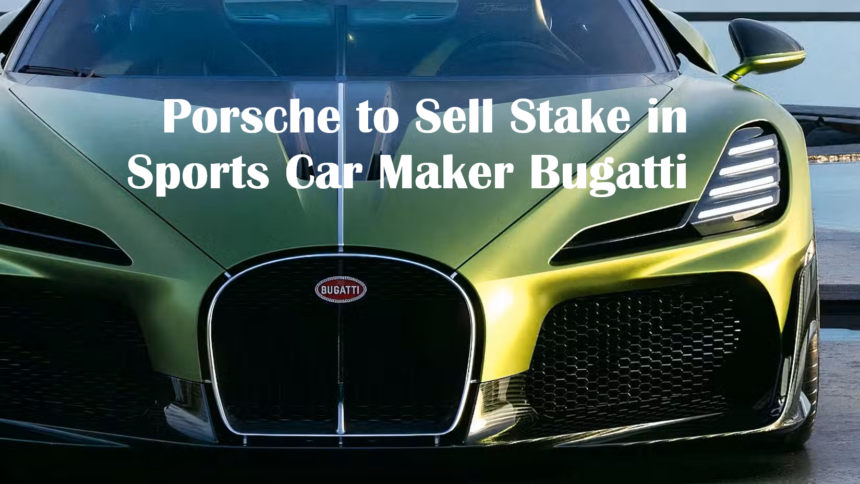
Porsche has decided to sell its stake in the iconic sports car brand Bugatti, marking a major shift in its corporate strategy. The German automaker will divest its 45% share in Bugatti Rimac, a joint venture created in 2021 with Croatia’s Rimac Group. This move reflects a broader effort to refocus on its core business.
Porsche has faced mounting pressure due to declining profitability and changing market conditions. By exiting the Bugatti partnership, the company aims to streamline operations and strengthen its primary brand identity. The decision signals a turning point not only for Porsche but also for the future of Bugatti, one of the most prestigious names in high-performance automotive history.
Understanding the Bugatti Rimac Partnership
The Bugatti Rimac joint venture was established in 2021. It combined Bugatti’s heritage in luxury hypercars with Rimac’s expertise in electric vehicle technology. Porsche held a minority stake, while Rimac controlled the majority.
This partnership aimed to bring innovation to the hypercar segment. Bugatti continued to produce ultra-luxury vehicles, while Rimac contributed cutting-edge electric systems. The collaboration produced advanced models and strengthened technological development.
Porsche played a key supporting role in this structure. It helped guide strategy and maintain connections within the broader automotive ecosystem. However, the company never held full control, which limited its long-term influence. Now, Porsche has chosen to exit this arrangement entirely.
Details of the Stake Sale
Porsche will sell its entire 45% stake in Bugatti Rimac to a consortium of investors. The group is led by a U.S.-based investment firm, backed by international partners, including funds from Abu Dhabi. The deal also includes Porsche’s stake in Rimac Group, which stands at over 20%. This means Porsche will fully withdraw from its involvement in both entities.
Financial details have not been disclosed publicly. However, estimates suggest that Bugatti Rimac carries a valuation exceeding $1 billion. Once the transaction is completed, Rimac Group will assume greater control over Bugatti. The new investors will support future growth and expansion.
Why Porsche Is Making This Move
Porsche’s decision stems from financial and strategic challenges. The company has experienced a sharp decline in operating profit. Reports indicate that earnings dropped significantly in the past year, raising concerns about long-term performance.
Several factors contributed to this decline. Weak demand in key markets such as China affected sales. Rising costs and trade pressures, including tariffs, also impacted margins. In response, Porsche has begun a broader restructuring effort.
The company aims to simplify operations, reduce costs, and focus on its core product lineup. Selling its Bugatti stake fits into this plan. By exiting non-core investments, Porsche can allocate resources more effectively. It can invest in areas that directly support its brand, such as performance vehicles and hybrid technologies.
The Future of Bugatti Under New Ownership
The sale opens a new chapter for Bugatti. With Porsche stepping away, Rimac and its new partners will shape the brand’s direction. Rimac has already demonstrated strong leadership in electric vehicle innovation. Its technology could influence the next generation of Bugatti models. This may lead to more hybrid or fully electric hypercars in the future.
The involvement of investment firms introduces new dynamics. These investors may focus on scaling the business and improving profitability. Their support could provide additional capital for research and development. At the same time, Bugatti’s identity as a luxury performance brand remains central. Any changes must preserve its reputation for exclusivity and engineering excellence.
Industry Impact and Market Reactions
Porsche’s exit from Bugatti reflects broader trends in the automotive industry. Companies are reassessing their portfolios as they navigate a transition toward electrification and digitalization. Luxury carmakers face increasing competition and rising costs.
They must balance innovation with profitability. This often requires difficult decisions, such as divesting assets or restructuring partnerships. Investors and analysts view Porsche’s move as a practical step. It shows a willingness to adapt to changing conditions.
By focusing on its core strengths, Porsche aims to remain competitive in a rapidly evolving market. The deal also highlights the growing influence of investment firms in the automotive sector. Private capital plays a larger role in shaping the future of high-performance brands.
Challenges Ahead for Porsche
Although the sale provides strategic clarity, challenges remain. Porsche must address declining demand and shifting consumer preferences. The transition to electric vehicles presents both opportunities and risks. Developing new technologies requires significant investment. At the same time, traditional combustion engines still generate strong demand in certain markets.
Porsche must balance these priorities carefully. It must innovate while maintaining the qualities that define its brand. The company’s leadership has emphasized a renewed focus on product excellence. This includes improving performance, design, and customer experience. Success will depend on how effectively Porsche executes this strategy in the coming years.
A Broader Transformation in Motion
The sale of Porsche’s stake in Bugatti represents more than a single transaction. It reflects a broader transformation within the automotive industry. Manufacturers are redefining their roles in a world shaped by electrification, sustainability, and digital technology. Partnerships and joint ventures continue to evolve as companies seek competitive advantages.
Porsche’s decision shows that even established brands must adapt. Strategic focus and flexibility are essential in today’s market. At the same time, Bugatti’s future under Rimac and new investors offers a glimpse into the next phase of hypercar development. Innovation and tradition will likely combine in new ways.