



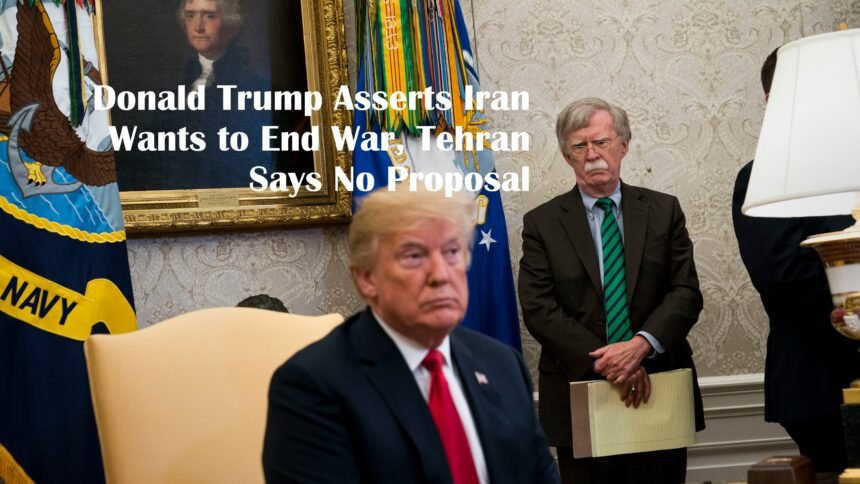
Tensions between the United States and Iran have intensified following statements from Donald Trump claiming that Tehran wants to end the ongoing war. However, Iranian officials quickly rejected the assertion, stating that no formal proposal to stop the conflict has been presented.
The disagreement underscores the deep-seated mistrust between the two sides, as military operations and retaliatory attacks persist across the region. The conflict has already destabilized parts of the Middle East and disrupted global energy markets.
Rising oil prices and growing humanitarian concerns have increased pressure on both sides to find a diplomatic path forward. Despite those pressures, public statements from Washington and Tehran indicate that both governments remain far apart on how the war might be resolved.
Trump Claims Iran Wants a Deal
Trump said in a recent interview that Iran is eager to negotiate an agreement that would end the fighting. According to him, Tehran has signaled interest in reaching a deal, but the terms currently discussed remain unacceptable to the United States.
He explained that the conditions must be stronger before any agreement can be considered. The U.S. president emphasized that any deal must ensure Iran completely abandons its nuclear ambitions. He argued that the United States will not halt military operations unless Tehran accepts strict limitations.
Trump also claimed that the ongoing military campaign has already inflicted severe damage on Iran’s military capabilities, including missile systems and drone production facilities. Trump’s remarks suggest that Washington believes it holds the advantage in the conflict. He has repeatedly argued that continued military pressure will force Tehran to negotiate under tougher conditions.
Tehran Rejects the Claim
Iranian officials quickly dismissed Trump’s statement. Authorities in Tehran said that no official proposal for ending the war has been delivered. They insisted that claims about Iran seeking a deal are inaccurate.
Iran’s leadership also signaled that negotiations would only occur under certain conditions. Officials indicated that meaningful talks could happen if attacks against Iran stop and if compensation or guarantees are discussed. Without those elements, Tehran believes negotiations cannot move forward.
The rejection reflects longstanding distrust between the two governments. Iranian leaders argue that Washington’s military actions and sanctions demonstrate hostility rather than a genuine interest in diplomacy.
Escalation of the Conflict
The conflict began when U.S. and Israeli forces launched major strikes against Iranian nuclear and military facilities in late February. Iran responded with missile and drone attacks against Israel and several Gulf countries. These retaliatory strikes have expanded the conflict and increased the risk of regional escalation.
The fighting has affected several countries across the Middle East. Military exchanges have involved air strikes, missile launches, and drone attacks. Civilian casualties and infrastructure damage have also been reported in multiple areas.
Iran has threatened to expand its campaign further if the attacks continue. Meanwhile, the United States and its allies have vowed to maintain pressure until Iran’s military capabilities are significantly weakened.
Strategic Importance of the Strait of Hormuz
One of the most significant global concerns relates to the strategic waterway known as the Strait of Hormuz. This narrow passage handles a large portion of the world’s oil shipments. Disruptions in the area can quickly affect global energy markets.
Recent tensions have raised fears that the waterway could be blocked or mined during the conflict. Intelligence reports have suggested that Iranian forces might deploy naval mines in the region. Such actions could threaten commercial shipping and drive oil prices even higher.
Because many economies depend heavily on energy supplies from the Gulf region, governments worldwide are closely monitoring the situation. Any prolonged disruption could trigger major economic consequences.
Diplomatic Efforts and Mediation Attempts
Several countries in the Middle East have attempted to mediate between Washington and Tehran. Nations such as Oman and Egypt have reportedly tried to open channels for ceasefire discussions. However, those efforts have produced little progress so far.
Diplomatic initiatives face significant obstacles. Both sides accuse the other of acting in bad faith. The United States demands strict conditions regarding Iran’s nuclear program, while Iran insists that military attacks must end before negotiations can begin.
International organizations and regional powers continue to encourage dialogue. They warn that the conflict could spread further if diplomatic solutions remain out of reach.
Humanitarian and Economic Consequences
The war has already created serious humanitarian and economic challenges. Thousands of people have reportedly been killed or displaced during the fighting. Cities and infrastructure in several areas have suffered damage from air strikes and missile attacks.
The economic impact extends beyond the region. Oil markets have reacted strongly to the conflict, with prices rising as supply routes face uncertainty. Global airlines and shipping companies have also adjusted routes due to security concerns.
These developments highlight how a regional conflict can quickly produce worldwide consequences. Governments and international institutions are increasingly worried about prolonged instability.
Uncertain Path Forward
Despite Trump’s claim that Iran wants to end the war, the absence of a formal proposal shows that both sides remain far from agreement. Public statements from Tehran suggest that Iran does not currently see a diplomatic framework that meets its conditions.
At the same time, the United States appears determined to continue its military campaign until stronger concessions emerge. This strategic standoff creates uncertainty about how long the conflict might last.
For now, military operations continue while diplomatic channels remain fragile. Whether negotiations eventually begin may depend on changes in battlefield dynamics, international pressure, or shifts in political strategy on either side.