



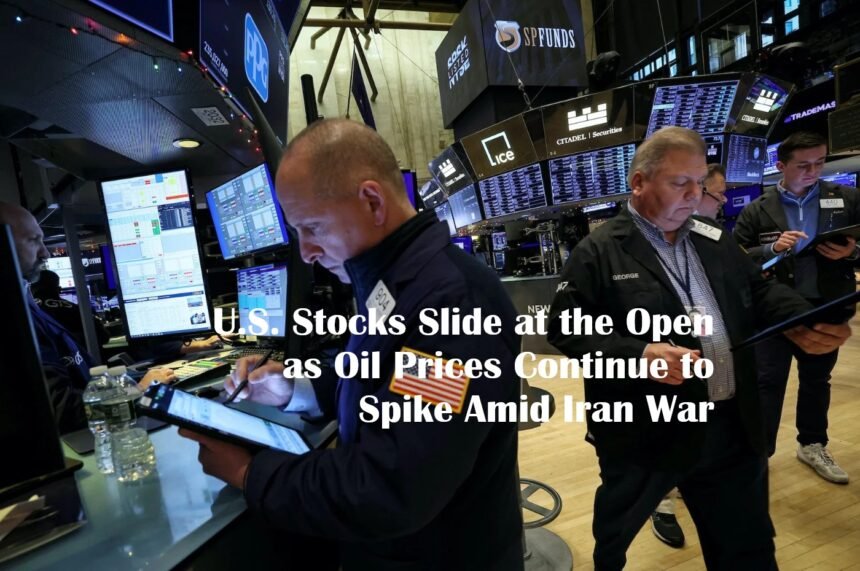
U.S. stock markets opened lower as investors reacted to surging oil prices and escalating tensions in the Middle East. The ongoing war involving Iran has created strong uncertainty across global financial markets. Traders quickly shifted to defensive positions as energy prices climbed sharply.
The surge in crude oil prices followed attacks on oil tankers and continued military activity in the region. These developments raised fears about disruptions to global energy supply.
As a result, major U.S. stock indices declined during early trading. Market analysts say rising oil costs could increase inflation and reduce corporate profits. Investors, therefore, reacted cautiously as the trading day began.
Wall Street Opens Lower
Major U.S. stock index futures dropped before the market opened. The declines reflected growing concerns about the economic impact of the war. Dow Jones futures fell by roughly 783 points, representing a decline of about 1.7 percent. S&P 500 futures also dropped around 1.5 percent. Nasdaq 100 futures declined approximately 1.6 percent during early trading.
These early losses signaled that investors expected volatility throughout the trading session. Traders responded quickly to the surge in oil prices and the geopolitical risks tied to the conflict. Financial markets tend to react sharply when geopolitical tensions threaten energy supplies. The current conflict has triggered exactly that type of response.
Oil Prices Surge Above $100
Crude oil prices jumped sharply as the conflict intensified across the Middle East. Brent crude climbed close to $100 per barrel, while U.S. West Texas Intermediate also surged significantly. The spike occurred after Iranian attacks on oil tankers in the Persian Gulf. The strikes damaged several ships and raised fears of further disruptions to global shipping routes.
Energy markets reacted immediately. Oil traders anticipated possible supply shortages if the conflict expanded further. Energy infrastructure in the region plays a critical role in global oil distribution. Even small disruptions can produce strong price reactions. The surge in oil prices therefore, became a major factor driving market volatility.
Concerns Over Energy Supply
Investors fear that the war could disrupt oil flows through key maritime routes. The Strait of Hormuz remains one of the most important shipping corridors in the global energy market. Roughly one-fifth of the world’s oil supply moves through this narrow passage each day. Any threat to the route can push energy prices higher and create instability in financial markets.
Recent attacks on shipping in the region have already slowed tanker traffic. Some shipping companies have suspended operations because of security risks. These developments increased fears of a prolonged energy shock. Oil prices surged as traders priced in potential supply shortages.
Impact on Specific Sectors
Certain sectors of the U.S. stock market reacted more strongly than others. Companies that rely heavily on fuel costs saw the largest declines. Airline stocks fell sharply during early trading. Higher oil prices directly increase fuel expenses for carriers. Analysts estimate that rising oil prices could add billions of dollars in additional costs across the airline industry.
Cruise companies also faced pressure as investors anticipated higher operating expenses. Travel-related businesses often struggle when energy prices surge. Technology companies and growth stocks also slipped. Investors frequently move away from high-risk assets during geopolitical crises.
Inflation Fears Return
Rising energy prices often lead to higher inflation across the economy. Fuel costs affect transportation, manufacturing, and consumer spending. Investors worry that the oil surge could slow economic growth in the United States. Higher fuel prices may reduce consumer purchasing power and increase production costs for businesses.
Analysts say the current conflict could produce a new inflation shock if oil prices remain elevated. Similar events in the past have triggered widespread economic pressure across global markets. Because of these concerns, many investors reduced exposure to riskier assets.
Broader Market Volatility
The war in Iran has already created major swings in global financial markets. Stocks, commodities, and currencies have experienced rapid price movements. Earlier sessions showed large fluctuations in both oil prices and stock indices. Markets reacted to every new development in the conflict.
Global investors now monitor military activity and diplomatic signals closely. Even small changes in the geopolitical situation can shift market sentiment quickly. This environment has created one of the most volatile periods in recent financial trading.
Economic Risks of Prolonged Conflict
Economists warn that a prolonged conflict could create broader economic consequences. Energy shortages could spread through global supply chains. Higher fuel prices often increase shipping costs and manufacturing expenses. Businesses then pass these costs on to consumers.
Global growth could slow if energy prices remain high for an extended period. Inflation pressures may also force central banks to maintain higher interest rates. These factors contribute to the uncertainty currently affecting financial markets.
Investors Turn to Safe Assets
As stocks declined, many investors moved toward safer assets. Gold prices increased as demand for safe-haven investments rose. The U.S. dollar also strengthened against several major currencies.
Currency markets often respond quickly to geopolitical crises. These shifts reflect a common pattern during periods of global instability. Investors prefer assets that historically hold value during uncertain times.
Outlook for Financial Markets
Financial markets will likely remain sensitive to developments in the Middle East. Oil prices will play a central role in shaping investor sentiment in the coming weeks. If the conflict expands or threatens major shipping routes, energy prices could climb even higher.
That scenario would likely place additional pressure on global stock markets. However, markets could recover quickly if diplomatic efforts reduce tensions. Oil prices would likely stabilize if shipping routes remain secure and supply disruptions ease.