



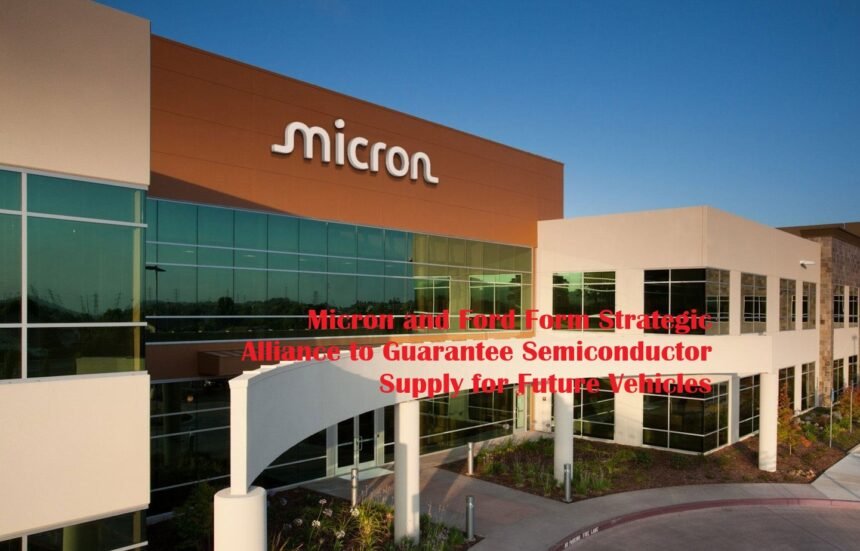
Micron Technology and Ford Motor Company announced a major long-term deal on July 6, 2026. The two American giants signed a Strategic Customer Agreement to secure essential memory chips. This partnership guarantees a stable supply of semiconductor solutions for Ford’s upcoming vehicle lines. Modern vehicles require immense processing power.
As a result, automakers must secure reliable components to keep assembly lines running smoothly. The agreement highlights the changing nature of the global automotive supply chain. Memory chips once belonged primarily to the consumer electronics sector. Today, these components represent a vital element in automotive manufacturing.
Executives from both corporations expressed immense satisfaction with the new strategic alliance. The deal will help Ford minimize future disruption risks in its manufacturing operations. Over the past few years, unpredictable component shortages have plagued global vehicle production.
Automakers now prefer direct long-term contracts with chip manufacturers to prevent these costly delays. This proactive step positions Ford ahead of many global competitors. Micron will increase its output specifically to satisfy Ford’s long-term production requirements. Both companies aim to push the boundaries of automotive technology through deep collaboration.
The Growing Role of Data in Modern Automotive Engineering
Modern vehicles function as powerful mobile data centers. Advanced driver-assistance systems constantly scan the road to ensure passenger safety. Infotainment systems stream high-definition content and manage complex navigation maps simultaneously. These operations require massive amounts of rapid-access memory and permanent storage solutions.
Without these advanced semiconductors, modern automotive features simply cannot operate. Therefore, securing memory chips has become a top priority for corporate leaders. Vehicles generate gigabytes of data every single hour they operate on the road.
Artificial intelligence algorithms process this information in real time to prevent collisions. This intensive computational workload places severe strain on vehicular memory storage. Micron offers specialized automotive-grade memory products that withstand extreme temperatures and vibrations.
These chips maintain excellent performance standards under harsh road conditions. Ford will integrate these high-performance chips into its next-generation electric and internal combustion models. The partnership ensures that future Ford buyers will experience seamless digital features.
Boosting Domestic Manufacturing and Supply Chain Resilience
This landmark agreement relies heavily on Micron’s extensive manufacturing footprint inside the United States. Micron plans to fulfill its supply commitments by expanding domestic production capacity. Specifically, the company is upgrading its fabrication facility located in Manassas, Virginia. This facility specializes in advanced dynamic random-access memory, commonly known as DRAM. By localizing production, both corporations insulate themselves from geopolitical tensions across the ocean.
Local manufacturing creates a far more predictable supply environment for the American auto industry. Ford President and Chief Executive Officer Jim Farley praised the partnership enthusiastically. He noted that building high-volume vehicles in America requires a resilient local supply chain.
He also commended Micron for investing heavily in the domestic workforce and manufacturing sector. Relying on local chip production protects American factory jobs from overseas logistics bottlenecks. Micron CEO Sanjay Mehrotra echoed these positive sentiments during the official announcement. He stated that advanced memory becomes increasingly critical as vehicles grow more intelligent. He promised that Micron will provide consistent support for Ford’s long product lifecycles.
Micron Captures the Automotive Semiconductor Market
The agreement with Ford represents a broader commercial strategy for Micron Technology. During its recent fiscal third-quarter conference call, Micron discussed 16 distinct strategic customer agreements. The agreement with Ford stands out as a prime example of this corporate strategy.
Interestingly, this deal occurred just days after Micron signed a similar supply pact with General Motors. By capturing agreements with two of Detroit’s primary automakers, Micron consolidates its market leadership. The semiconductor producer is successfully embedding itself into the foundation of the American automotive industry.
Financial analysts view these strategic customer agreements as highly beneficial for chip makers. Historically, the semiconductor market experienced intense boom-and-bust cycles driven by personal computer demand. Long-term automotive contracts provide a much-needed stabilizer for corporate revenues.
Automakers require steady component deliveries over many years, ensuring predictable cash flows. Micron can plan its multi-billion-dollar factory expansions with greater confidence because it possesses guaranteed buyers. This symbiotic relationship stabilizes the broader technology and automotive economic ecosystems simultaneously.
Engineering Tomorrow’s Software-Defined Transportation Solutions
The automotive industry is shifting rapidly toward software-defined vehicles. In these modern architectures, software updates constantly improve vehicle performance after the initial purchase. This design philosophy requires vehicle systems to possess significant hardware overhead. Engineers must install more memory than current software actually needs.
This extra capacity allows the vehicle to handle more complex software applications in the future. Ford’s long-term agreement with Micron specifically accounts for this forward-looking engineering approach. The two companies will not merely trade components over the counter.
They also intend to engage in deep technology collaboration and system-level optimization. Ford engineers will work closely with Micron chip designers to validate next-generation memory products. This cooperation ensures that future Micron chips will perfectly align with Ford’s internal computing architecture.
Deep integration enhances energy efficiency and processing speeds inside the vehicle dashboard. It reduces system latency, allowing safety features to respond fractions of a second faster.
Overcoming Global Economic and Supply Vulnerabilities
The global chip shortage of previous years taught major manufacturers an unforgettable lesson. Minor disruptions in overseas factories can entirely halt vehicle assembly lines across North America. These shutdowns cost the automotive industry billions of dollars in lost revenue.
By signing this agreement, Ford effectively insulates its next-generation vehicle programs from similar disasters. Direct relationships with semiconductor manufacturers replace the old, fragmented multi-tier supplier networks. Furthermore, this agreement strengthens critical infrastructure inside the United States.
A secure supply of semiconductors ensures that transportation manufacturing remains stable during international crises. Micron’s ongoing investments in its Virginia fab demonstrate how corporate initiatives align with national economic interests.
Consumers will ultimately benefit from these strategic corporate decisions. Safer, smarter, and more reliable vehicles will reach the market without unexpected dealership delays. This collaborative framework sets a powerful precedent for how tech firms and automakers can build a prosperous future together.