



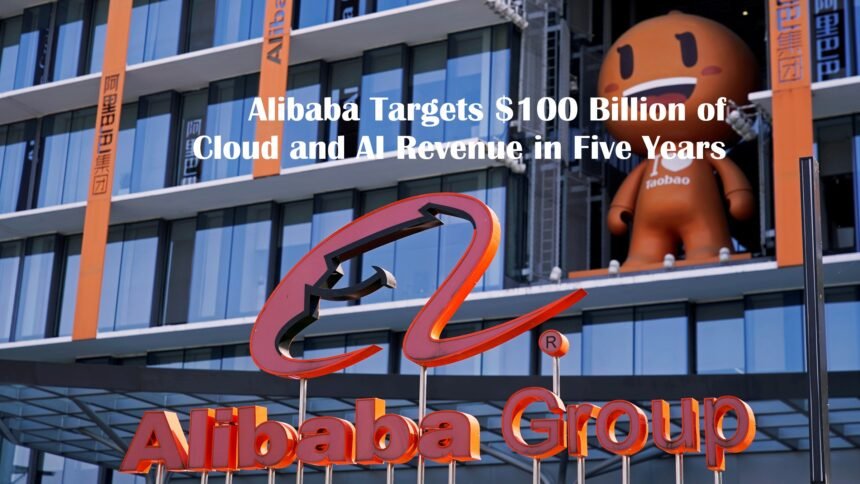
Alibaba Group has set an ambitious goal. The company aims to generate over $100 billion in cloud and artificial intelligence (AI) revenue within five years. This target reflects a major strategic shift toward advanced technologies.
It also highlights growing competition in the global AI race. The announcement came during a recent earnings call. Leadership emphasized that AI will drive future growth. This direction was chosen as traditional e-commerce faces pressure.
A Bold Revenue Target
The $100 billion goal was outlined by CEO Eddie Wu. The plan focuses on cloud computing and AI services. These include Model-as-a-Service (MaaS) offerings and enterprise solutions. Alibaba’s cloud unit has already crossed an important milestone. External commercial revenue recently exceeded 100 billion yuan.
This progress signals strong demand for AI-powered tools. The long-term objective was to capitalize on the rapid adoption of AI. Businesses are increasingly relying on automation and data-driven insights. Alibaba aims to become a key infrastructure provider in this shift.
AI as the Core Growth Engine
AI has been positioned as the main growth engine. Investments have increased significantly in this area. Billions of dollars are being allocated to infrastructure and research. Revenue from AI-related products has grown rapidly. In fact, AI sales have recorded triple-digit growth for multiple quarters.
Cloud computing plays a central role in this strategy. AI services are delivered through Alibaba Cloud. This includes computing power, storage, and machine learning tools. Demand for these services continues to rise. Companies need scalable systems to run AI models. Alibaba is building the ecosystem to meet that demand.
Strong Cloud Performance
Alibaba’s Cloud Intelligence unit has shown strong growth. Revenue increased by around 36% year-on-year. This performance stands out compared to other segments. The growth was driven by AI-related demand. Enterprises are adopting AI solutions at a fast pace. This trend has boosted cloud usage significantly.
AI applications require large computing resources. Cloud platforms provide these resources efficiently. Alibaba benefits from this structural shift. The company has also improved its AI product offerings. New tools and platforms have been introduced. These innovations aim to attract more enterprise customers.
Challenges in Core Business
Despite progress in AI, challenges remain. Alibaba’s traditional business segments are under pressure. E-commerce growth has slowed due to weak consumer demand. Competition has intensified across multiple sectors. Price wars in retail and delivery services have reduced margins. Profitability has been affected significantly.
Recent financial results show these difficulties. Net income dropped sharply, even as revenue grew slightly. These challenges have increased urgency. AI is expected to offset these weaknesses. The company is betting heavily on future returns from technology investments.
Heavy Investment Strategy
Large investments are being made in AI infrastructure. Data centers, chips, and algorithms are key focus areas. These investments are necessary for long-term growth. Alibaba is also developing its own AI models. Proprietary technology allows better control over performance and costs. This approach strengthens its competitive position.
Spending levels remain high. However, returns may take time to materialize. Investors are closely watching the balance between growth and profitability. The company believes early investment will pay off. AI adoption is still in its early stages. Long-term demand is expected to increase significantly.
Structural Changes and AI Focus
Alibaba has reorganized parts of its business. AI operations are being separated from cloud computing. This change aims to improve efficiency and monetization. A new unit has been created to focus on AI development. This division will handle AI products and services. The goal is to accelerate innovation.
Digital assistants and AI agents are key areas of focus. These tools can perform tasks continuously. This increases usage and revenue potential. The company is moving beyond traditional cloud services. It is building a broader AI ecosystem. This includes applications for both consumers and businesses.
Competitive Landscape
Competition in AI is intensifying globally. Chinese and international firms are investing heavily. Alibaba faces strong rivals in both cloud and AI markets. Domestic competitors are developing advanced AI models. Startups and tech giants are entering the space. This creates pressure to innovate.
Global companies are also expanding AI capabilities. The race for AI leadership is becoming more competitive. Infrastructure and scale are key advantages. Alibaba’s existing cloud network gives it a strong position. However, continuous innovation is required. Market leadership is not guaranteed.
Future Outlook
The $100 billion target reflects confidence in AI growth. Demand for AI services is expected to rise across industries. Businesses are integrating AI into daily operations. Alibaba aims to become a major player in this transformation. Its cloud platform will serve as the foundation. AI services will drive revenue expansion.
Short-term challenges remain significant. Profitability pressures may continue. However, long-term prospects appear promising. Success will depend on execution. Investments must translate into sustainable revenue. Competition must be managed effectively.