



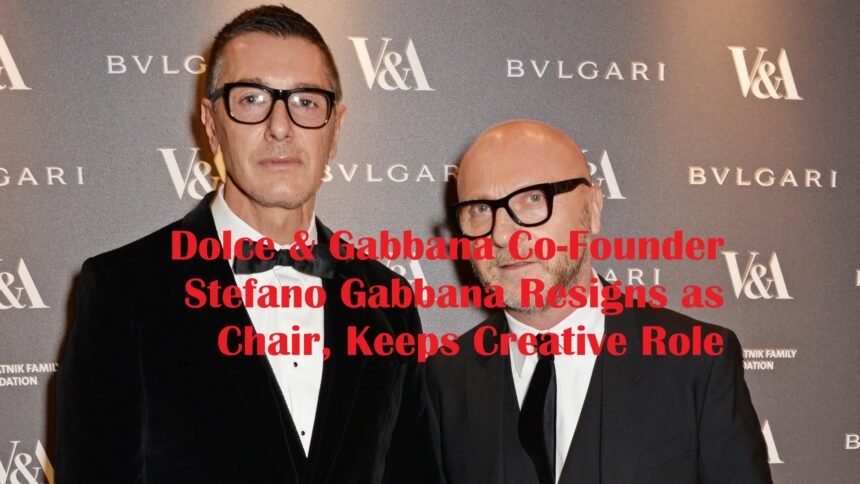
Stefano Gabbana, co-founder of the Italian luxury fashion house Dolce & Gabbana, has stepped down from his position as chairman. The company confirmed that his resignation became effective on January 1, 2026. Despite this leadership change, he continues to play an active role in the brand’s creative direction.
The announcement marks a significant transition for one of the most influential names in global fashion. Gabbana co-founded the brand in 1985 with Domenico Dolce. Together, they built a luxury empire known for bold aesthetics and a strong Italian identity.
Even after resigning, Gabbana remains deeply connected to the company’s artistic vision. The brand stated that his exit from the chair role does not affect his creative responsibilities. This separation of governance and creativity reflects a broader restructuring within the company.
Resignation Confirmed Through Corporate Filing
The resignation was disclosed through a corporate filing submitted to Italian authorities. According to the filing, Gabbana informed the company of his decision in December 2025. The change took effect at the start of the new year. Alfonso Dolce, brother of co-founder Domenico Dolce, assumed the role of chairman. He already serves as the chief executive of the company.
This move consolidates leadership under a more centralized management structure. The company described the change as part of a “natural evolution” in its governance model. It emphasized continuity in operations and creative output. The brand reassured stakeholders that no disruption would occur in its design direction.
Creative Control Remains Intact
Although Gabbana stepped away from corporate duties, his creative influence remains unchanged. He continues to contribute to design direction and brand identity. The company made it clear that creative activities led by Gabbana are unaffected. This distinction highlights the unique structure of the fashion house, where founders often maintain artistic control even when they exit executive roles.
Gabbana and Dolce are still involved in shaping collections and overseeing design themes. Their presence remains visible in runway shows and brand campaigns. The creative partnership that began more than four decades ago continues to define the label’s identity.
Financial Pressure and Strategic Restructuring
The leadership change occurs during a period of financial pressure for the luxury group. The company is engaged in discussions with lenders regarding significant debt obligations. Reports indicate that the business is dealing with hundreds of millions of euros in debt.
Negotiations involve refinancing and restructuring existing financial commitments. The company is also considering strategic options to strengthen liquidity. These options include asset adjustments and potential licensing strategies. External advisors have been involved to support financial planning.
The goal is to stabilize the company while maintaining independence. Despite these challenges, the brand continues to perform strongly in global luxury markets. Its high-end collections and fragrance lines remain important revenue drivers.
A Brand Built on Heritage and Bold Identity
Dolce & Gabbana has long been recognized for its strong visual identity. The brand draws inspiration from Italian culture, Sicilian heritage, and theatrical design elements. Since its founding in 1985, the label has expanded into multiple categories. These include fashion, accessories, fragrances, and lifestyle products.
The brand became known for its dramatic runway presentations and luxurious craftsmanship. Over the decades, it has also faced controversies. However, its global presence has remained strong. The label continues to attract celebrity attention and maintain influence in high fashion circles.
Leadership Transition and Corporate Direction
With Gabbana stepping down as chairman, the company now operates under a slightly different leadership structure. Alfonso Dolce oversees executive decisions, while creative leadership remains with the founders. The transition reflects an effort to separate business governance from artistic direction.
This model allows creative founders to continue shaping design while professional managers handle corporate responsibilities. The company stated that this structure ensures long-term stability. It also supports future growth in a highly competitive luxury market.
Continuing Influence in Global Fashion
Even after leaving his chair role, Stefano Gabbana remains a key figure in fashion. His design influence continues to shape seasonal collections and brand identity. Industry observers note that the brand’s creative direction is unlikely to change significantly.
The founding duo still defines the visual language of the label. The company also maintains strong visibility in major fashion events. Its runway shows continue to attract global attention and high-profile guests.