


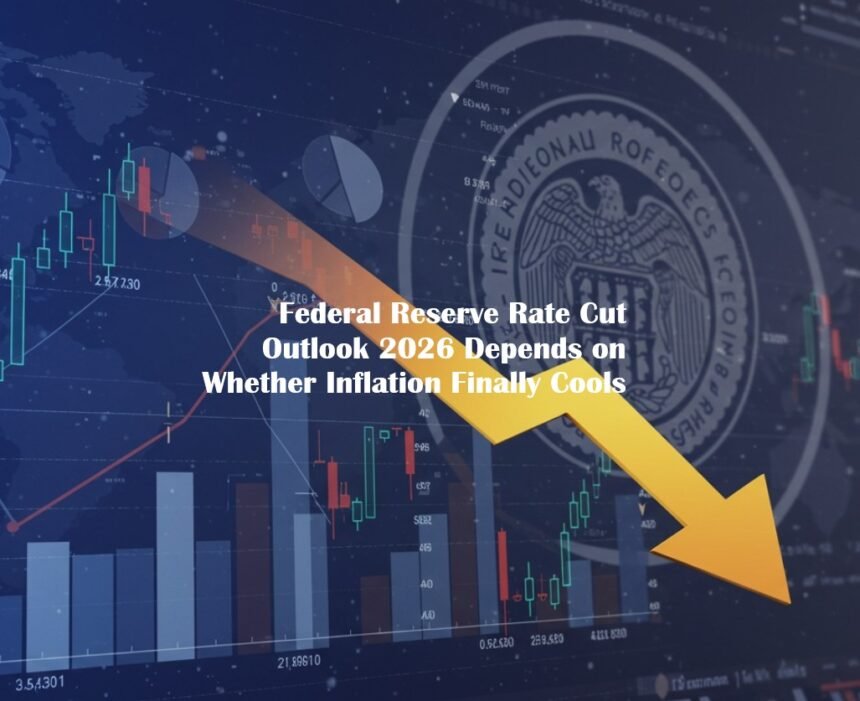
The Federal Reserve is approaching its September policy meeting with an unusually difficult economic puzzle. Policymakers must determine whether the US economy is showing enough signs of cooling to justify a change in interest rates, while inflation remains above the central bank’s long-term objective. The next decision will therefore depend on more than a single employment report.
Officials are weighing inflation trends, labor-market conditions, consumer demand and the possibility that recent price pressures could persist longer than expected. The Federal Open Market Committee is scheduled to meet on September 15 and 16, making the next two weeks particularly important for investors and financial markets.
Inflation Remains the Key Obstacle
The Federal Reserve has a dual mandate covering maximum employment and price stability, but inflation continues to present the bigger obstacle to an easier monetary policy. At its July meeting, the Fed maintained the federal funds target range at 3.5% to 3.75%. Officials noted that inflation remained elevated compared with the central bank’s 2% goal. That means policymakers cannot simply respond to signs of weaker hiring by immediately lowering borrowing costs.
If inflation remains persistent, an aggressive shift toward rate cuts could risk allowing price pressures to become entrenched. The challenge is especially important because policymakers must distinguish between temporary inflation pressures and a broader trend that could influence prices for months.
Labor Market Signals Are Becoming More Important
Employment data remain another major factor in the Fed’s calculations. A softer labor market could strengthen the argument for easing monetary policy, particularly if unemployment begins to rise significantly. However, policymakers must decide whether weakness in employment represents a temporary slowdown or the beginning of a more substantial deterioration. That distinction matters because interest-rate decisions operate with a delay.
Waiting too long to respond to a weakening economy could create unnecessary economic damage, while cutting rates too early could reignite inflation. For investors, this creates an increasingly data-dependent environment in which every major employment and inflation release can influence expectations for the September meeting.
Waller Leaves the Door Open to a Policy Shift
Federal Reserve Governor Christopher Waller provided an important indication of how at least one senior policymaker is viewing the current environment. In remarks on September 3, Waller said inflation was still meaningfully above the Fed’s 2% target but pointed to signs of disinflation. He indicated that if upcoming data confirm continued improvement, he would favor keeping the policy rate at its current level. However, he also said a different inflation picture could justify raising rates at the September meeting.
His comments highlight the unusual uncertainty surrounding the current policy outlook. Rather than committing to a predetermined path, officials appear prepared to react to incoming evidence.
Economic Growth Complicates the Decision
Another reason the Fed faces a difficult choice is that economic activity has not collapsed. Waller said real GDP expanded at a 1.8% annual rate during the first half of 2026, while consumer spending remained solid in the second quarter and business investment continued to perform strongly. This creates a delicate balance.
A resilient economy gives the central bank more room to prioritize inflation, but persistent strength could also make it harder for inflation to return quickly to target. At the same time, policymakers are monitoring uncertainty surrounding trade policy, geopolitical conflicts and artificial intelligence investment because each could affect both economic growth and prices.
What Investors Should Watch Before September 16
The most important question for financial markets is whether incoming data will provide enough evidence of sustained disinflation. If inflation continues moving lower while employment conditions weaken, expectations for future monetary easing could strengthen.
Conversely, renewed price pressures could encourage policymakers to maintain restrictive policy for longer. The Fed’s September decision will therefore be less about reacting to one headline figure and more about determining whether the broader economic trend has changed.
The Bigger Rate Outlook for 2026
The current environment suggests that the Federal Reserve is not yet ready to provide markets with a simple roadmap for interest rates. The central bank must balance inflation that remains above target against an economy that continues to expand. Its September meeting could offer greater clarity, but policymakers are likely to emphasize flexibility as they evaluate new data.
For investors, businesses and consumers, the Fed rate outlook for 2026 will ultimately depend on whether inflation demonstrates sustained improvement. Until that evidence becomes stronger, expectations for major changes in US interest rates are likely to remain highly sensitive to every new economic report.