



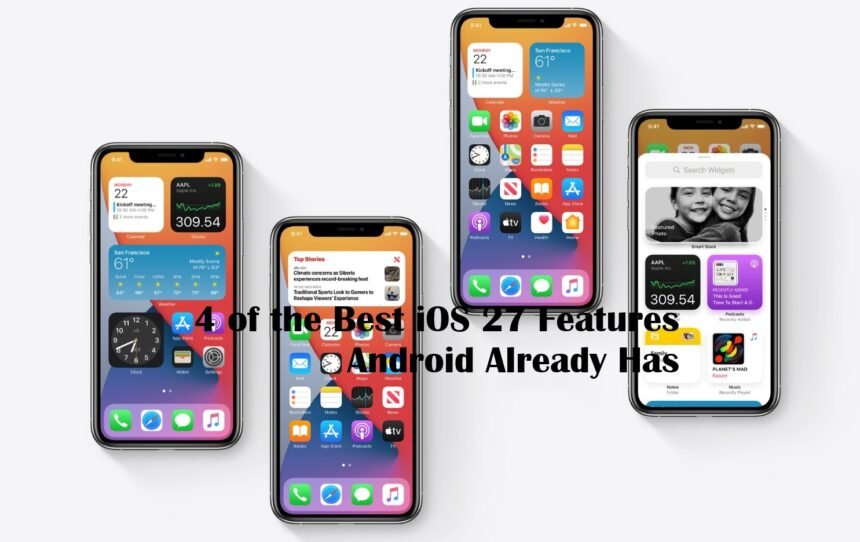
Apple introduced several headline features with iOS 27 during its latest software presentation. Many of these additions look impressive at first glance. However, Android users may feel a sense of déjà vu. Several of the most talked-about upgrades have existed on Android devices for years.
This situation is nothing new. Apple often focuses on refining features before bringing them to iPhone users. Android manufacturers usually experiment faster and introduce new ideas earlier. As a result, Android users often gain access to innovative tools long before they appear on iOS. Here are four of the best iOS 27 features that Android users already enjoy.
1. Advanced Visual Customization and Transparency Controls
One of the biggest highlights of iOS 27 is its improved visual design system. Apple expanded its transparent interface elements and introduced a transparency slider. Users can now adjust the look of menus, backgrounds, and interface layers more easily. While this sounds exciting for iPhone owners, Android users have seen similar options for years.
Many Android brands already offer transparency controls, interface customization tools, and visual themes. Users can adjust colors, icon styles, animations, and system appearance without waiting for major software updates. Android manufacturers also embraced glass-inspired interface designs long before iOS 27 arrived.
Some devices even allow users to disable visual effects entirely for better performance or improved readability. Smooth animations represent another key improvement in iOS 27. Apple emphasized more fluid transitions throughout the operating system. Yet Android companies have spent years refining animation engines and interface responsiveness.
Modern Android devices deliver fast and polished visual experiences across many price categories. The addition of transparency controls shows Apple’s commitment to personalization. However, Android users have already enjoyed a broader range of customization options for a long time.
2. Core Features That Android Users Consider Standard
Apple also showcased several system-level improvements during the iOS 27 announcement. Some of these updates solve everyday problems and improve convenience. One example involves smarter transitions between Wi-Fi and cellular networks. iPhones can now switch connections more seamlessly when network conditions change.
This feature improves connectivity and reduces interruptions during online activities. Android devices have offered similar functionality for years. Many smartphones automatically move between available networks to maintain stable connections. Most users rarely notice the process because it happens in the background. Apple also introduced better message status indicators.
Users can now see when messages remain in transit before reaching recipients. This addition improves communication clarity and helps users understand delivery progress. Android messaging platforms have provided similar indicators for a long time. Delivery confirmations and message status updates became standard features years ago.
Audio customization received attention as well. iOS 27 adds more advanced equalizer controls for wireless audio products. Users can fine-tune sound profiles according to personal preferences.
Android smartphones already support extensive audio adjustments. Many devices include built-in equalizers, sound enhancement tools, and immersive audio technologies. Music enthusiasts often customize audio settings without relying on third-party applications.
Photo sharing also received upgrades. Apple added improved group album capabilities and automatic sharing options. These tools make collaboration easier among family members and friends. Android users have benefited from comparable photo-sharing experiences for years.
Shared albums, automatic synchronization, and collaborative galleries remain common features across many Android ecosystems. These updates undoubtedly improve the iPhone experience. Yet Android users may view them as long-established essentials rather than groundbreaking innovations.
3. Siri’s AI Evolution Mirrors Existing Android Experiences
Artificial intelligence dominated the technology industry throughout the past few years. Apple joined the trend by significantly upgrading Siri in iOS 27. The virtual assistant now supports more natural conversations, better contextual understanding, and enhanced productivity features. Siri can perform more complex tasks while maintaining awareness of user requests.
Android users already interact with advanced AI assistants on a daily basis. Modern Android platforms offer voice assistants capable of answering questions, managing schedules, generating content, and providing contextual recommendations. Apple also launched a dedicated Siri application that stores conversations and organizes relevant information.
This approach creates a centralized hub for AI interactions. Android ecosystems have embraced dedicated AI experiences for years. Users can access conversation histories, saved searches, and AI-generated content through specialized applications and integrated system features. Another notable addition involves Siri’s visual intelligence capabilities.
The assistant can analyze objects, text, and scenes through the smartphone camera. Users can gather information simply by pointing the camera at an item. Android devices introduced similar visual search tools many years ago.
Camera-based recognition, object identification, and text extraction have become routine functions across the platform. Apple’s AI improvements undoubtedly represent a major step forward for iPhone users. However, Android users have already incorporated many of these capabilities into their everyday workflows.
4. Apple Intelligence Arrives After Years of Android Innovation
Apple Intelligence serves as the company’s broader AI ecosystem. It extends beyond Siri and powers intelligent features throughout iOS 27. One major capability involves contextual awareness. The system can analyze information across applications and present helpful suggestions when users need them.
For example, it can surface relevant travel details during customer service calls or provide shortcuts based on current activities. Android devices have already explored similar concepts. Many smartphones use AI to predict actions, suggest responses, and surface relevant information automatically. These features reduce friction and help users complete tasks faster.
Apple Intelligence also introduces context-sensitive actions based on screen content. The system recognizes what appears on the display and offers useful shortcuts or recommendations. Android platforms have supported screen analysis and contextual actions for several years.
Users can search, translate, copy, or interact with content directly from their screens without switching applications. Photo editing received another AI-powered upgrade. Apple added new tools that simplify image enhancement, object removal, and creative editing. Android users have enjoyed AI-assisted photo editing for a long time.
Intelligent editing features can improve image quality, remove distractions, and generate creative effects within seconds. Voice dictation also became smarter in iOS 27. Users can compose messages and edit text through natural speech interactions. Android manufacturers have invested heavily in voice input technology.
Many devices already support highly accurate speech recognition and natural language processing capabilities. The expansion of Apple Intelligence demonstrates Apple’s determination to compete in the AI era. Nevertheless, many of its new features closely resemble tools already available throughout the Android ecosystem.