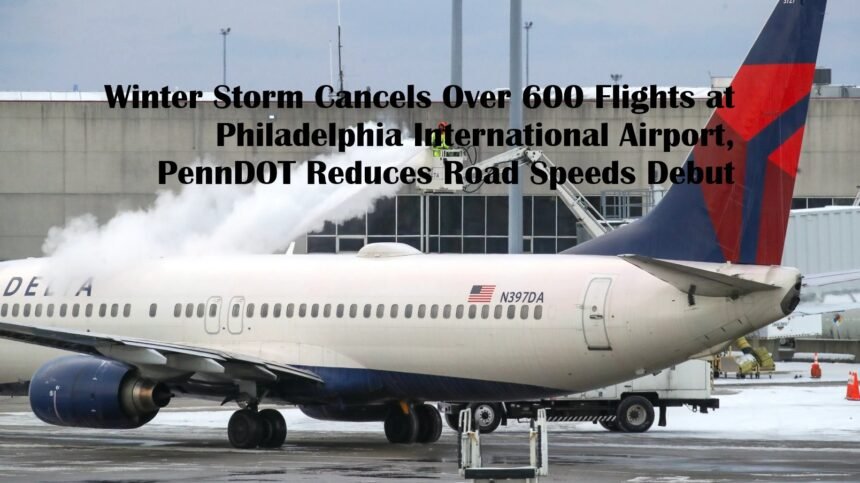
A powerful winter storm caused major disruption across the Philadelphia region, forcing the cancellation of more than 600 flights at Philadelphia International Airport.
The storm also prompted transportation officials to reduce road speeds across large parts of Pennsylvania as snow, ice, and strong winds created dangerous conditions. Travelers faced delays, closures, and uncertainty as authorities urged caution and patience.
Hundreds of Flights Canceled at Philadelphia Airport
Philadelphia International Airport experienced severe operational challenges as the storm intensified. Airlines canceled over 600 flights in a single day, affecting both departures and arrivals. Airport officials confirmed that snow accumulation and icy runways made safe operations difficult throughout the morning and afternoon.
Crews worked continuously to clear runways and taxiways, but heavy snowfall slowed progress. Airlines chose to ground flights rather than risk unsafe travel conditions. Many passengers arrived at the airport only to learn that their flights had been canceled or postponed until conditions improved.
Some airlines offered rebooking options and travel credits, but seats filled quickly as passengers tried to adjust their plans. Long lines formed at customer service desks, and airport staff encouraged travelers to check flight status online before leaving home.
Weather Conditions Create Ongoing Challenges
The winter storm brought a mix of snow, sleet, and freezing rain to southeastern Pennsylvania. Forecasters warned that rapidly changing temperatures would worsen road and air travel conditions. Wind gusts reduced visibility and caused drifting snow, making travel even more dangerous.
Meteorologists explained that the storm system moved quickly but packed significant moisture. In several areas, snowfall rates exceeded one inch per hour.
Ice accumulation added to the hazard, especially on bridges and untreated roads. The combination of snow and ice made de-icing aircraft more time-consuming. Each plane required thorough inspection and treatment before departure, which slowed airport operations even further.
PennDOT Reduces Speed Limits on Major Roads
In response to the storm, the Pennsylvania Department of Transportation reduced speed limits on several major highways. Officials lowered speeds to 45 miles per hour on many interstates to reduce accidents and improve safety. PennDOT crews spread salt and treated roads throughout the region.
Plow trucks operated around the clock, but officials stressed that no road treatment could fully eliminate danger during peak storm conditions. Reduced speeds aimed to give drivers more control and reaction time. Authorities warned that violations of the reduced speed limits could result in fines. They urged drivers to delay non-essential travel until conditions improved.
Accidents and Traffic Delays Reported
Despite warnings, several minor accidents occurred during the storm. Slippery roads caused vehicles to slide and spin, especially during the morning commute. Emergency services responded quickly, but traffic delays stretched for miles in some areas. Officials reported that most accidents involved drivers traveling too fast for conditions.
They repeated the importance of slowing down, increasing following distance, and avoiding sudden movements. Public transit systems also experienced delays. Bus routes adjusted schedules, and some services ran at reduced frequency due to road conditions.
Emergency Preparedness and Public Safety
Local authorities activated emergency plans to manage the storm’s impact. Police departments increased patrols, and emergency crews remained on standby to respond to crashes and stranded motorists. Officials urged residents to keep emergency supplies in their vehicles. Recommended items included blankets, water, flashlights, and phone chargers.
They also advised drivers to inform someone of their travel plans before heading out. Power companies monitored the situation closely, as ice and wind threatened power lines. Crews prepared for potential outages, although major disruptions remained limited during the storm’s peak.
Impact on Travelers and Local Businesses
The flight cancellations disrupted thousands of travel plans. Business travelers missed meetings, and families faced delayed reunions. Hotels near the airport saw an increase in last-minute bookings as stranded passengers sought shelter. Local businesses felt the impact as well. Restaurants and shops near travel hubs reported fewer customers during the storm.
Delivery services faced delays, and some businesses closed early due to safety concerns. Schools and offices adjusted schedules, with some opting for remote operations. Employers encouraged flexibility as employees dealt with transportation challenges.
Airport Operations and Recovery Efforts
Airport officials emphasized that safety remained the top priority. They coordinated closely with airlines, ground crews, and weather experts to plan recovery efforts. As snowfall slowed, crews focused on restoring full runway access. Officials warned that delays could continue even after the storm passed.
Aircraft and crews remained out of position, which created ripple effects across airline schedules. Passengers were advised to remain flexible and monitor updates. Airlines increased staffing at customer service counters to assist travelers. Many encouraged passengers to avoid the airport unless their flight status was confirmed.
Officials Urge Patience and Caution
State and local officials repeatedly asked residents to remain patient. They stressed that winter storms require coordinated responses and time to resolve. Road conditions could change quickly, even after plowing. Transportation leaders reminded the public that reduced speed limits and flight cancellations protect lives.
They emphasized that inconvenience is preferable to serious accidents or injuries. Officials also encouraged residents to check official alerts and weather updates before traveling. Accurate information, they said, helps people make safer decisions.
Looking Ahead
Forecasters predicted improving conditions within the next 24 hours as temperatures rose slightly and snowfall tapered off. However, refreezing overnight posed continued risks on untreated surfaces. PennDOT planned to maintain reduced speed limits until roads improved.
Airport officials expected a gradual recovery, with more flights resuming as conditions stabilized. The winter storm served as a reminder of how quickly weather can disrupt travel in the region. Authorities emphasized preparation, caution, and flexibility as essential tools for navigating severe winter conditions.