



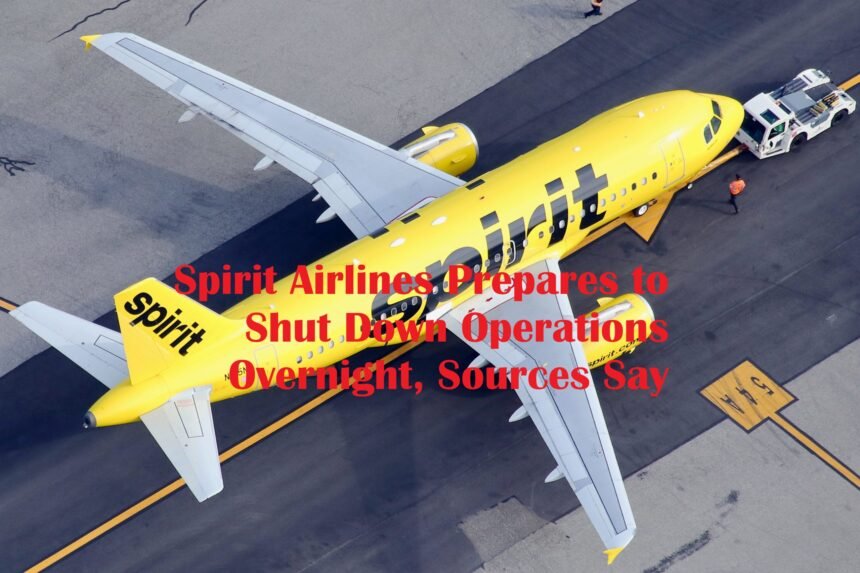
Spirit Airlines is facing a critical turning point. The airline is preparing to halt operations overnight after failing to secure a rescue deal. The development has shocked the aviation industry and raised concerns among travelers and employees.
Sudden Decision After Failed Rescue Talks
The airline’s board recently held a crucial meeting. Executives tried to finalize a rescue plan but failed to reach an agreement. This outcome pushed the company closer to shutdown. Sources familiar with the matter said operations could stop around 3 a.m. local time.
The timing reflects an effort to minimize disruption during peak travel hours. However, thousands of passengers may still be affected. The company has not issued a detailed public statement yet. Internal discussions have remained confidential due to the sensitive nature of the situation.
Financial Struggles Behind the Collapse
Spirit Airlines has struggled financially for several years. The airline filed for bankruptcy more than once in recent years. Recovery efforts have faced repeated setbacks. A major issue has been rising jet fuel costs. Prices increased sharply due to geopolitical tensions, including conflict in the Middle East.
Fuel costs doubled compared to earlier projections, placing heavy pressure on the airline’s finances. The airline’s restructuring plan depended on lower fuel prices.
When costs surged, projections became unrealistic. Losses widened, and liquidity tightened. Efforts to secure additional funding failed. Bondholders and government officials could not agree on a bailout structure. Without fresh capital, operations became unsustainable.
Government Bailout Efforts Fall Short
The administration of Donald Trump explored options to save the airline. A proposal worth $500 million was discussed. The plan involved taking a significant equity stake in the company. However, the proposal faced resistance.
Some policymakers questioned the value of investing in a struggling carrier. Bondholders also showed limited support for the plan. Negotiations stalled as disagreements grew. Without consensus, the bailout effort collapsed. This outcome left the airline with few remaining options.
Impact on Jobs and Passengers
The potential shutdown could affect thousands of employees. Estimates suggest that up to 20,000 jobs may be at risk. Pilots, cabin crew, and ground staff face uncertainty. Passengers may also experience significant disruption. Many travelers have active bookings or unused credits.
Refund processes and rebooking options remain unclear. Other airlines are preparing to step in. Major carriers plan to accommodate stranded passengers where possible. This response aims to reduce chaos across the travel system.
Role in the U.S. Aviation Market
Spirit Airlines has played a unique role in the industry. The company built its brand on ultra-low fares. It helped drive competition and lower ticket prices across many routes. At its peak, the airline accounted for about 5% of U.S. flights. Its presence forced larger airlines to adjust pricing strategies.
Budget-conscious travelers benefited from these dynamics. A shutdown could reduce competition in key markets. Ticket prices may rise as fewer low-cost options remain. Industry analysts are watching the situation closely.
Previous Challenges and Missed Opportunities
The airline faced multiple setbacks before this crisis. A planned merger with JetBlue Airways was blocked on antitrust grounds. This decision removed a major path to financial stability. Attempts to find alternative buyers also failed. Several airlines reviewed potential deals but declined to proceed.
Concerns about debt and profitability discouraged investors. The company also attempted restructuring through cost cuts. Fleet reductions and route adjustments were introduced. These measures improved efficiency but did not solve core financial issues.
Operational Wind-Down Plan
If the shutdown proceeds, an orderly wind-down will follow. Flights will stop overnight. Aircraft will be repositioned for return to lessors. Employees will receive instructions regarding next steps. Some staff may be furloughed immediately.
Others may remain temporarily to assist with closure procedures. The company aims to minimize operational chaos. However, the speed of the shutdown could still create confusion. Travelers may face last-minute cancellations and delays.
Broader Industry Implications
The collapse of Spirit Airlines would mark a rare event. No U.S. airline of similar size has shut down in decades. The situation highlights the fragility of low-cost carriers in volatile markets. Rising fuel prices have affected the entire aviation sector. Airlines with weaker financial positions are more vulnerable.
Spirit’s business model relied heavily on cost efficiency, which became harder to maintain. The crisis also reflects broader economic pressures. Inflation, geopolitical risks, and shifting demand have reshaped the industry. Airlines must adapt quickly to survive in this environment.
What Comes Next
The immediate future remains uncertain. Final approval for the shutdown depends on internal decisions. Conditions could still change if new funding emerges at the last minute. Travelers are advised to monitor updates closely. Flexible travel plans may help reduce inconvenience.
Industry responses will likely evolve as the situation develops. For employees, the focus will shift to job transitions. Support programs and hiring efforts from other airlines may provide some relief. However, the impact will be significant.