



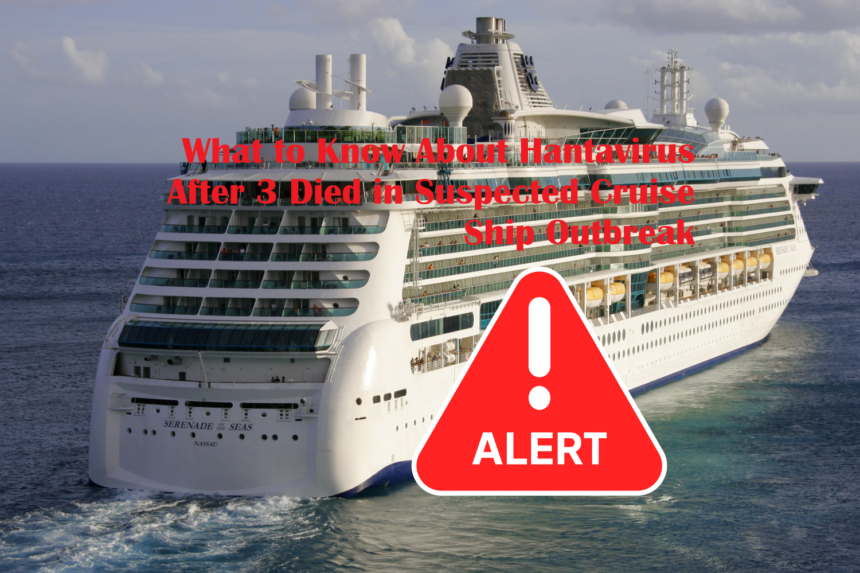
A suspected hantavirus outbreak on a cruise ship has raised global concern. Three passengers have died, and several others have fallen ill. Health authorities continue to investigate the situation. The incident has drawn attention to a rare but dangerous virus.
The outbreak occurred aboard a vessel traveling in the Atlantic Ocean. Officials confirmed at least one case and identified several suspected infections.
This event has prompted many questions about hantavirus, its risks, and how it spreads.
What Happened on the Cruise Ship
The outbreak took place on a ship carrying passengers from multiple countries. The vessel was sailing near Cape Verde when cases emerged. Three people died within weeks, while others showed symptoms. Health agencies confirmed one infection through testing.
Several additional cases remain under investigation. A patient has been treated in intensive care, and some crew members reported respiratory symptoms.
Authorities have taken precautionary measures. Passengers and crew stayed onboard under isolation protocols. Medical evacuations and further testing have been arranged. The situation highlights how quickly illness can spread in confined environments. Cruise ships often present unique public health challenges.
What Is Hantavirus?
Hantavirus refers to a group of viruses carried mainly by rodents. Humans can become infected through contact with contaminated materials. These include urine, droppings, or saliva from infected animals. The virus exists in many parts of the world. Each strain often links to a specific rodent species.
In most cases, infection occurs when people inhale particles from contaminated surfaces. This risk increases in enclosed or poorly ventilated spaces. Although the virus is rare, it can cause severe illness. Experts stress that most people never encounter it.
Types of Illness Caused by Hantavirus
Hantavirus can lead to two main diseases. Each affects the body in different ways. The first is hantavirus pulmonary syndrome (HPS). This condition attacks the lungs and can become life-threatening. Early symptoms include fever, fatigue, and muscle aches. Later stages involve coughing and difficulty breathing. Fluid can build up in the lungs, making breathing harder.
Severe cases may require intensive medical care. The second illness is hemorrhagic fever with renal syndrome (HFRS). This condition affects the kidneys. Symptoms include headaches, abdominal pain, and blurred vision. In serious cases, kidney failure may occur. Both diseases can be fatal. The mortality rate for HPS can reach around 38 percent in symptomatic cases.
How the Virus Spreads
Rodents serve as the primary carriers of hantavirus. Humans usually become infected through indirect exposure. This happens when contaminated dust or particles are inhaled. Direct contact with rodents can also lead to infection. Bites or scratches may transmit the virus, though this occurs less often.
Human-to-human transmission remains rare. Only certain strains show this capability, and even then, close contact is required. Experts believe the cruise ship outbreak likely involved environmental exposure. Investigations are ongoing to determine the exact source.
Symptoms and Timeline
Symptoms do not appear immediately after exposure. They usually develop between one and eight weeks later. Early signs resemble common illnesses. Patients often report fever, fatigue, and muscle pain. Some also experience headaches and dizziness. As the disease progresses, symptoms worsen.
Respiratory issues may develop in HPS cases. Patients can experience shortness of breath and chest tightness. In HFRS cases, kidney-related symptoms emerge. These include reduced urine output and internal complications. The progression can be rapid. Early medical attention improves survival chances.
How Dangerous Is Hantavirus?
Hantavirus infections are rare but serious. The severity depends on the strain and the patient’s condition. HPS has a high fatality rate among those who develop symptoms. Many patients require hospitalization. HFRS tends to have a lower mortality rate but still poses significant risks.
Complications can include internal bleeding and kidney failure. Despite these dangers, the overall risk to the public remains low. Health authorities emphasize that outbreaks are uncommon. The cruise ship case has drawn attention because of its unusual setting and multiple fatalities.
Prevention and Safety Measures
Preventing hantavirus infection focuses on reducing exposure to rodents. People should avoid contact with rodent droppings and nesting areas. Proper cleaning methods are essential. Sweeping or vacuuming contaminated areas can release particles into the air. Instead, surfaces should be disinfected carefully.
Good ventilation helps reduce risk. Protective gear may be used when cleaning enclosed spaces. Travelers do not need to cancel trips due to hantavirus concerns. Experts note that transmission requires specific conditions. Public health responses often include isolation, monitoring, and sanitation measures. These steps help limit further spread.
Why the Cruise Ship Case Matters
The outbreak highlights the importance of early detection and response. Cruise ships bring people together in close quarters. This environment can complicate containment efforts. Authorities have coordinated across countries to manage the situation.
Medical evacuations and testing have been prioritized. The case also underscores the role of environmental health. Even rare diseases can emerge under certain conditions. Scientists continue to study hantavirus behavior. Understanding transmission patterns remains crucial for prevention.