



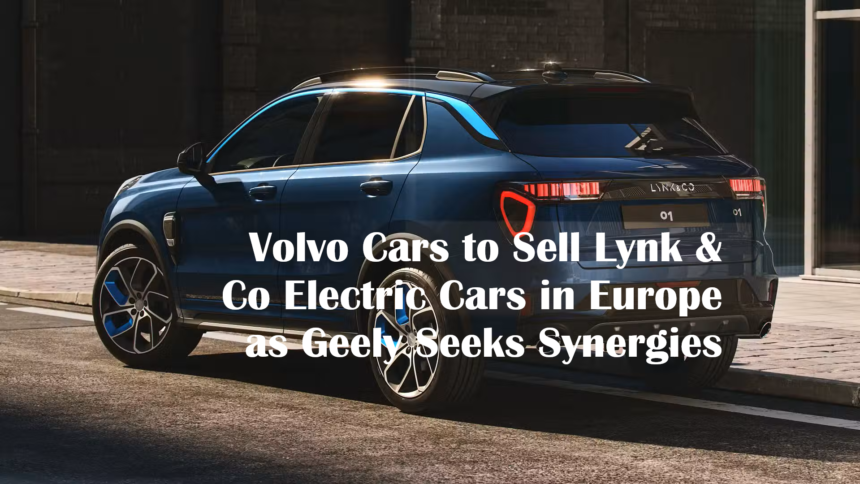
Volvo Cars has announced a new strategy to expand its footprint in Europe’s electric vehicle market. The company plans to sell Lynk & Co electric cars across the region. This move comes through a partnership with Geely Auto, its sister company under Geely Holding.
The decision reflects a growing focus on efficiency, collaboration, and shared resources within global automotive groups. The agreement highlights how automakers adapt to rising competition and changing consumer demand. It also shows how companies aim to grow without heavy investment in new product development.
The Agreement and Its Scope
Volvo Cars signed a memorandum of understanding with Geely Auto. The deal positions Volvo as the exclusive importer and distributor of Lynk & Co vehicles in Europe. Volvo plans to use its existing retail network to sell these vehicles.
The company will also rely on its established service systems to support customers. This approach allows Lynk & Co to enter or expand in multiple European markets quickly. It also reduces the need to build new infrastructure. The agreement still depends on final terms, but the strategic direction is clear.
Leveraging Existing Infrastructure
Volvo Cars has built a strong dealer and service network across Europe. This network now plays a central role in the new partnership. Lynk & Co vehicles will be sold through Volvo’s dealerships and supported by its service centers. This integration creates immediate benefits.
Customers gain access to reliable service without uncertainty. Dealers can offer a broader product lineup. The system also improves operational efficiency. Volvo benefits as well. Its retail partners can increase utilization and generate more revenue. The company strengthens its presence without major capital expenditure.
Expanding Customer Reach
The partnership helps Volvo reach a wider audience. Lynk & Co targets a different demographic compared to Volvo’s premium positioning. The brand focuses on younger, urban, and tech-oriented consumers. By adding Lynk & Co models, Volvo expands its portfolio.
It can serve both premium and mid-range segments. This strategy increases market coverage without internal competition. The company also avoids the cost and time required to develop new vehicles. It uses existing products to capture new customers.
Geely’s Strategic Shift
Geely Holding has changed its strategy in recent years. The company now focuses on efficiency and integration instead of aggressive acquisitions. The group owns several automotive brands, including Volvo, Lynk & Co, Zeekr, and Lotus. Managing such a large portfolio requires coordination. Geely has started consolidating operations and aligning brands under shared structures.
This shift aims to reduce costs and improve profitability. It also helps the group compete in a market with tight margins and rapid innovation. The partnership between Volvo and Lynk & Co fits this strategy. It creates synergies by combining resources and avoiding duplication.
Background of Lynk & Co
Lynk & Co was created as a joint venture between Geely and Volvo. The brand blends European design with Chinese manufacturing efficiency. It entered Europe several years ago but faced challenges in scaling its business. The company initially focused on subscription-based ownership models.
However, this approach did not meet expectations in all markets. As a result, Lynk & Co began shifting toward traditional retail channels. The new partnership accelerates this transition. Volvo’s dealership network provides a ready-made platform for growth.
Competitive Pressure in Europe
Europe remains one of the most competitive automotive markets. Traditional manufacturers dominate, but new entrants continue to gain ground. Chinese automakers have increased their presence in recent years. These companies offer competitive pricing and advanced technology.
However, they face challenges such as tariffs and brand perception. Geely’s strategy addresses these challenges. By using Volvo’s established reputation, Lynk & Co can gain credibility. The partnership also reduces entry barriers in key markets.
Operational Efficiency and Cost Benefits
The collaboration creates multiple efficiencies. Shared logistics, marketing, and distribution reduce overall costs. Volvo can integrate Lynk & Co vehicles into its existing systems. This reduces duplication and improves supply chain efficiency. Scale also plays an important role.
Higher volumes can lower production and distribution costs. These savings support competitive pricing and better margins. Efficiency has become critical in the electric vehicle market. Automakers face high development costs and increasing competition. Strategic partnerships help balance these pressures.
Broader Industry Implications
The partnership reflects a broader trend in the automotive industry. Companies now prioritize collaboration over expansion. Large groups like Geely manage multiple brands across different segments. Coordination allows them to maximize value from shared assets.
Other automakers may follow similar strategies. They could integrate operations across brands to reduce costs and improve efficiency. This approach also aligns with the transition to electric vehicles. The shift requires significant investment, making efficiency more important than ever.
Future Outlook
The success of this strategy will depend on execution. Volvo must integrate Lynk & Co smoothly into its network. It must also maintain brand differentiation. Consumer response will play a key role. If customers embrace Lynk & Co vehicles, the partnership could expand further.
Geely may apply similar models to other brands. This could reshape how automotive groups operate globally. The European rollout will serve as a critical test. Strong performance could validate the strategy and encourage further collaboration.