


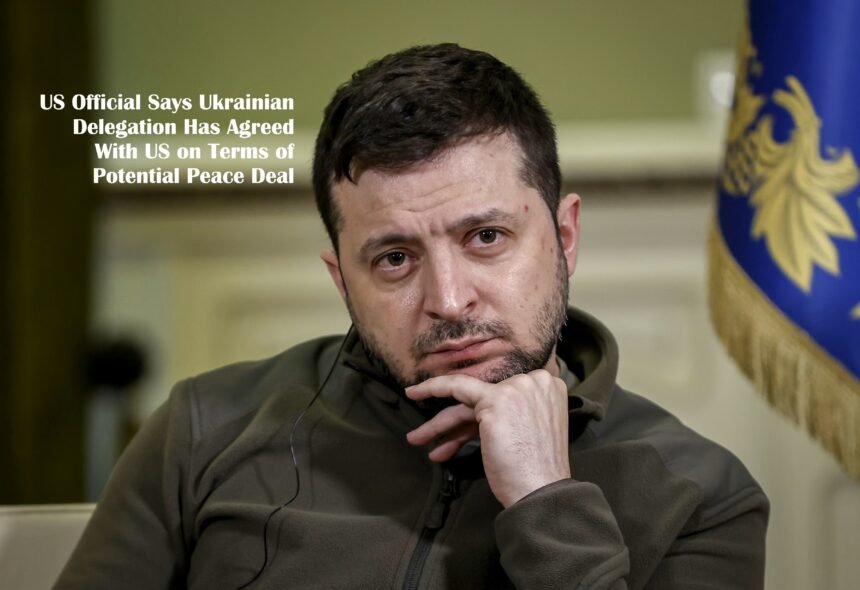
A U.S. official has confirmed that a Ukrainian delegation has reached an agreement on key terms of a possible peace deal proposed by the United States. This development follows high-level negotiations aimed at advancing a diplomatic resolution to the conflict.
What Was Agreed
According to the U.S. source, Ukraine accepted the core elements of a revised peace plan. The original proposal reportedly contained 28 points, but it has since been condensed into a 19-point framework. Significant changes include the removal of a clause about amnesty for war-related acts as well as limitations on the future size of Ukraine’s military.
Behind the Diplomacy
The breakthrough came after a weekend of talks in Geneva. U.S. Army Secretary Dan Driscoll traveled to Abu Dhabi soon after to meet with a Russian delegation, following up on the agreements made with Kyiv. Those meetings were shrouded in secrecy, underscoring their sensitivity and high stakes.
Reactions and Reservations
Even after Ukraine’s agreement, President Volodymyr Zelenskyy cautioned that further work remains. He stated that while progress had been made, details still needed to be carefully negotiated. Meanwhile, Moscow has claimed to lack full clarity on the revisions made during the Geneva talks.
Broader Context
This arrangement builds on previous diplomatic momentum. Earlier in the year, U.S. and Ukrainian teams agreed in principle on a 30-day ceasefire, contingent on Russian acceptance. As part of that deal, the U.S. also agreed to resume intelligence sharing and security assistance, moves that were paused at one point in the conflict.
At the same time, a controversial 28-point peace proposal has drawn attention. Critics argue that it favors Moscow because it recognizes some of Russia’s territorial demands.
Ukrainian President Zelenskyy has repeatedly rejected concessions of that magnitude, emphasizing that any settlement must protect Ukraine’s sovereignty.
Why This Matters
If this agreement holds, it could represent a significant step toward ending one of the most intense geopolitical conflicts of our time. The streamlined 19-point plan shows that both parties are willing to negotiate seriously, which may open a real path toward lasting peace.
Moreover, the deal has implications for Ukraine’s future military posture, its international alliances, and even how it rebuilds from wartime devastation. However, the exclusion of an amnesty provision and the scaling back of military constraints may make the agreement more palatable to Kyiv.
Risks and Uncertainties
That said, there remain critical risks:
- Russian Reaction: Any peace deal must be acceptable to Moscow. If the Russians reject the new draft, the agreement could unravel.
- Domestic Backlash: In Ukraine, public sentiment may not easily accept compromises, especially on security or territorial integrity.
- Implementation Challenges: Even with a signed deal, translating terms into lasting peace will require robust verification, guarantees, and likely international oversight.
- Sustainability of Support: The success of this deal depends on continued backing from external allies, including European states, which have expressed concern about how much say they have in the process.
The Road Ahead
Negotiators will now likely focus on finalizing remaining details, ironing out the minor but sensitive points flagged by both sides. Further diplomatic sessions could be scheduled to solidify the agreement and to agree on monitoring and enforcement mechanisms.
If a deal is signed, it could lead to a phased process: a ceasefire, followed by more comprehensive arrangements on security, reconstruction, and long-term guarantees. This could also lay the groundwork for a broader international effort to stabilize and rebuild Ukraine.
Conclusion
A major diplomatic milestone may be within reach: U.S. officials state that Ukrainian negotiators have agreed on the terms of a revised peace deal. While the path ahead remains fraught with challenges, the emerging framework suggests both sides are engaging seriously.
Whether this moment marks the start of a durable peace, however, will depend on follow-through, trust, and international cooperation.