



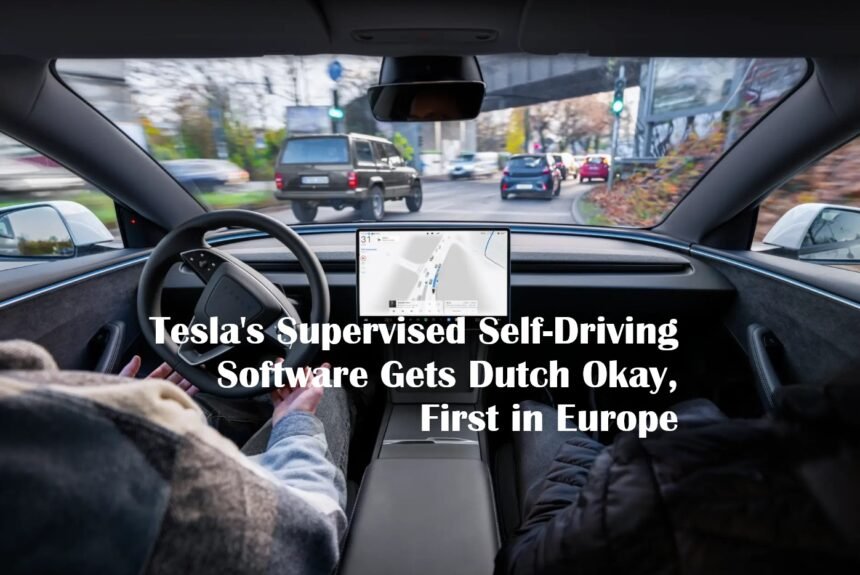
Tesla has achieved a major milestone in Europe after its supervised self-driving software received approval in the Netherlands. The decision marks the first regulatory authorization of its kind across the European region. The approval was granted by Dutch vehicle authorities after extensive testing and evaluation.
The system is known as Full Self-Driving (Supervised). It is designed to assist drivers rather than replace them. Human supervision is still required at all times. This development is expected to influence future regulatory decisions in other European countries.
Regulatory Decision in the Netherlands
Dutch regulators confirmed approval after a long assessment process. The system was tested for around 18 months under various road conditions. The national vehicle authority stated that the software can handle key driving tasks. These include steering, braking, and acceleration. However, full control remains with the driver.
The authority emphasized that safety was the main priority during evaluation. It was also stated that the system contributes positively to road safety when used correctly.
The approval allows Tesla vehicles equipped with the software to operate on both highways and city streets in the Netherlands, subject to strict supervision rules. Drivers must remain attentive and ready to take control at any moment. The decision represents a structured and cautious regulatory approach.
Technology Behind the System
The approved system is part of Tesla’s advanced driver assistance technology. It is not classified as full autonomous driving. Instead, it operates as a supervised system that supports human drivers. The software continuously monitors driving conditions using sensors and cameras. Driving decisions such as lane changes and speed adjustments are assisted by the system.
However, responsibility is always assigned to the human driver. The system also monitors driver attention. Alerts are triggered if the driver becomes distracted. In extreme cases, functionality may be temporarily limited to ensure safety. This approach reflects strict European safety standards. The technology differs from systems used in other regions due to regulatory requirements.
Significance for the European Market
This approval is considered the first step toward wider acceptance in Europe. The Dutch vehicle authority has indicated that it will submit the findings to European regulators. This could lead to broader approval across member states in the future. Tesla views this development as an important expansion opportunity.
The company has long aimed to introduce its supervised driving system in Europe. The region has historically maintained stricter regulations compared to other markets.
The approval may also strengthen Tesla’s position in the electric vehicle sector. Increased adoption of its software could enhance the appeal of its vehicles. It could also support future plans involving autonomous ride services.
Safety and Regulatory Caution
Authorities have stressed that the system does not make vehicles self-driving. Drivers remain fully responsible for all actions while using the software. Mobile phone use and other distractions are prohibited during operation. The system includes driver monitoring features. These features ensure attention is maintained throughout the journey.
If the driver fails to comply, warnings are issued. Continued inattention may result in system restrictions. European regulators are known for strict safety standards. This approval reflects careful testing rather than rapid adoption. The evaluation process included extensive real-world and controlled testing environments.
Impact on Tesla’s Strategy
The approval supports Tesla’s long-term strategy in artificial intelligence and autonomous driving. The company considers self-driving technology a key part of future growth. Revenue from software and autonomous systems is expected to play a major role in the upcoming years. Tesla’s leadership has repeatedly emphasized the importance of full self-driving development.
The European approval strengthens confidence in expansion plans. It also demonstrates progress in regulatory acceptance outside its primary markets. This milestone may encourage further collaboration between regulators and automotive companies. It also highlights the gradual shift toward advanced driver assistance systems in modern vehicles.
Future Outlook in Europe
The decision in the Netherlands could influence other countries within the region. If further approvals follow, the software may become available across the European Union. This would require additional regulatory review and voting processes. Experts expect a cautious but progressive rollout. Safety validation will remain a central requirement.
Expansion will depend on consistent performance and compliance with regional standards. Tesla is expected to continue working with regulators to meet additional requirements. The company aims to broaden availability in the near future. The development marks an important step toward the wider adoption of supervised driving systems in Europe.