


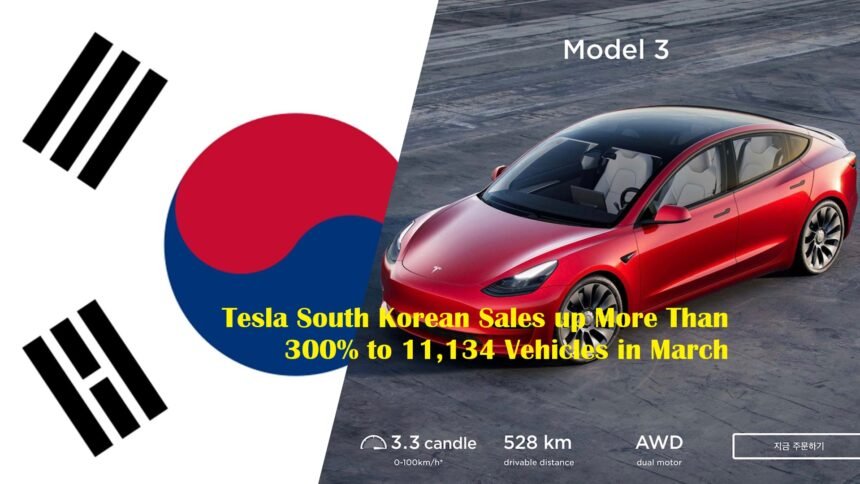
Tesla experienced a dramatic rise in South Korean sales last month as its vehicle registrations climbed sharply compared with the same period a year earlier. According to data reported by market researcher Carisyou, Tesla registered 11,134 vehicles in March 2026, representing a 330% increase year‑over‑year. This surge highlights how the company’s pricing and market strategies have reshaped demand in one of Asia’s most competitive electric vehicle (EV) markets.
Impact of Price Cuts on Consumer Demand
One of the key drivers behind Tesla’s strong performance in South Korea was the implementation of significant price reductions on select models. The company trimmed prices on some versions of its Model Y and Model 3 electric vehicles, both of which are manufactured at its facilities in China. The move made these EVs more affordable for local consumers, stimulating demand and boosting registration numbers.
These price cuts also intensified competition among EV makers in South Korea. Domestic brands and other global manufacturers faced fresh pressure to adjust their pricing strategies to stay relevant in a market that increasingly values affordability as well as performance.
Broader Market Dynamics Influencing Sales
South Korea’s EV market has been expanding rapidly, supported by growing environmental awareness and government incentives aimed at reducing carbon emissions. This backdrop created fertile ground for Tesla’s increased sales, especially as consumers showed heightened interest in electric options that combine range and value.
Industry data indicates that rising EV adoption is part of a longer‑term trend as internal combustion engine vehicles lose appeal among environmentally conscious buyers. While price reductions played a major role, Tesla’s brand strength and reputation for performance helped it capture attention among both existing EV buyers and new adopters.
The Model Y and Model 3 benefited from improved accessibility, meeting the needs of customers who might otherwise consider alternative options or delay electrification altogether.
Comparison With Other EV Registration Trends
Although Tesla’s sales in South Korea enjoyed remarkable growth, the broader market saw varying degrees of expansion among competitors. Domestic manufacturers also reported higher EV registrations in March, driven by strong local demand for environmentally friendly vehicles. These broader trends reflect how consumer interest in electrified transportation continues to shift rapidly across segments.
For example, major local automakers boosted their own EV sales in the same period, though none matched the explosive growth rate seen by Tesla in South Korea. The competitive environment remains vigorous as both domestic and foreign brands vie for market share in the expanding EV sector.
Local Economic and Policy Influences
Government policies aimed at reducing emissions have supported EV adoption in South Korea for years. Subsidies, tax incentives, and improvements in charging infrastructure have helped make electric vehicles a more practical choice for many consumers. These measures, combined with heightened environmental awareness, further bolstered the appeal of EVs during the first quarter of 2026.
South Korea is also home to several major battery producers and a strong automotive supply chain. This ecosystem benefits manufacturers of EVs while encouraging innovation and competition. Tesla’s rapid sales growth can therefore be seen not just as a result of pricing adjustments but also within the context of broader industrial transformation taking place in the country.
Tesla’s Place in South Korea’s EV Landscape
Tesla’s recent performance stands out in a market traditionally dominated by strong domestic competitors and well‑established global brands. The company’s ability to secure such a significant increase in registrations indicates that its value proposition resonates with South Korean consumers.
While its price cuts triggered heightened competition, they also ensured that Tesla remained an attractive option for customers considering a switch to electric. Brand perception and innovation have also played a role.
Tesla has positioned itself not just as a carmaker but as a technology leader, with features such as advanced driver‑assistance systems and over‑the‑air software updates helping to differentiate its products from others in the market.
Challenges and Future Outlook
Despite this recent success in South Korea, Tesla faces ongoing challenges both domestically and globally. Elsewhere in the world, the company has encountered mixed sales results, and in some regions it has faced increased competition from Chinese automakers and other EV producers. Nevertheless, strong performance in key markets like South Korea demonstrates that Tesla still holds considerable appeal for many consumers.
Looking ahead, South Korea’s EV market is likely to remain a critical battleground for Tesla and its competitors. Continued innovation, strategic pricing, and effective marketing will be essential as more consumers shift toward electrified transportation and as local firms continue to strengthen their offerings.