



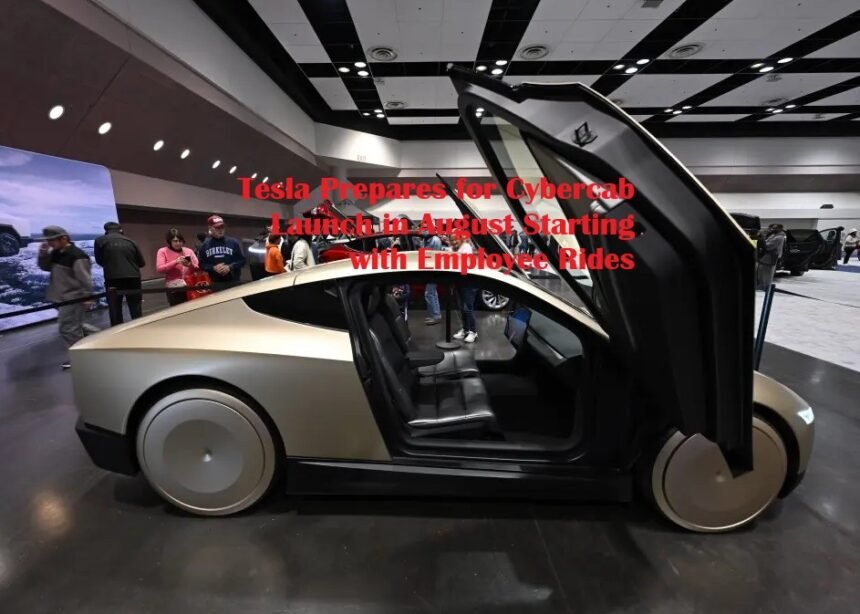
Electric vehicle giant Tesla is actively preparing for the initial operational launch of its dedicated Cybercab robotaxi. According to internal sources familiar with the company’s operational roadmap, the firm plans to roll out Cybercab rides in Austin, Texas. The initial deployment phase will specifically serve Tesla employees before expanding to broader public access.
The upcoming rollout marks a crucial milestone in chief executive Elon Musk’s long-term vision to pivot Tesla toward autonomous transport networks. By using company staff as initial test passengers, Tesla aims to validate real-world operational performance, refine fleet coordination software, and gather essential sensor data under controlled urban conditions.
Controlled Employee Rollout Precedes Wider Integration
Tesla told internal teams that employee rides will begin on municipal roads across Austin. Initial passenger trips will allow engineers to collect driving telemetry across diverse urban routes. Within a few days of starting internal rides, Tesla intends to integrate Cybercab units directly into its existing Austin Robotaxi fleet.
Before advancing toward public road testing, Tesla conducted preliminary test drives around its Austin manufacturing facilities. The company also provided local first responders with emergency safety training regarding steering-wheel-free vehicles. These operational checks ensure that safety teams can manage unexpected road incidents or vehicle stalls effectively.
- Employee Passenger Trial: Internal staff members serve as initial passengers to evaluate ride quality and system reliability.
- Emergency Safety Protocols: Austin emergency teams completed specialized safety procedures for pedal-less autonomous cars.
- Rapid Fleet Integration: Cybercabs will join the main robotaxi dispatch network shortly after employee trials conclude.
- Real-World Telemetry: Testing on municipal streets allows neural networks to adapt to complex traffic flows.
A Purpose-Built Hardware Platform for Driverless Transport
The Cybercab represents a radical departure from traditional automotive interior design. Purpose-built exclusively for driverless ride-hailing networks, the two-seat electric vehicle lacks standard manual controls, such as a steering wheel, accelerator pedal, or brake pedal. Passenger interaction relies entirely on digital touchscreens and voice interfaces. The vehicle operates on Tesla’s proprietary Full Self-Driving vision platform, relying primarily on high-resolution cameras and onboard neural networks.
Unlike competitors that utilize expensive lidar arrays, Tesla’s camera-centric approach aims to drastically lower manufacturing costs per vehicle. Lower hardware costs allow the automaker to scale its autonomous fleet rapidly across international markets.
- Pedal-Free Interior: Removing manual driver controls maximizes passenger cabin space and comfort.
- Vision-Only Architecture: Advanced camera systems process surroundings without expensive lidar sensors.
- Low Production Costs: Simplified manufacturing enables competitive per-mile passenger pricing.
- Constant Connectivity: Starlink satellite integration maintains seamless contact between vehicles and fleet control hubs.
High Stakes in the Autonomous Ride-Hailing Race
Tesla’s August launch comes at a crucial juncture in the commercial autonomous vehicle industry. Rival operators have already accumulated millions of commercial rider-only miles across major American cities, setting high benchmarks for safety and operational uptime. Deploying purpose-built Cybercabs allows Tesla to showcase its competitive edge in hardware scaling and autonomous software efficiency. Investors view the Cybercab project as a pivotal catalyst for Tesla’s long-term valuation.
Transitioning from a pure consumer vehicle manufacturer to an autonomous mobility provider creates recurring software revenue streams. Successful employee testing will reassure financial markets that commercial driverless operations are technically viable.
- Commercial Scaling: Moving from human-supervised test units to purpose-built robotaxis expands total market size.
- Regulatory Scrutiny: Safety regulators monitor pedal-free vehicle deployments closely to ensure public safety.
- Recurring Revenue: Autonomous ride fees provide steady high-margin software income for the business.
- Market Positioning: Early operational success cements Tesla’s leadership in physical AI applications.
Navigating Regulatory Approval and Timeline Constraints
While Tesla maintains an internal target for late August, company executives acknowledge that launch dates remain fluid. Final deployment timelines depend heavily on system stability, neural network performance metrics, and local regulatory clearances. Testing vehicles without steering wheels requires specific exemptions or approvals from highway safety authorities.
Tesla continues accumulating driving data specific to the Cybercab platform before expanding fleet density. Gathering feedback from employee passengers helps software teams optimize vehicle braking profiles, pick-up routines, and passenger drop-off locations in dense municipal areas.
- Software Calibration: Continuous driving updates refine vehicle maneuvers in unpredictable traffic.
- Safety Compliance: Tesla aligns fleet operations with municipal transport safety requirements.
- Feedback Integration: Employee riders report software glitches before public fare collection begins.
- Gradual Expansion: Austin serves as the operational blueprint for future city rollouts globally.
The Future Trajectory of Tesla Mobility Networks
The upcoming Austin employee trial represents a decisive step forward for Tesla’s transportation strategy. By testing Cybercabs on public municipal streets, the company transitions its theoretical driverless vision into tangible reality.If Tesla executes the employee phase without operational disruptions, broader public access will follow quickly. The Cybercab rollout in August may soon be recognized as the opening chapter of a new era in autonomous urban mobility.