



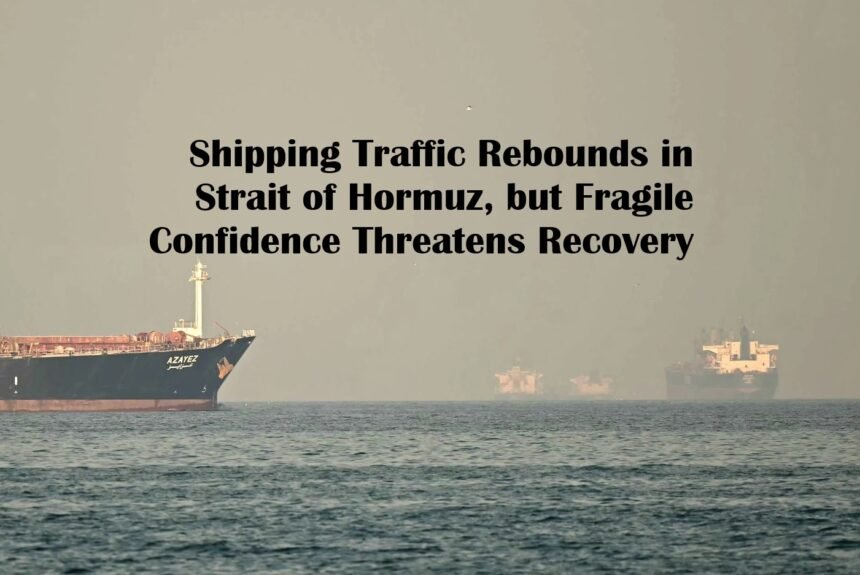
Shipping traffic through the Strait of Hormuz is showing encouraging signs of recovery after months of disruption. Tankers and commercial vessels have started returning to one of the world’s busiest maritime corridors. However, the rebound remains fragile because shipping companies, insurers, and cargo owners still face serious security concerns. The Strait of Hormuz serves as a vital gateway for global energy exports. Around one-fifth of the world’s oil supply normally passes through this narrow waterway.
Any disruption immediately affects energy markets, freight costs, and international trade. Although vessel movements have increased in recent days, industry experts believe confidence has not fully returned. The shipping industry continues to monitor political developments before restoring normal operations.
Shipping Activity Begins to Recover
Recent data indicate that tanker traffic has increased compared with the lowest levels recorded during the regional conflict. More crude carriers have resumed voyages through the strait as diplomatic tensions eased and temporary agreements reduced immediate security risks. Daily vessel crossings have improved, signaling that operators are slowly regaining confidence.
Despite the improvement, shipping volumes remain well below historical averages. Before the conflict, approximately 130 to 140 vessels crossed the Strait of Hormuz each day. Current traffic represents only a fraction of normal activity, highlighting the long road toward full recovery.
Confidence Remains the Biggest Challenge
The biggest obstacle is no longer physical access to the waterway. Instead, confidence has become the key issue. Shipping companies want clear evidence that the region will remain stable before sending additional vessels through the strait.
Many shipowners continue to worry about sudden military escalation. Insurance providers also remain cautious because conflict-related risks can dramatically increase operating costs. Without stronger guarantees, shipping companies may continue choosing safer routes or delaying voyages.
Business decisions in the maritime sector depend heavily on risk management. Even when governments announce ceasefires or temporary agreements, commercial operators usually wait for lasting stability before making major commitments.
Insurance Costs Continue to Pressure Operators
Marine insurance remains one of the largest concerns for shipping companies. Higher security risks increase insurance premiums, raising transportation costs for every voyage through the Strait of Hormuz. These higher costs eventually affect global supply chains. Oil producers, exporters, and importers may all face higher expenses.
Those additional costs can spread across multiple industries, including manufacturing, transportation, and consumer goods. Insurance companies also require continuous assessments of regional security. Any new incident could immediately raise premiums again, making shipping through the area less attractive.
Energy Markets Watch Every Development
The Strait of Hormuz plays a central role in global energy markets. Countries in the Gulf rely on this route to export crude oil, liquefied natural gas, and petroleum products to customers worldwide. As shipping activity increases, oil markets generally respond with greater optimism.
Traders expect improved supply availability when more tankers complete their voyages. That expectation can help stabilize oil prices after periods of extreme volatility. Nevertheless, investors continue watching political developments closely. Any sign of renewed conflict could quickly reverse recent gains and increase market uncertainty.
Shipping Companies Prefer a Cautious Approach
Many shipping companies are avoiding aggressive expansion despite improving conditions. Executives understand that rebuilding confidence requires time rather than a single diplomatic breakthrough. Fleet managers carefully evaluate every voyage before approving transit through the Strait of Hormuz.
They review intelligence reports, security assessments, weather conditions, and insurance requirements before making operational decisions. This cautious strategy helps reduce unnecessary risks while allowing gradual increases in shipping activity. It also protects crews, cargo, and valuable vessels from unexpected incidents.
Regional Stability Will Determine Future Growth
Future shipping volumes will depend largely on political stability across the region. Long-term agreements between governments could encourage more shipping companies to restore regular schedules. Experts believe confidence will improve only if commercial vessels continue crossing the strait without significant disruptions.
Every successful voyage strengthens trust among shipowners, insurers, and cargo customers. On the other hand, even a single serious security incident could delay recovery for weeks or months. That possibility explains why many companies continue adopting conservative operating strategies.
Global Trade Depends on Reliable Maritime Routes
The Strait of Hormuz remains one of the world’s most important maritime chokepoints. Reliable access benefits not only oil exporters but also manufacturers, retailers, and consumers across international markets. Smooth shipping operations help maintain stable supply chains.
Delays in one strategic location often create ripple effects across multiple industries. Freight rates, delivery schedules, and inventory planning all depend on reliable transportation routes. As shipping traffic gradually increases, businesses hope supply chains will become more predictable. Stable logistics also support economic growth by reducing transportation uncertainty.
Outlook for the Shipping Industry
Industry analysts remain cautiously optimistic about future shipping activity. Vessel movements are improving, but the pace of recovery depends on lasting political stability rather than short-term agreements. Shipping companies will likely continue increasing operations step by step.
They want consistent evidence that commercial navigation remains safe before returning to pre-conflict levels. Insurance providers and financial institutions share the same cautious outlook because they also face significant financial exposure. The recovery process may therefore extend over several months instead of happening within weeks. Patience and stability will play essential roles in rebuilding normal maritime operations.