



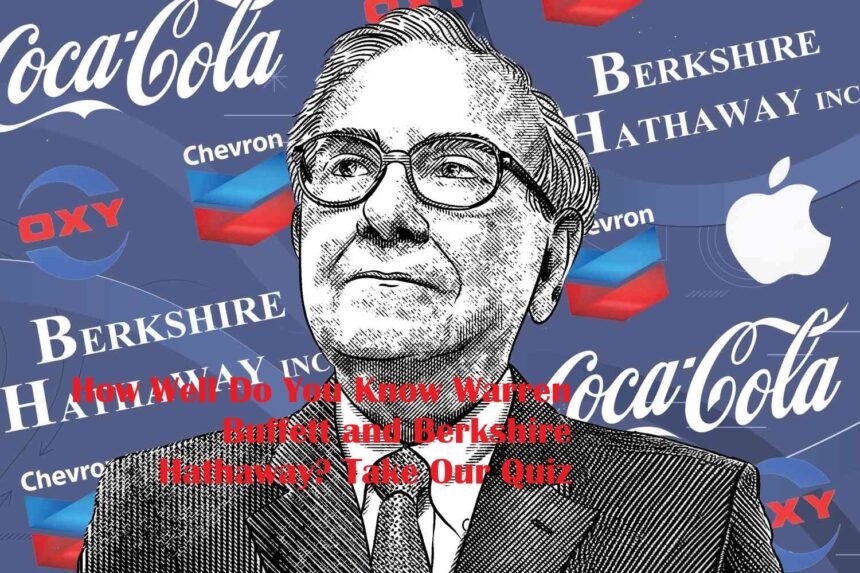
Warren Buffett is one of the most famous investors in modern history. For decades, he led Berkshire Hathaway, turning it into a financial powerhouse. A new quiz challenges readers to test how much they really know about Buffett and the company he built. This article explores the quiz, key facts about Buffett and Berkshire, and why this matters for both investors and curious readers alike.
Who Is Warren Buffett?
Warren Buffett is often called the “Oracle of Omaha.” He began investing as a child and never stopped learning about markets and businesses. His approach to investing focuses on value, patience, and strong fundamentals. Buffett’s strategy made Berkshire Hathaway one of the most successful conglomerates in the world.
Buffett took control of Berkshire Hathaway in the mid‑1960s. At the time, it was a struggling textile firm. He transformed the company into a diverse conglomerate with holdings in insurance, railroads, consumer brands, and financial assets. Many investors admire how he stayed true to his principles even when markets fluctuated.
Though Berkshire Hathaway’s scope grew over time, Buffett stayed focused on disciplined investing. He rarely chased short‑term trends. Instead, he looked for long‑term value and strong businesses. This philosophy helped Berkshire consistently outperform many competitors.
What Is the Quiz About?
The quiz asks readers about the history, strategies, and milestones linked to Buffett and Berkshire Hathaway. It tests knowledge of investing facts, company holdings, leadership changes, and legendary moves by Buffett over the years. Participants are encouraged to answer questions correctly to see how well they understand one of finance’s greatest stories.
Some questions may focus on Buffett’s early life. Others probe how Berkshire became a global giant. The quiz does not require expert financial training. Instead, it rewards anyone with an interest in investing, corporate history, and business leadership.
The quiz’s purpose is not only to entertain. It also educates readers about key lessons from Buffett’s career. By testing their knowledge, participants learn more about investing wisdom and corporate strategy that helped Berkshire grow.
Berkshire Hathaway: A Corporate Giant
Berkshire Hathaway is a massive holding company with interests in dozens of businesses. Its structure is unique in the corporate world. Rather than focusing on one industry, Berkshire owns a wide range of companies across sectors.
The company owns insurance firms like GEICO and specialty insurers. It also controls BNSF Railway, one of North America’s largest rail networks. Energy, consumer goods, and manufacturing are also parts of its portfolio. These divisions provide steady cash flow and diversify risk.
In addition to wholly owned businesses, Berkshire holds large equity stakes in public companies. Apple, American Express, Bank of America, and Coca‑Cola have all been major holdings. Over decades, Buffett used these stakes to generate strong returns.
Berkshire Hathaway’s approach to buying businesses is patient and selective. It often buys companies outright when valuations make sense. For public stocks, Buffett prefers companies with durable competitive advantages and strong cash flow. This approach has helped the firm weather market volatility.
Buffett’s Legacy and Recent Changes
After more than 60 years as CEO, Buffett stepped down from that role at the end of 2025. He remains chairman, but a new leadership era has begun. His successor, Greg Abel, now leads operations. This shift marks a major moment in Berkshire’s history.
Despite the change in CEO, Buffett’s approach still shapes the firm. In his final year as CEO, he became even more cautious. Berkshire sold more stocks than it bought and increased its cash reserves to record levels. Buffett also made strategic acquisitions while trimming some public holdings.
Investors and the market reacted to this transition. Some analysts worry about how Berkshire will perform without Buffett’s personal touch. Others believe his long‑planned succession ensures continuity. The quiz will likely include questions about this leadership change and its impact on the company’s strategy.
Why This Quiz Matters
The quiz is more than a fun challenge. It reminds readers why Buffett and Berkshire Hathaway matter. Buffett’s investment style influenced generations of investors. His annual shareholder letters and public talks offered timeless wisdom.
Learning facts about Berkshire also helps people understand how large corporations operate. Berkshire’s decentralized structure and diversified holdings show how a conglomerate can balance risk and reward. Lessons from Buffett’s decisions can apply to individual and institutional investors alike.
For students and new investors, the quiz can spark deeper interest. It encourages them to explore annual reports, shareholder letters, and financial history. Many successful investors point to Buffett’s teachings as foundational to their own learning.
Key Lessons from Buffett’s Career
Even if someone hasn’t taken the quiz yet, there are timeless lessons to remember. Buffett’s career shows the value of patience in investing. Markets fluctuate, but long‑term focus can pay off over time. Another lesson is to stick to what you understand. Buffett often avoided businesses outside his expertise.
This discipline helped him avoid costly mistakes and maintain strong performance over decades. Buffett also emphasized the importance of valuation. Rather than buying the most popular stocks, he bought companies with intrinsic value. This value‑oriented mindset helped Berkshire grow steadily.
Finally, Buffett’s humility is noteworthy. Despite unprecedented success, he remained grounded, living modestly and avoiding ostentation. His focus was always on sound decision‑making rather than short‑lived fame.
How to Prepare for the Quiz
To get a good score on the quiz, it helps to know both facts and philosophy. Reading about Buffett’s life, studying Berkshire’s business model, and reviewing recent company history are good starting points. Investors often review annual shareholder letters for insight. These letters reveal Buffett’s thought process and how he approaches risk and opportunity.
A strong grasp of Berkshire’s major holdings and business units can also help. The quiz seems designed to test both trivia and deep understanding. Participants should not only remember dates and numbers but also the reasoning behind major decisions. This mix makes the quiz both educational and engaging.