


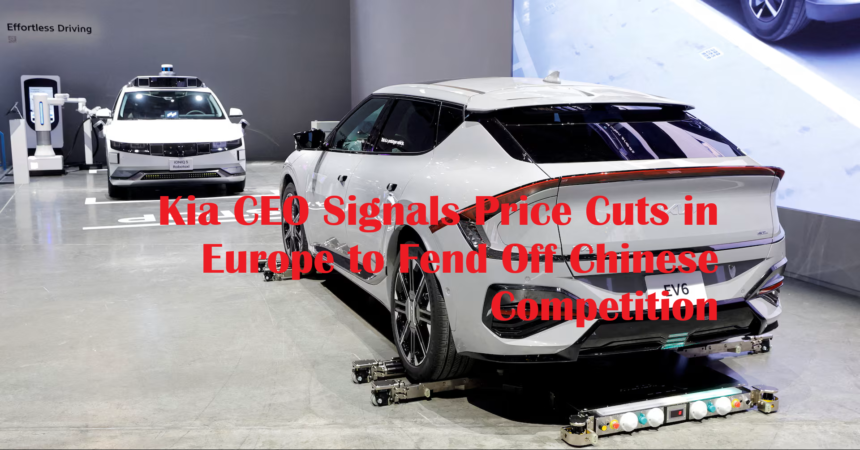
Kia is preparing to lower vehicle prices in Europe. The move aims to counter growing competition from Chinese electric vehicle makers. The company’s leadership sees Europe as a critical battleground. Chinese automakers have expanded aggressively outside their home market.
Slowing domestic demand has pushed them toward overseas growth. Europe has become a top destination for this expansion. Brands such as BYD are increasing their presence quickly. Registrations of Chinese vehicles in Europe have surged.
In some cases, growth has far exceeded that of traditional automakers. Kia’s leadership recognizes this shift. The company is adjusting its pricing strategy to remain competitive. Price cuts are now part of a broader defensive plan.
Narrowing the Price Gap
Kia has already reduced the price difference with Chinese rivals. The gap now stands at around 15% to 20%. Previously, it ranged between 20% and 25%. This change reflects a clear strategy. Kia wants its vehicles to remain attractive without sacrificing brand value. Lower prices can help maintain market share in a crowded field.
Executives believe the adjustment is necessary. Chinese competitors often offer advanced features at lower prices. This combination has attracted European consumers. Kia’s response focuses on balance. The company aims to stay competitive while preserving profitability. That balance will define its success in the region.
Europe as a Key Battleground
Europe has emerged as a central arena for global auto competition. Legacy carmakers and new entrants are competing for dominance. Chinese companies have targeted the region with affordable electric vehicles. These models appeal to cost-conscious buyers. They also meet strict environmental standards.
At the same time, European consumers are shifting toward electric mobility. Demand for EVs continues to grow across the continent. This trend intensifies competition among manufacturers. Kia views Europe as essential to its long-term growth. The company cannot afford to lose ground in this market. Price adjustments are one way to protect its position.
Impact on Profitability
Lower prices often come with trade-offs. Kia has already felt some pressure on its earnings. The company reported a decline in quarterly profit. Sales incentives in Europe contributed to this result. Despite this, leadership remains confident. Strong overall profitability gives Kia room to maneuver. The company can absorb short-term impacts to secure long-term gains.
Executives emphasize disciplined pricing. They do not plan to engage in reckless discounting. Instead, they aim for targeted adjustments that support competitiveness. This approach reflects a broader industry challenge. Automakers must balance growth and profit in a rapidly changing market.
Chinese Expansion and Market Dynamics
Chinese automakers are reshaping the global industry. Many companies have developed cost advantages through scale and supply chains. They also benefit from strong domestic competition. Intense rivalry at home has forced innovation and efficiency. These strengths now support their global expansion.
In Europe, Chinese brands offer competitive pricing and modern technology. This combination has disrupted traditional market dynamics. Recent data highlights the trend. Some Chinese brands have recorded triple-digit growth in European registrations. This rapid expansion creates urgency for established players. Companies like Kia must respond quickly to maintain relevance.
Strategic Response from Kia
Kia’s strategy goes beyond simple price cuts. The company is leveraging its global scale and brand strength. Executives highlight the importance of profitability. Kia believes it can compete effectively without sacrificing financial stability.
The company is also focusing on product differentiation. Design, technology, and reliability remain key selling points. These factors help justify pricing decisions. Kia’s leadership sees pricing as one tool among many. A broader strategy will guide its response to competition.
Industry-Wide Price Competition
The European market is entering a phase of intense price competition. Automakers are introducing discounts and incentives. Chinese companies have played a major role in this shift. Their aggressive pricing has forced competitors to react.
Other global manufacturers face similar challenges. Price wars can erode margins across the industry. However, they can also stimulate demand. Kia’s decision reflects this reality. The company is adapting to a new competitive environment. Pricing flexibility has become essential.
Outlook for the Chinese EV Sector
Kia’s leadership expects changes in China’s auto industry. Government support for electric vehicles may decline. This could lead to consolidation among manufacturers. A restructuring process may occur sooner than expected.
Some companies could struggle to survive without subsidies. At the same time, Chinese firms continue to expand globally. Their presence in Europe is likely to grow further. This dual dynamic creates uncertainty. Competition will remain strong even as the industry evolves.
Long-Term Implications for Europe
The rise of Chinese automakers will shape Europe’s automotive future. Consumers will benefit from more choices and competitive pricing. Traditional manufacturers must adapt quickly. Innovation and efficiency will become even more important.
Kia’s strategy reflects these realities. The company is preparing for a prolonged period of competition. Price adjustments alone will not determine success. Strong products and brand trust will also play crucial roles.