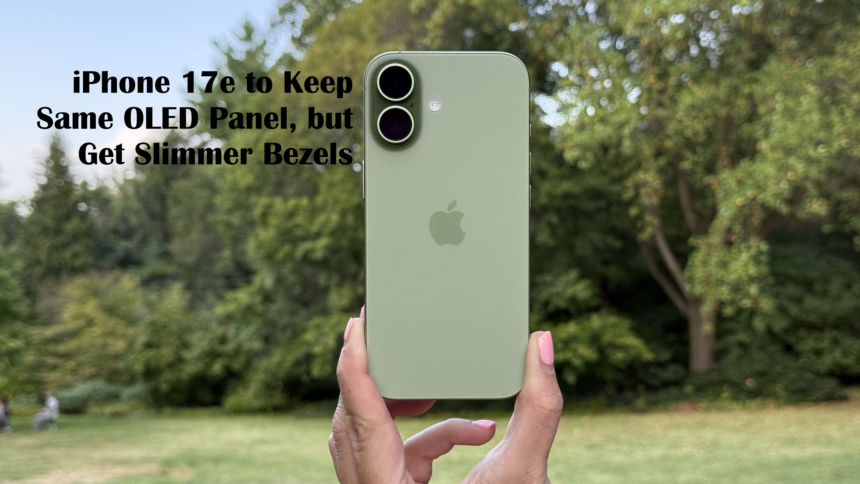
Apple is preparing to release the iPhone 17e, a follow-up to its current budget-oriented “e” model. According to a recent supply-chain report, the new device will reuse the same OLED panel as the iPhone 16e but it will feature noticeably slimmer bezels.
What Remains the Same: The Display Panel
The upcoming iPhone 17e is expected to use the same OLED panel that first appeared in the iPhone 14 and was reused in the iPhone 16e. This choice reflects Apple’s strategy to reuse proven, mass-produced components for its lower-cost devices.
Previous specifications for that panel include Super Retina XDR with a contrast ratio around 2,000,000:1, 800-nit typical brightness and up to 1,200-nit peak brightness for HDR content. By retaining the older OLED panel, Apple helps keep production costs down. Using an existing, established supply chain can streamline manufacturing.
What Changes: Slimmer Bezels, Updated Look
Even though the display panel stays the same, iPhone 17e is slated for a design refresh. The new model is set to feature slimmer bezels than its predecessor. Because bezel thickness depends more on the chassis frame and how snugly the screen fits into it than on the panel itself, Apple can slim down the borders without touching the panel design.
That design update could make a noticeable difference in aesthetics and the screen-to-body ratio. The slimmer borders will give the front display a cleaner, more modern look, even though the underlying display remains unchanged.
Why Apple Might Avoid Other Upgrades for 17e
Some rumours suggested that the iPhone 17e might adopt the newer pill-shaped cutout design (often referred to as Dynamic Island) seen on flagship iPhone models. However, the recent report does not claim that the 17e will include such a change. Adopting Dynamic Island would require more than a display change.
The device would need a reworked TrueDepth camera system, revised sensor placement, and updated display masking modifications that would likely raise production costs and negate many of the cost-saving measures gained by reusing the existing OLED panel.
As such, it appears Apple aims to keep 17e as an affordable option that still feels fresh, thanks to slimmer bezels, but avoids redesigning major internal components.
Other Expected Specifications
Alongside the screen changes, iPhone 17e is expected to retain a 6.1-inch OLED display with a 60 Hz refresh rate. Since the reused panel originates from older production lines (i.e., those used for iPhone 14 and 16e), it does not support the variable refresh rate (e.g., 120 Hz) that newer, higher-end iPhone models may offer.
The decision to stick with a 60 Hz panel further underscores Apple’s commitment to keeping the 17e model cost-efficient and distinct from its flagship counterparts.
What This Means for Buyers
For prospective buyers, the iPhone 17e could offer a compelling mix: affordability, a familiar OLED display with proven performance, and a cleaner, more modern design thanks to slimmer bezels. The visual refresh may make the phone feel more up-to-date, even if the internal screen technology remains the same.
However, the lack of newer features like Dynamic Island or a higher refresh rate means that 17e will remain behind flagship models in terms of premium feel and display performance. For users who value cost efficiency and only need a decent OLED display for everyday tasks social media, browsing, photos the 17e could make sense.
But multimedia-heavy users who want smooth scrolling or advanced display features may still prefer higher-end models.
Conclusion
The upcoming iPhone 17e illustrates how incremental design changes can refresh a device without overhauling its core hardware. By reusing the OLED panel from previous generations and slimming down the display bezels, Apple appears to strike a balance between cost control and aesthetic improvement.
In effect, the iPhone 17e offers a subtle but meaningful upgrade in appearance while preserving the cost-efficient components that make the “e” lineup appealing. For budget-conscious buyers, the 17e promises a good value, a modern look, reliable display, and the trusted Apple ecosystem, even if it does not chase the full feature set of flagship devices.