



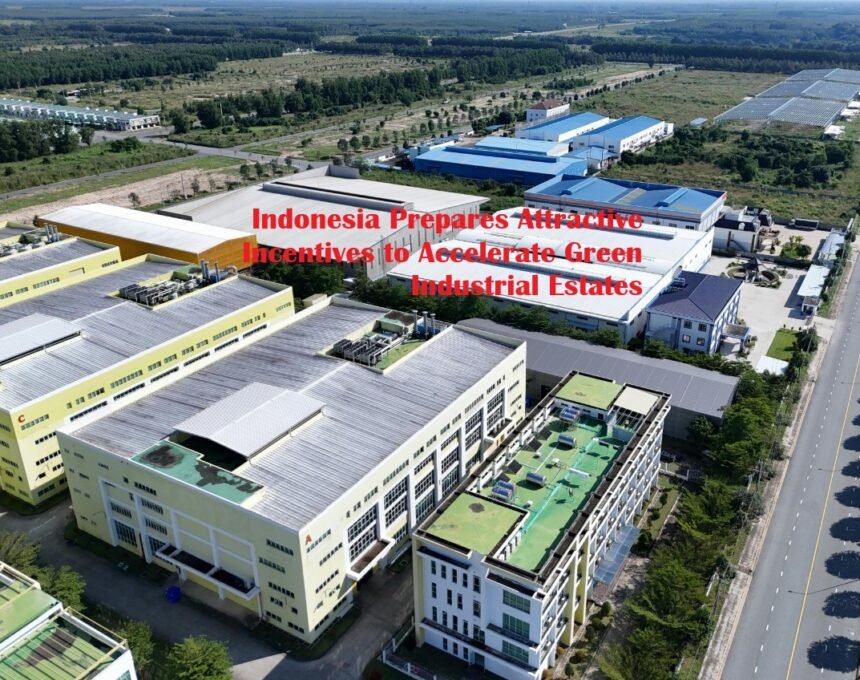
The Indonesian government is formulating a strategic package of fiscal and non-fiscal incentives to accelerate the development of green industrial estates across the archipelago. This initiative reflects the country’s firm commitment to driving sustainable economic growth, reducing carbon emissions, and attracting eco-conscious foreign investment.
By transitioning traditional industrial zones into environmentally friendly hubs, Indonesia aims to strengthen its global competitiveness in the rapidly evolving green economy. Government officials recognize that sustainable industrialization requires significant capital investment and advanced technology.
To encourage industrial estate developers and tenant companies to adopt eco-friendly practices, the government plans to offer tax holidays, import duty exemptions for green technology, and streamlined licensing procedures. These measures will significantly lower operational risks and upfront costs for businesses committed to decarbonization.
Fostering Sustainable Investment and Industrial Transformation
Indonesia aims to position itself as a regional powerhouse for green manufacturing and clean energy processing. The planned incentives target industrial zones that prioritize renewable energy integration, efficient waste management systems, and sustainable water usage. By offering clear regulatory support, the government seeks to draw multinational corporations looking to align their supply chains with global net-zero targets. Industry leaders have welcomed the government’s proactive approach to green industrial development.
Transitioning to clean energy sources allows manufacturers to reduce their reliance on fossil fuels while avoiding potential carbon border tariffs imposed by international trading partners. Consequently, these green estates will serve as vital catalysts for modernizing the national industrial ecosystem.
Key Pillars of the Green Estate Framework
The proposed framework sets clear criteria for industrial zones seeking green certification and financial incentives. Developers must implement comprehensive environmental management systems and integrate clean energy sources into their power grids. Furthermore, factories operating within these estates must adopt circular economy principles to minimize industrial waste and reduce overall resource consumption.
- Renewable Energy Integration: Utilizing solar, hydro, and geothermal power to run factory operations.
- Circular Waste Systems: Recycling industrial wastewater and processing solid waste efficiently.
- Resource Efficiency: Implementing smart energy monitoring tools to optimize electricity consumption.
- Eco-Friendly Infrastructure: Building green-certified structures and maintaining sustainable logistics networks.
These standards ensure that certified green industrial estates deliver verifiable environmental benefits rather than superficial branding. The government will establish rigorous monitoring mechanisms to evaluate estate performance and ensure compliance with national sustainability benchmarks.
Boosting Economic Competitiveness through Decarbonization
Sustainable industrial development plays a pivotal role in maintaining Indonesia’s economic resilience in an era of global energy transition. Major export markets increasingly demand environmentally responsible production processes from their suppliers. By establishing incentives for green industrial estates, Indonesia enables local manufacturers to more easily meet international sustainability standards.
In addition to expanding export opportunities, the growth of green industrial estates creates thousands of high-skilled jobs in clean technology, environmental engineering, and renewable energy management. This transformation directly supports Indonesia’s broader economic goals while accelerating its national decarbonization roadmap toward net-zero emissions.
Streamlining Permits and Public-Private Collaboration
Beyond financial relief, the government is prioritizing administrative efficiency to ensure the swift implementation of green projects. Developers of green industrial estates will gain access to simplified permitting processes and dedicated assistance from investment authorities. Removing regulatory bottlenecks ensures that green construction projects move forward without unnecessary administrative delays.
- Application Submission: Industrial estate developers submit green transformation plans.
- Environmental Evaluation: Government panels verify clean energy and waste management targets.
- Incentive Granting: Eligible projects receive immediate tax relief and fast-track permits.
- Continuous Monitoring: Authorities conduct annual audits to verify ongoing green compliance.
Public-private partnerships remain essential for building the infrastructure necessary to support green industrial growth. The government encourages collaboration between private developers, state-owned utility providers, and international technology vendors. This unified approach ensures that industrial estates receive a reliable supply of clean electricity, water, and digital connectivity.
Long-Term Vision for Indonesia’s Green Economy
The incentive plan for green industrial estates marks a decisive step toward realizing Indonesia’s vision of becoming a sustainable economic leader in Asia. By creating a favorable environment for eco-friendly manufacturing, the country builds a resilient industrial base capable of enduring future global economic shifts.
As implementation details emerge, both domestic and foreign investors are preparing to expand their footprints in Indonesia’s green industrial landscape. Strategic government support, coupled with abundant natural resources, places Indonesia in an optimal position to lead the region’s green industrial transformation for decades to come.