


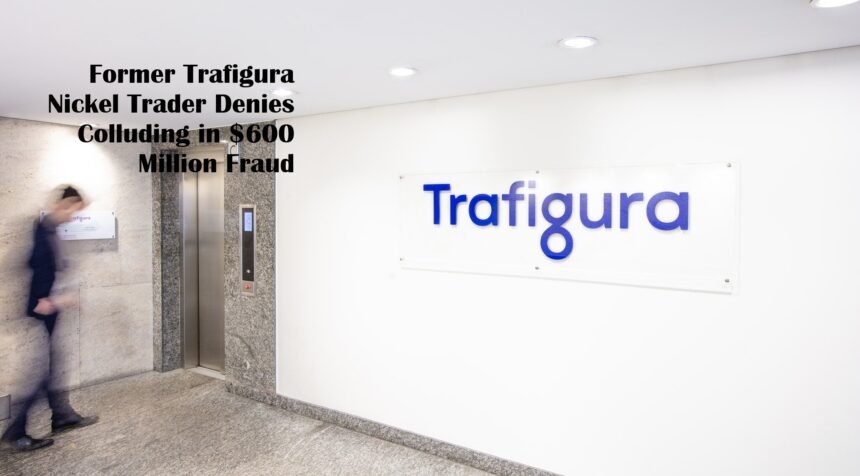
In a closely watched London High Court trial, Sokratis Oikonomou, once the head of nickel trading at Trafigura, has strongly denied accusations by Indian businessman Prateek Gupta that he helped orchestrate a $600 million fraud. The claim centers on the alleged delivery of low-grade metals instead of high-purity nickel. Oikonomou, who spent about 16 years at the company before his termination in early 2023, insists he had no involvement in any illicit scheme.
Allegations Against Gupta
Trafigura alleges that, between 2017 and 2022, Gupta and his associated companies agreed to supply 99.8 percent pure nickel. Instead, according to Trafigura, the deliveries consisted of steel or scrap materials. The company claims that, upon inspection, some cargoes were found to be predominantly carbon steel, leading to a massive financial write-down.
Gupta, however, presents a counter-narrative. He argues that senior Trafigura staff, including Oikonomou, participated in a complex trading structure designed to boost the company’s reported nickel volume. According to him, more than 500 trades amounting to around $3.3 billion were executed in a “merry-go-round” fashion to make Trafigura appear more active in the nickel market.
Oikonomou’s Defence
In court filings, Oikonomou stated clearly: “I did not devise, know of, or participate in any such arrangement.” He expressed deep offense at the suggestion that he would damage his career and compromise his integrity by engaging in a fraudulent plan.
He also rejected Gupta’s claim about a so-called “transit financing” operation, which Gupta described as a way to disguise substandard metals. The idea, according to Gupta, was that some Gupta-linked entities would sell nickel (or what was claimed to be nickel) to Trafigura, and then repurchase it at port destinations before inspection, helping to hide the substitution.
Trafigura has acknowledged that a transit financing structure did exist between the parties. However, it has been denied that the structure’s purpose was fraudulent.
Evidence Presented at Trial
Gupta’s team has laid out chat logs and internal emails exchanged with Trafigura staff, including Oikonomou. Those communications, he argues, show coordination and planning for a scheme to deliver lower-quality materials while presenting them as high-grade nickel.Trafigura responded by launching an internal review shortly after these allegations came to light. According to the company, the investigation found no proof that senior staff colluded with Gupta to carry out fraud. Oikonomou’s testimony echoes this, as he maintains that all accusations are based on insinuation rather than verifiable proof.
Financial Impact and Legal Fallout
The fallout from this dispute has been severe. After inspecting suspect containers, Trafigura booked a charge of about $590 million to cover its losses. In February 2023, it filed a lawsuit against Gupta and his related companies, accusing them of orchestrating the alleged fraud.
Simultaneously, a global freezing order was placed on Gupta’s assets, which include bank accounts in the UK and elsewhere. According to the lawsuit, many of the cargoes that were paid for turned out to be substantially misrepresented.
Broader Implications for the Metals Industry
This case has raised serious questions about transparency and due diligence in global commodity trading. Trafigura’s large reported losses suggest that even major players can be exposed to sophisticated risk when physical inspections or quality verification are inadequate.
Gupta’s defense strategy arguing that Trafigura insiders engineered a trading web to enhance trading figures also introduces a different concern: that fraud may not always be external, but could be embedded within trading structures themselves.
Moreover, the role of financial institutions is coming under scrutiny. According to trial filings, a bank reportedly Citi originally provided financing only for what was thought to be high-grade nickel, complicating attempts to trade lower-quality materials openly.
Conclusion
At the heart of this multifaceted court battle lies a clash of narratives: Trafigura says it paid for premium nickel but was duped, while Gupta claims the company’s own employees participated in a scheme to inflate its nickel trading footprint. Oikonomou, once a key figure in Trafigura’s nickel business, has firmly denied any collusion.
As the trial unfolds in London, the case could set important precedents on how physical commodity trades are verified, financed, and challenged in legal settings.