Google’s recent software changes are affecting how users set reminders on Wear OS devices. A key feature that once made quick task creation easy, directly from a smartwatch, is no longer available. After the migration of reminders to a unified task system, Wear OS users are discovering limitations they did not expect.
This shift impacts anyone who relies on on-the-go reminder tools from their wearable device. The evolution of reminders into a centralized task platform brings benefits to some devices.
Yet the inability to create new reminders directly from Keep on Wear OS frustrates many users. It also raises questions about how productivity tools should function across different types of hardware. This article explores what changed, why it matters, and what users should know going forward.
What Changed on Wear OS
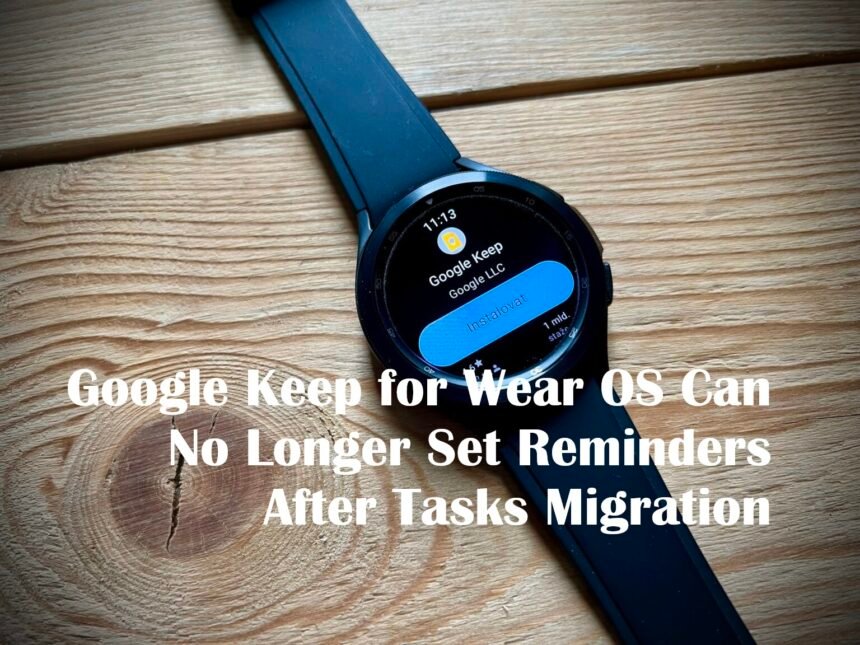
In earlier versions of the Wear OS app, users could scroll to the bottom of a note or list and add a reminder directly on the watch. A bell icon offered a simple way to set deadlines without touching a phone. After the reminders shifted into the larger task system, that option disappeared. The bell icon no longer appears next to the pin and archive options.
Notes and lists on Wear OS still display, but the direct reminder feature is gone. This change means the reminder tools users once took for granted must now be accessed from a phone or another device. For someone who likes to set quick time-based alerts while walking or during meetings, this can be a major inconvenience.
Instead of tapping a couple of times on the watch screen, reminders now require interaction through other apps or devices. Some users find this shift puzzling because mobile versions of the note-taking app still retain reminder creation features.
There is no clear explanation why different platforms now offer different capabilities for the same service. Many expect consistency across devices so that setting a reminder feels seamless, whether on phone or watch.
The Growing Role of Task Integration
Under the new system, reminders no longer live in the original app alone. Instead, they exist in a centralized task hub that spans multiple devices and apps. This hub can manage reminders from mobile apps, web interfaces, calendar integrations, and even AI assistants.
Moving reminders into this unified space helps keep all to-dos in one place rather than fragmented across separate systems. Developers believe this consolidation reduces duplicate features and simplifies user workflows over time. For example, once reminders are saved in the task system, users can view and edit them from more than one interface.
On smartphones and tablets, reminders sync across calendar tools or task lists without confusion. Yet this supposed simplification does not extend fully to Wear OS in its current form. Despite the benefits of phones and tablets, Wear OS stands apart because it lacks full integration for task creation.
The watch can display reminders that already exist, but cannot initiate the process of creating them. That responsibility now falls to tasks or other companion apps outside the wearable environment. As a result, the tasks integration strategy that works well elsewhere feels incomplete on the wrist.
Why This Matters for Users
Wear OS users who value hands-free or easy glanceable productivity tools feel the impact first. Many wearables thrive on quick interactions. Users tend to want to set reminders quickly while walking, cooking, or during meetings. Without this capability, a watch becomes more of a display device than a productivity tool.
Some users expected that voice commands would fill the gap. Indeed, talk-to-assistant features are more useful now than ever. However, forcing users to rely on voice commands for task creation is not ideal for all environments. Busy or noisy places can make voice prompts impractical. This means a feature many thought was simple and reliable is no longer convenient for some.
Users who depended on reminders for critical tasks may also feel the disruption more negatively. When notifications no longer appear because the creation point moved, it can be easy to miss important reminders. Wearables once offered a way to create and receive alerts in the same place. Now, task creation must happen elsewhere, which adds more steps and more friction.
The Conflict Between Simplicity and Consolidation
There is tension between simplifying many productivity tools in one central system and maintaining ease of use on all platforms. Centralizing reminders into a single task ecosystem makes sense for people who regularly switch between apps on a phone or computer. It allows the same list to appear everywhere.
But wearables were designed for simplicity first. Users embrace watches because they save time and reduce friction. Taking away the ability to start a reminder directly on the wrist means wearables lose some of their unique advantages. While consolidation may benefit long-term planning and organization on larger screens, it can harm spontaneous productivity on smaller devices.
Developers have suggested using task creation via voice or phone for reminders now. Integrating artificial intelligence assistants might help bridge the gap. However, not all users want to rely on voice commands or carry a phone in every scenario. The tradeoff highlights a broader question about how productivity tools should balance minimalism with power.
What Users Can Do Now
If quick reminder creation on Wear OS matters, users need to adjust their workflows. For now, opening the task hub through companion apps on phones or tablets is the only path to set new alerts. Users can still view reminders on their watches once they are created.
Some smartwatch interfaces allow voice-activated task creation, though this approach has limits. Reliable voice recognition requires calm environments and precise speech. So, it remains a compromise rather than a full replacement for the lost feature.
In addition, users can explore third-party apps that integrate with Wear OS and provide independent reminder functions. These alternatives sometimes offer direct reminder creation on the watch itself. While they do not use the same unified task system, they give back some of the convenience that users miss.
Looking Ahead
The disappearance of a simple reminder feature on Wear OS may feel like a setback to many. Yet it also highlights the complexity of evolving ecosystems that span devices and services. Google’s focus on unified tasks shows where future productivity tools may land. However, developers may need to refine this strategy so that valuable features remain available on all platforms.
For now, users must adapt to changes that were introduced during the reminder migration. As wearable technology evolves, further updates could restore some of the lost convenience or offer new solutions. If productivity on small screens is a priority, early feedback from users will likely shape future updates.